




“Music and dance are all you need.”
– Molière (Le bourgeois gentilhomme)
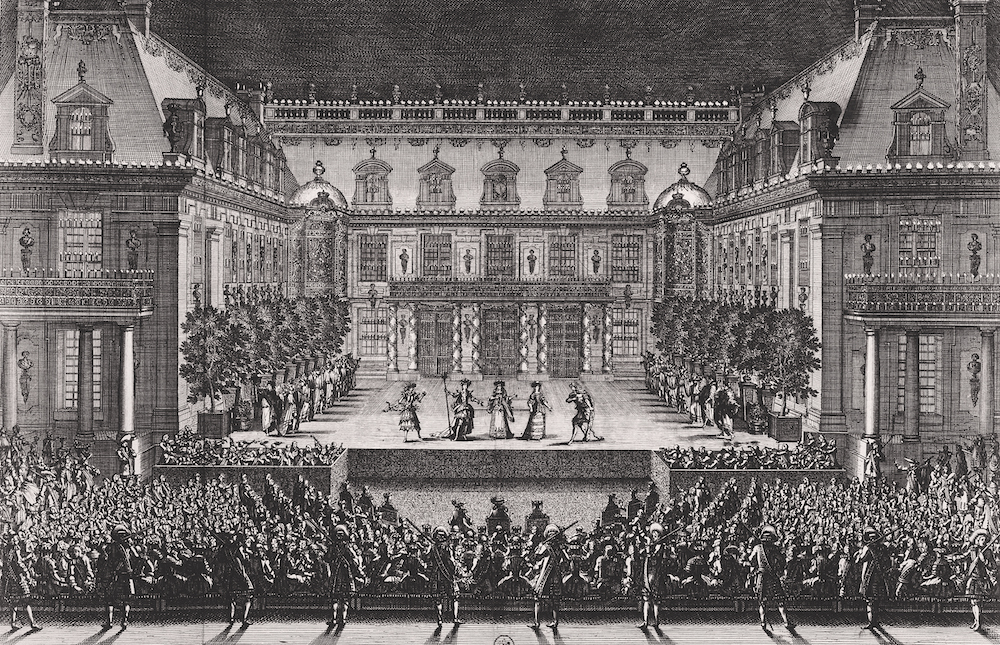
Louis XIV (1638-1715) was not alone in his autocratic rule amongst 17th century monarchs. However, it was his innovative use of diplomatic and political soft power that contributed to his long reign as King of an all-powerful France. His opulent palace in Versailles was the envy of other European leaders as a symbol of wealth and power, and many tried to replicate it for their own vanity projects.
The King exerted supremacy through a complex code of etiquette, and politicised the arts to impress his authority on aristocrats and foreign dignitaries alike. In appointing the Italian-born musician, dancer and composer Jean-Baptiste Lully as Master of the King’s Music, Louis chose a political manipulator whose ruthlessness matched his own. Their control over music, dance and opera ensured that the arts had the single purpose of glorifying the King and France. Even the choice of subject matter for each ballet became a tool for propaganda.
The King’s passion for dancing was central to his power, and dance and diplomacy became inseparable. Versailles was the setting for concerts, extravagant balls, sumptuous...
Continue reading
Get unlimited digital access from $4 per month
Already a subscriber?
Log in




Comments
Log in to start the conversation.