Opera Australia has released its 2025 Annual Report, outlining a dramatic financial turnaround, with the company recovering strongly after posting a multi-million-dollar loss the previous year.

Opera Australia’s operating deficit before the inclusion of its capital fund narrowed dramatically from $10.6m in 2024 to just $271,776 in 2025.

After accounting for investment gains and contributions from the Opera Australia Capital Fund, the company recorded a near break-even net deficit of $36,051 before the fund’s contribution lifted the organisation back into surplus.
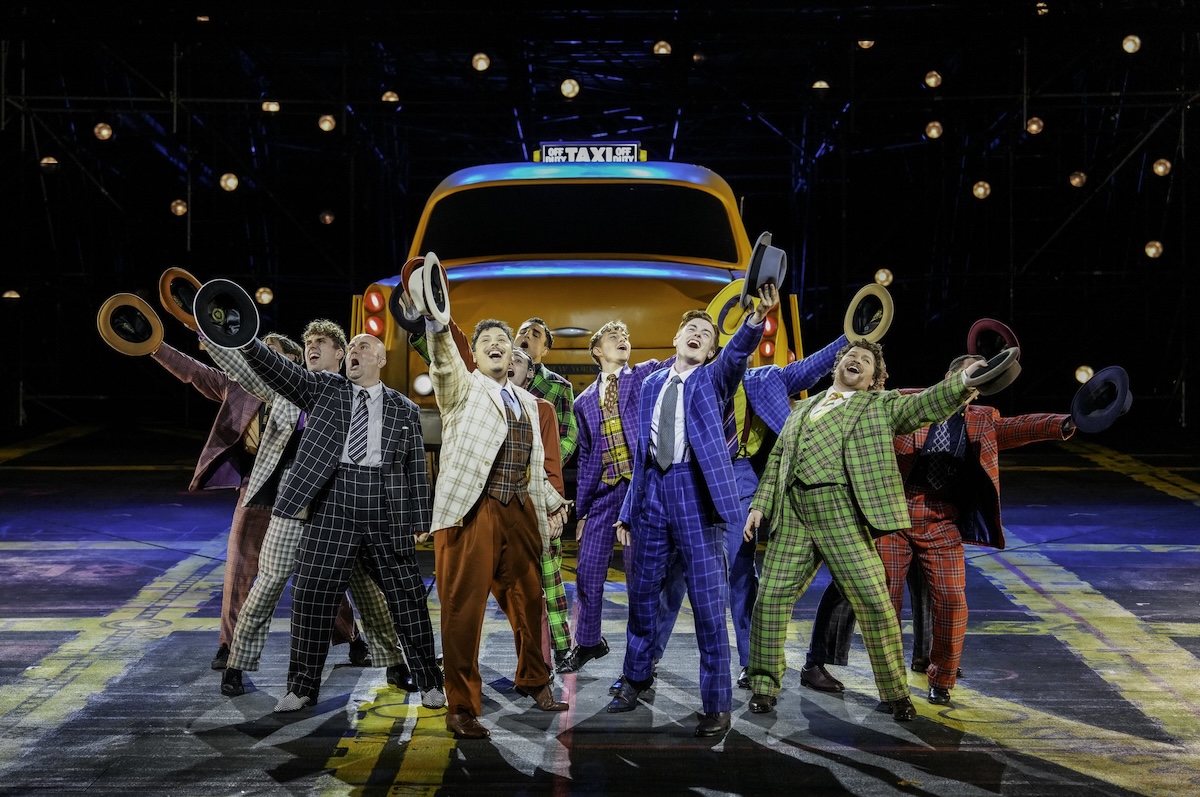
Guys & Dolls, Handa Opera on Sydney Harbour. Photo © Neil Bennett

Chair Glyn Davis described the result as “a year of meaningful financial progress”, saying the company had delivered “a significant turnaround from the 2024 result”.

“I am pleased to report that 2025 was a year of meaningful financial progress,” Davis wrote in the annual report. “Total revenue reached $122.8 million, with Opera Australia delivering a break-even outcome for the 2025 financial year.”

The report attributed the improved result to “solid audience attendance and box office performance”, alongside cost-cutting and operational efficiency measures introduced during the year.

Box office revenue rose from $50.7 million in 2024 to $65.3 million in 2025 – an increase of almost 29 per cent – making ticket sales the company’s strongest-performing income stream by a wide margin. Commercial activities, including production hires and orchestral services, also climbed from $7.36 million to $9.87 million.

Opera Australia staged 457 performances across 25 productions in 2025, attracting a total audience of 574,809 people.

Hadestown

Christine Anu and Elenoa Rokobaro in Hadestown. Photo © Lisa Tomasetti

Among the company’s biggest box-office performers was the Australian premiere of the musical Hadestown, which drew 83,835 patrons in Sydney and a further 103,031 in Melbourne – by far the company’s largest attendance figures of the year. The report noted the production “broke Theatre Royal Sydney box office records”, while Melbourne performances at Her Majesty’s Theatre also sold out.

Opera Australia’s harbour spectacular Guys & Dolls also proved a major commercial success, attracting 48,804 attendees at Handa Opera on Sydney Harbour. The production marked the first musical comedy staged at the annual harbour event and featured a large-scale new production directed by Shaun Rennie.

Other strong performers included Rent, which sold 50,361 tickets, the long-running Great Opera Hits concerts with 47,899 attendees, and Carmen, which attracted a combined Sydney and Melbourne audience of almost 48,000.

Warwick Fyfe and Nicole Car as Rusalka in Opera Australia’s Rusalka. Photo © Carlita Sari

The report also highlighted artistic successes including the critically acclaimed Rusalka starring Nicole Car, described as one of the company’s “highest audience-rated productions”. Limelight described the production as “the best in decades”.

Total revenue and income rose from $103.6m to $122.8m in 2025. Government funding remained comparatively stable at just under $30m, with the largest contribution continuing to come from Creative Australia, which provided more than $25m in base and project funding.

Fundraising also strengthened. Donations and bequests increased to $6.71m, up from $5.62m in 2024, while net proceeds from fundraising campaigns climbed to $3.6m.

The company’s cash position improved markedly. Cash reserves rose from $4m at the end of 2024 to more than $12m by December 2025, while operating cash flow swung from a $4.2m outflow to a positive $12.1m. Advance ticket sales nearly doubled from $10.6m to $19.8m.

Audience development was another standout feature of the report. More than 68 per cent of opera ticket buyers and more than 75 per cent of musical theatre buyers were first-time Opera Australia purchasers. The company also reported that 93.3 per cent of first-time attendees said they would attend opera again.

Danielle de Niese and Richard Anderson in Opera Australia’s Carmen. Photo © Keith Saunders

The report notes Opera Australia continues to operate in a difficult environment marked by cost-of-living pressures and rising production expenses.

Expenditure increased across several categories in 2025. Staff and employment costs rose to $64.6 million, venue expenses climbed above $11.3m, and marketing and promotion spending reached almost $12.4m. Royalties, scores and instrument costs more than doubled to $3.63m.

Opera Australia said it would continue refining its “programming mix”, expanding audience engagement and pursuing operational efficiencies to strengthen long-term sustainability.

Read/download Opera Australia’s Annual Report here.

Get our free weekly round-up of music, arts and culture.