




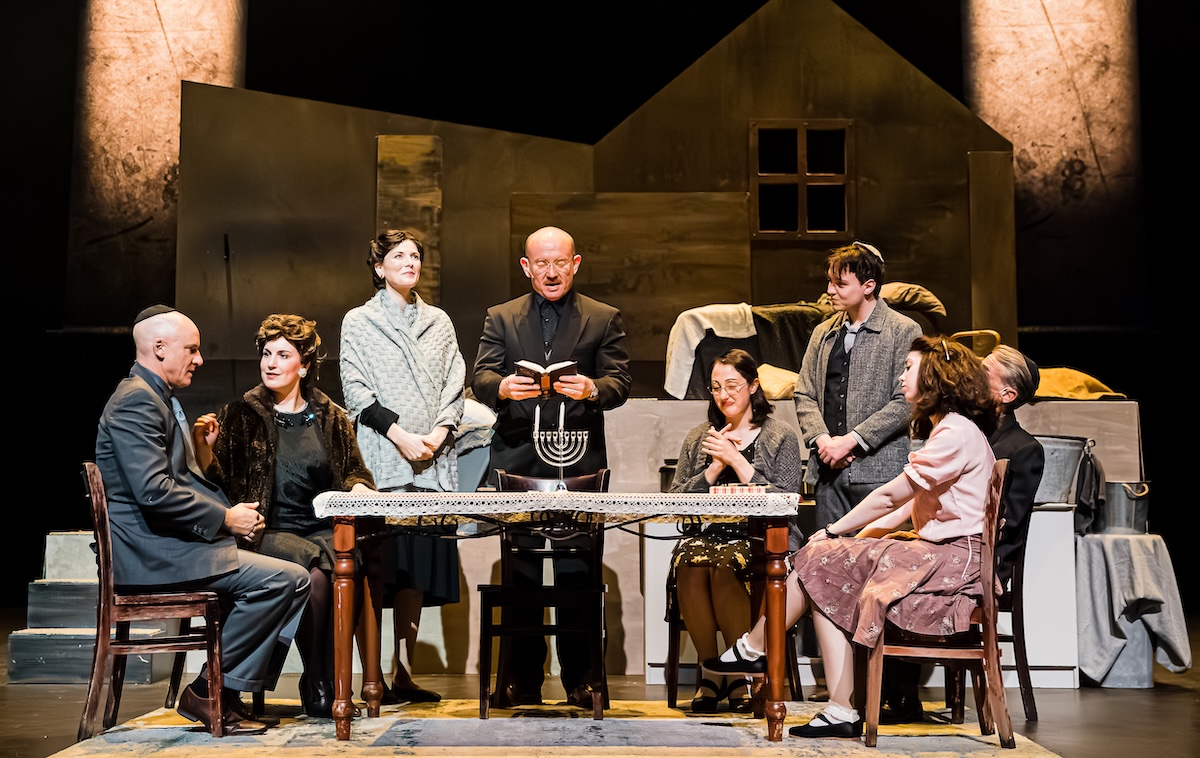
Right now seems as good a time as any to revisit this venerable, still affecting adaptation of Anne Frank’s wartime diaries. Done well, it can open a window onto empathy and understanding.
This production, staged in a large and wholly unsympathetic venue, struggles to find the play’s heartbeat.
Penned by Frances Goodrich and Albert Hackett and premiered in the United States just a decade after Anne Frank’s death in the Buchenwald concentration camp, it offers a softened, distinctly Americanised portrait of a teenage girl. The script draws on edited diaries from which Anne’s father, Otto, removed material he considered inappropriate or unflattering from his her record of two years spent hiding from the Nazis in a secret annex of an Amsterdam factory.
Tonally, the work feels closer to Anne of Green Gables than Anne of wartime Europe. Anne’s saintly optimism and coy rebellion feels more in tune with the anxieties of teen-quake America in the 1950s than life under occupation. Its portrait of a coming-of-age forged in circumstances beyond imagining – in stifling proximity to adults – can be affecting, however, especially for younger audiences.
Continue reading
Get unlimited digital access from $4 per month
Already a subscriber?
Log in







Comments
Log in to start the conversation.