

The background chatter is all about AI right now but it seems that the baton is fast becoming one of the most sought-after tools in the next generation of Australian musicians’ repertoires, with more students undertaking conducting studies at the Sydney Conservatorium of Music in unprecedented numbers.

Enrolments in the Con’s undergraduate conducting program have increased six-fold since 2019, prompting the institution to introduce additional classes and a new honours pathway for students wanting to pursue conducting at a higher level.

For Dr Elizabeth Scott, lecturer in conducting at the Con, the surge has been “extraordinary and pleasantly surprising.”

“It could be due to students wanting to increase their skills for the future,” Scott says. “If they have the skills to conduct a school band, orchestra, choir or a musical theatre ensemble, it makes them more employable. And conducting is an exciting field of music. It attracts leaders.”
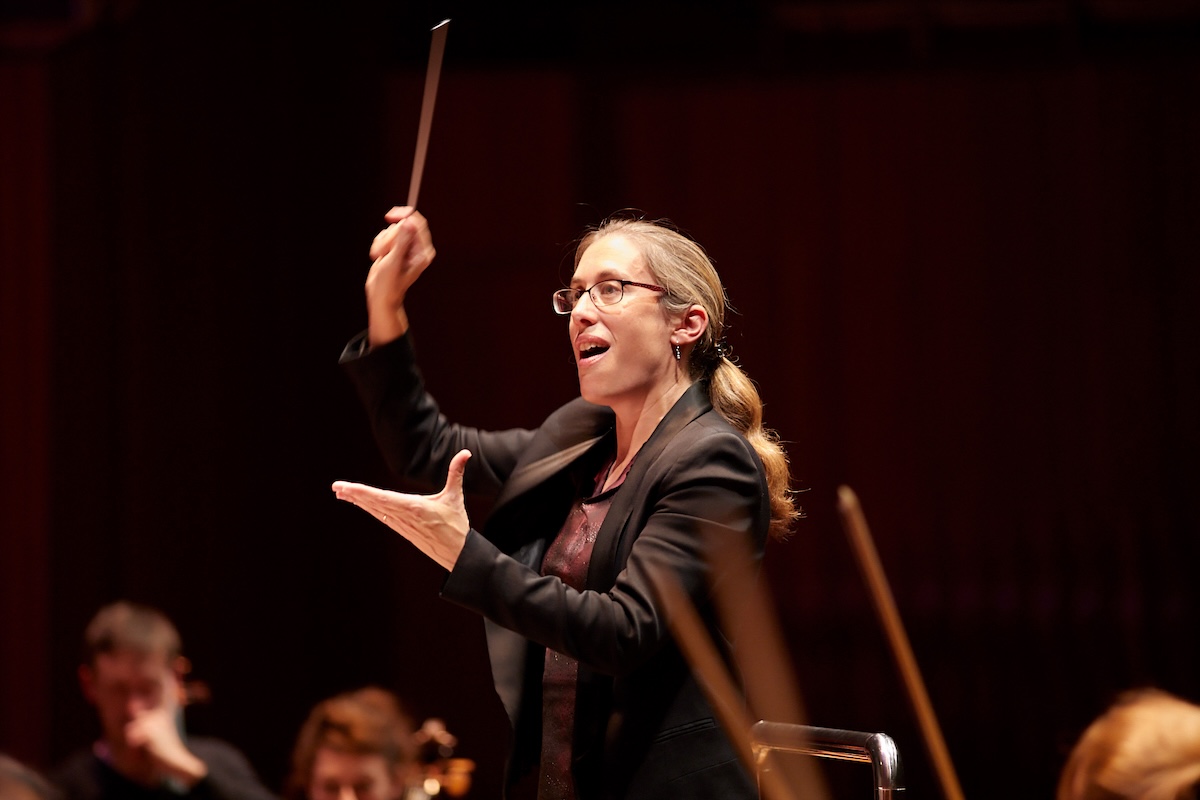
Elizabeth Scott: “It connects you with the idea of yourself as a leader.” Photo supplied

The growing interest reflects a broader understanding among young musicians that conducting is not simply about mastering a beat pattern – it is about communication, collaboration and leadership.

Professor Benjamin Northey, who joined the Conservatorium teaching staff in 2026 while continuing his career as one of Australia’s leading conductors, believes conducting offers musicians a unique opportunity to develop those qualities.

“It’s really good for your musicianship to stand up in front of a group of your peers and to be able to try and communicate your ideas, whether it be verbally, whether it be physically, with the technique of conducting,” he said.

“But also it connects you with the idea of yourself as a leader. We don’t train to be leaders, we just expect that leaders will emerge, and I think conducting is one of those things that really taps us into what it feels like to step into that leadership position.”

Benjamin Northey sits in audience chairs, his feet up, at the Sydney Conservatorium's Recital Hall.

Benjamin Northey. Photo © Stefanie Zingsheim/Sydney Conservatorium of Music

The Conservatorium currently offers three conducting units – Conducting 1, Conducting 2 and Advanced Conducting – as electives for undergraduate music students. The popularity of the courses suggests students are actively seeking out the opportunity rather than simply fulfilling degree requirements.

In 2026, the cohort is made up largely of second- and third-year students, with almost equal numbers of men and women and representation from across the Conservatorium’s performance, composition and music education programs.

Deputy Dean of the Conservatorium and composer Professor Matthew Hindson believes composition students in particular are recognising the value of conducting skills.

“I suspect the composing students want to be in control of getting their music ‘out there’, and see conducting as a very important skill to have in that mission,” he said.

Conducting student Bea Chaston: “I wanted to find my own conducting style”. Photo © University of Sydney

For student Bea Chaston, the appeal was both practical and personal. A singer and violinist, the third-year student from south-west Sydney enrolled because she wanted to better understand the role of the conductor from the inside.

“I chose to take the conducting class because I knew it would be fun and finding out that Liz [Scott] was our professor was amazing because I’m familiar with her conducting style and know first-hand that she is incredible at her job plus she is a wonderful person so immediately the class promised to be very fulfilling,” she said.

“Another reason was I’m a singer and a violinist, and you work with so many conductors and all their styles are different, with stylised beat patterns, conveying what they want from you in dynamics, phrasing and character and I wanted to find my own conducting style.”

“It’s so interesting to see the differences between you and your classmates and you all learn from each other and build each other up! We laugh a lot and it is such a space of community because we all have our own reasons for doing the class.”

Conducting student Bea Chaston and Dr Elizabeth Scott. Photo © University of Sydney

But Chaston also discovered that stepping onto the podium comes with significant responsibility.

“When you’re learning everything that goes into preparing a work, the background research, preparation for a practice, overall knowledge of the ensembles and instruments, the list goes on and it really puts into perspective how much goes into being a great conductor,” she said.

The renewed interest in conducting comes at a time when Australian conductors are increasingly visible on the international stage. Dr Scott believes the careers of figures such as Sydney Conservatorium graduate Simone Young – chief conductor of the Sydney Symphony Orchestra – have helped inspire emerging musicians.

“There was a time when our orchestras were conducted by international guest conductors but now we’re seeing more and more Australian conductors leading orchestras locally and in Europe and America,” she said.

The Conservatorium has produced many leading conductors, including Richard Bonynge, Nicolette Fraillon, Nick Carter, Lyn Williams and Michelle Leonard. Recent graduates include Natalie Murray-Beale, Nicholas Milton, Vanessa Scammell, Sam Weller and Carlo Antonioli.

For organist and postgraduate conducting student Marko Sever, the discipline represents a natural progression from a career as a professional organist.

“It allows me to shape music on a larger canvas and work collaboratively with like-minded musicians,” he says.

Marko Sever: “Conducting is a natural next step”. Photo © University of Sydney

Sever was drawn to the Conservatorium’s Master of Music (Performance, Conducting) program after learning that Northey would be joining the faculty.

“My goal is to build a career that combines conducting, performance, and artistic leadership, while creating ambitious musical projects that connect with audiences,” he said.

“Conducting is a natural next step for musicians with a strong performing background. The best conductors never stop drawing on their experience as performers and collaborators.”

With demand continuing to grow, the Conservatorium’s expanded conducting pathway signals a renewed appetite among young musicians to lead from the podium – and suggests Australia’s next generation of conductors is already finding its voice.

Applications are now open for Bachelor of Music at Sydney Conservatorium of Music.

Contribute to Limelight and support independent arts journalism.