




“You are the greatest Brünnhilde I have heard in 40 years.”
“And who did you hear 40 years ago?” inquired Birgit Nilsson of what must have been a momentarily flummoxed Karl Böhm.
The wit and the voice seem utterly inseparable to us now – disarming, unflagging and totally at the legendary soprano’s beck and call. It could lash, or it could draw you in closer: it could certainly do both at the same time. With the advent of the centenary of her birth, the image of the laughing Valkyrie burns brighter than ever. There she jokes about Rudolf Bing being a dependent. Here she accuses a competitive Franco Corelli of giving her rabies. There she identifies her imitation pearls as bought with the meagre fees of the Vienna Opera.
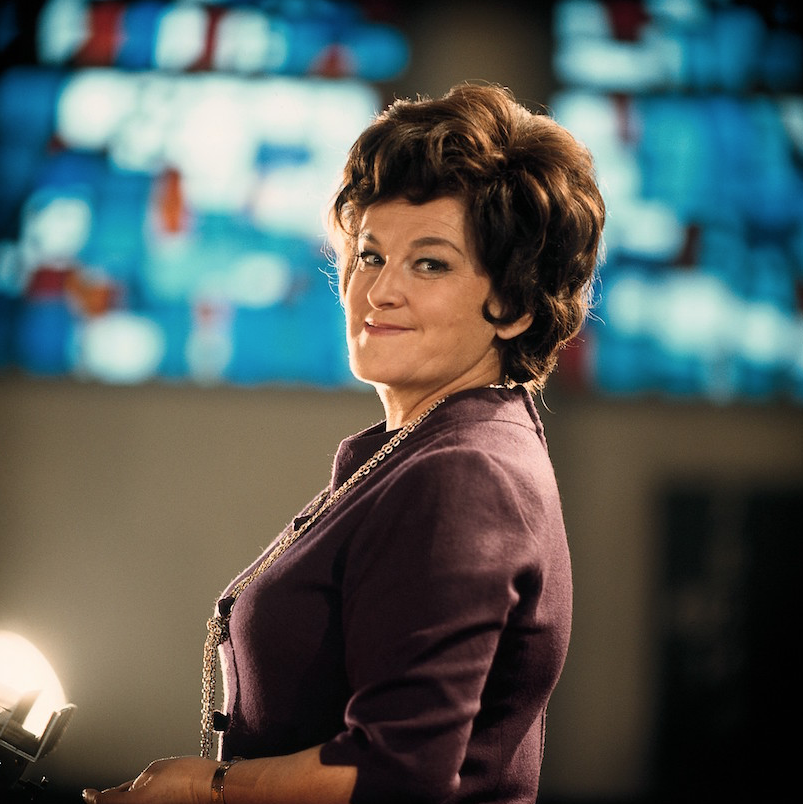 Birgit Nilsson. Photo © Siegfried Lauterwasser/DG
We hear the same stories over and again, some undoubtedly apocryphal. But the spark of a quick mind and the brilliance of a steely attitude makes them evergreen. Akin to putting on one of her records, it makes you wonder – how could this woman, with such outsized, positively Wagnerian qualities, ever possibly exist?
Born on a farm in Västra Karup, Sweden, Nilsson was a bit of a disappointment to her father. Like some of the tales that emerge from those northern climes, young Märta Birgit Nilsson was the only child of a man who desired a son. Nils Svensson, a sixth-generation farmer, wanted there to be a seventh – what he got instead was a girl with a preternaturally loud voice, who could play the piano from the age of three and had little ambition of settling down as a farmer’s wife. “At my christening I allegedly drowned out both the pastor and the organ,” was how Nilsson put it in her own memoir.
Though Birgit attended agricultural school, where she learnt how to cook and milk cows, her mother Justina Svensson quietly but firmly nurtured her gifts. Not overfond of being a farmer’s wife herself, Justina had long harboured ambitions of being a singer – it was she that first bought Birgit a toy piano, and she that saved the equivalent of $500 from her inheritance in order to send Birgit to the Royal School of Music in Stockholm.
Her father, who had little truck with any of these ambitions, never contributed a cent to Nilsson’s education. But despite being disappointed in his hopes for her, he maintained a genial, joking relationship with his child, delighting in his insistence that the great diva was not so good. His party trick, as it were, was to apprehend bemused audience members during interval, inquiring as to whether they thought Ms Nilsson had been too loud in the first or second act. Invariably he would seize on the one person who gave him any concession on this ground, and present it to his daughter as an overwhelming consensus: she had been much too loud.

At that time, nearly all graduates of the Royal School sang at the Royal Opera in Stockholm, and so it was for Nilsson. In time honoured tradition, her operatic debut came about in 1946 when another singer fell ill, leaving her to jump into the role of Agathe in Weber’s Der Freischütz at rather short notice. While familiar with Agathe’s arias, the spoken dialogue and recitatives proved difficult to master within three days. Her less than perfect performance resulted in the conductor, a cantankerous Leo Blech, temporarily banning her from the house. “I thought I was finished,” said Nilsson, who later revealed that she had contemplated throwing herself into a river close to the theatre.
It was the rather more benevolent Fritz Busch who saved her from being finished at the ripe old age of 28. Recognising her potential, Busch engaged her for the role of Lady Macbeth in 1947, a part whose difficulties are not so far removed from the big voice-killers that populated her career. One of the most important litmus tests for a successful Lady M is her final high D Flat, which on top of being cruelly exposed is required to be sung piano and held for a respectable length of time. Busch suggested that Nilsson merely mime the note, leaving the task to another singer standing in the wings. In fact, the singer cracked the note multiple times in rehearsal, leading Nilsson to point out that “I will be blamed if that note is cracked anyhow. Why not let me crack my own D Flat?” Suffice it to say, she essayed her own D Flat night after night, with nary a crack to be heard. It was from there her career took wing, with Nilsson re-engaged at the Royal Opera by Blech a mere 12 months after she had been dumped by him. That house was to be an invaluable training ground, bearing witness to her first Leonores, Marschallins, Sieglindes, Donna Annas, Sentas and Toscas, all sung in Swedish.
Nilsson soon plunged headfirst into the world of Wagner, finding her powerful instrument uniquely suited to his demands. Her timbre, as the critic John Ardoin put it, “was sunlight reflected off a copper surface” – it could slice through a large orchestra “like a marble column from its lowest notes to the high C of its top register”. Allied with reserves of breath, superhuman stamina, and a questing intelligence, Nilsson was a rare creature indeed, her instrument of fire and ice also finding her a home in the works of Strauss and Puccini.
 Nilsson as Puccini’s Turandot
Her Vienna State Opera debut in the spring of 1954 proved a significant turning point. The word ‘demanding’ does it little justice – Nilsson was made to guest four different roles within a period of nine days. “And that was not the worst,” she related in her memoir. “I was singing each role for the first time in its original language. In German, I was performing Elsa in Lohengrin, Leonore in Fidelio, and Sieglinde in Walküre; in Italian, Aida. I was granted a musical run-through with piano with the various conductors, but the staging rehearsals were conspicuous by their absence.”
Nilsson rose to the occasion, winning over both critics and audience alike. “I even received applause after Dich, teure Halle (unusual for this opera),” she noted. Fidelio had been dropped for Tannhäuser a few days after she touched down in Vienna, throwing yet another spanner in the works.
An Elsa at Bayreuth soon followed, and her first Brünnhilde in a complete Ring at the Bavarian State Opera in 1955. She impressed enough to be invited by Karajan himself, now artistic director of the Vienna State Opera, to sing Brünnhilde in Walküre. His methods she found disconcerting – he wouldn’t hear of having vocal coaches in rehearsals, and would play recordings (not even his own) to save the singers’ voices while preparing the orchestra. “Karajan was not a one-on-one instructor, and he never discussed the interpretation of a role,” Nilsson later reported. “It was enough for him if you found the spotlight and reined in your acting.”
While she was more or less an established star by the mid-50s, Rudolf Bing, General Manager of the Metropolitan Opera, remained unimpressed. He had had ample opportunity to see her in action – her American debut had taken place in 1956 with San Francisco Opera; she had auditioned for him in Berlin; and he had seen her Salome in Munich. It was not until he heard her Isolde at the Vienna Opera in 1958 that a contract was forthcoming. “I was not mad,” Nilsson told the New Yorker in 1966. “I develop slowly. I was glad to come to the Metropolitan when my voice was better. But, if Mr Bing had hired me then, I might not have been so expensive.”
 Photo © Siegfried Lauterwasser/DG
Isolde was the role with which she made her Met debut, and it was confirmed: Ms Nilsson, Swedish farm girl, was the real deal, the natural successor to the great Kirsten Flagstad and a star amongst stars at that illustrious house. The New York Times ran its review of the performance on its front page, with the headline “Birgit Nilsson as Isolde Flashes Like New Star in ‘Met’ Heavens”. It was to be the first of 233 appearances by Nilsson at the Met, spanning 16 roles. After winning an ovation that lasted 15 minutes, she proclaimed she still had enough breath to sing Turandot “right this minute”.
“The Swedish soprano assumed one of the most demanding roles in the repertory and charged it with power and exaltation,” wrote Howard Taubman in the Times. “With a voice of extraordinary size, suppleness and brilliance, she dominated the stage and the performance. Isolde’s fury and Isolde’s passion were as consuming as cataclysms of nature.”
The year 1959 was a bumper one for Nilsson, which saw her enter the studio for the first time under Decca’s wing to record excerpts from Tristan und Isolde with Hans Knappertsbusch and the Vienna Philharmonic. Coming into her prime as a dramatic soprano, the thrill of hearing a 41-year-old Nilsson remains undimmed. Its majesty, molten power and innate authority is something to behold. Critic David Blum describes her voice in the Liebestod as seeming “to glide on waves and, in its ease and repose, to be transformed into liquid matter. Whether floating full-bodied at piano or riding the breakers with majesty and passion, it has the resplendence of an unblemished pearl, illuminated by a deep lustre at its core.”
 Nilsson as Elektra. Photo © James Heffernan for the Met/DG
Of course, no discussion of Nilsson’s career is quite complete without touching on the legendary Solti Ring. Superlatives have, surely, been exhausted on this topic, but the power and vividness of her portrayals have not. Solti was responsible for many of her outstanding recordings – her wonderfully nuanced Brünnhilde sits alongside a single-minded Salome, a deranged Elektra and a magnificent Turandot. To spend a few hours in their company is to encounter something profound.
By the late 50s and 60s, Nilsson’s success was such that even her father’s gruff, unimpressed exterior began to slip. At a performance of Tosca, he turned to the unsuspecting gentleman next to him, remarking, “don’t applaud her. She’s only my daughter.”
A heady time that would send many into a tailspin, her sense of humour held her in good stead. In preparation for her Met debut as Elektra, she worked closely with one of the house’s vocal coaches, Walter Taussig. Although she had made her debut as Elektra in Sweden in 1965 and had brought it to Vienna, as was her general practice with new roles, she remained nervous about bringing the part to the Met, never wanting to deliver less than her best. “If you make a big success in New York, it goes all over; if you make a big flop, it goes all over, too,” she explained.
Such anxieties seem to be overcome, as is demonstrated in a delightfully mischievous letter she sent to Taussig’s wife: “Dear Mrs Taussig. I have a confession to make. I have had a child with your husband. Her name is Elektra. I am quite she sure she is his because nobody else could have given me this child.”
 Nilsson receives a surprise visit in the recording studio. Photo © Decca
Nilsson never relinquished this so-called child until the very end of her career – her final ever performance was as Elektra in Frankfurt, 1982. “It was a great performance and I felt I was in my best form, as though it was the high point of my career,” she later said. Though to some her once penetrating voice had lost some of its lustre and earth-shattering power, the burning intensity and sheer presence of Nilsson was never in doubt.
A decade after her retirement, she shared a line with a reporter from The New York Times that for her must have been something of a credo. “I’ve always tried to remember what my mother used to tell me: stay close to the earth. Then when you fall down, it won’t hurt so much.”
Birgit Nilsson died in Västra Karup in 2005, the place where she was born.
Marking Birgit Nilsson’s 100th birthday, a box set of her complete Decca, Philips and Deutsche Grammophon recordings has been released





Comments
Log in to start the conversation.