On 1 May, the Seymour Centre plays host to a meeting of musical worlds.

In stark contrast to what is happening in the geopolitical arena, the Tehran-born composer and tar player Hamed Sadeghi will bring Persian-Iranian and western traditions into fruitful conversation in a new work, Convergence.

Rather than fusing them into a single sound, he has them to sit side by side: distinct and tensile, with each responding to the other.

Convergence isn’t about creating a musical melting pot, Sadeghi explains to Limelight. “It’s not that traditional idea of ‘fusion’. It’s more about the beauty of seeing distinct shapes and sounds sitting together, creating something larger than themselves.”

That distinction between fusion and coexistence sits at the heart of a 60-minute work that moves draws on the linearity of Persian classical music and the structures of Western forms. The performance unfolds as a single arc, drawing on the tonal intimacy of a string trio, the expressive purity of the soprano voice, and the rhythmic depth of Persian percussion.

Sadeghi himself anchors the work on the tar, the long-necked lute central to Iranian art music.
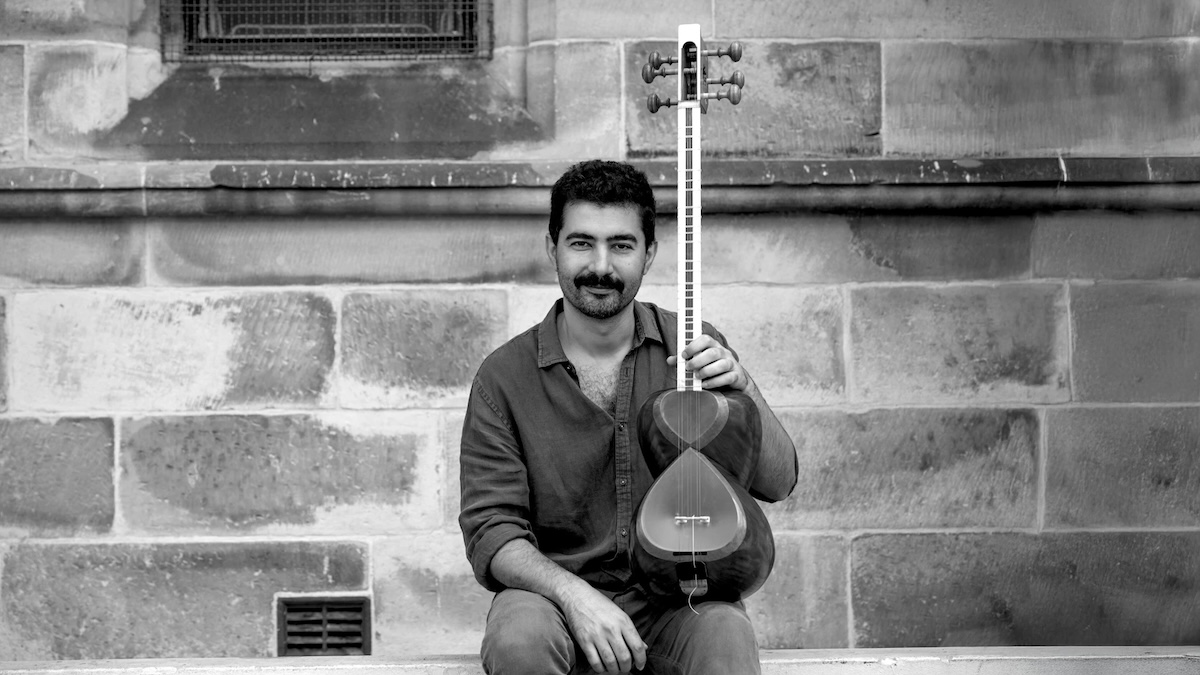
Hamed Samarghi: “Maybe we can focus on what we share, instead of what divides us.”

Raised and trained in Tehran, Sadeghi’s formation was rigorous and steeped in tradition. Before auditioning for one of Iran’s many conservatories, students are expected to spend years internalising the canon of Persian classical repertoire. “It can take seven or eight years just to learn and memorise it,” he explains. “You work closely with teachers before you even get to that stage.”

Alongside the Persian masters he studied in Tehran, Western composers including Chopin, Bach and Schubert left a strong impression. It was the Persian tradition of improvisation that provided a bridge to other forms, however. “I always loved improvised music,” he says. “When I came to Australia in 2013, I started going to jazz gigs, playing with jazz musicians. That’s when I realised I had a connection with that world.”

That connection has since become a defining feature of his practice. Collaborations with figures from Australia’s improvising community – with bassist Lloyd Swanton (The Necks) and saxophonist Sandy Evans ,for example – have expanded his musical language while reinforcing a core interest in dialogue rather than assimilation. “It’s always evolving,” he says. “I’ve built a strong community around me here.”

In the weeks prior to presenting Convergence, Sadeghi will be in Germany for a series of gigs with his ARIA-nominated Eishan Ensemble at the jazzahead! international jazz trade fair in Bremen. Later in the year, in September, he presents Comfortable at Sydney’s City Recital Hall, a new work for an eight-piece ensemble of tar, woodwinds, brass, double bass and percussion.

Where many streams meet

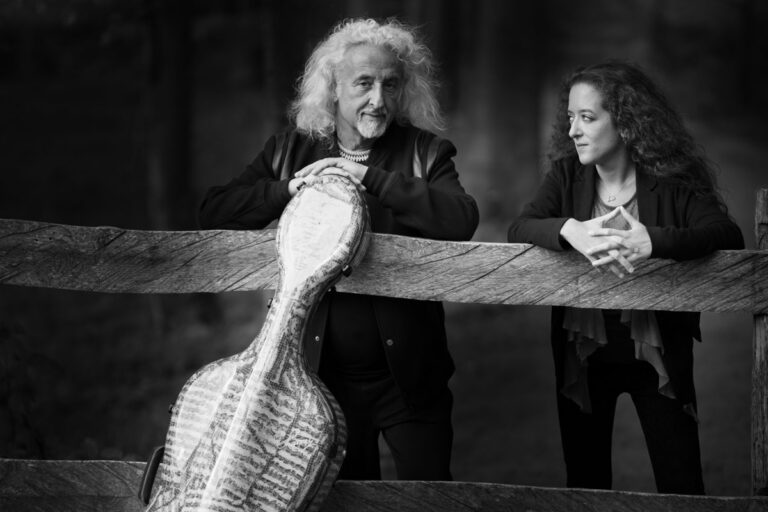
Convergence emerges directly from that space between cultures, musical languages and ways of hearing. The ensemble reflects this plurality: soprano Aida Manouchehrpour, violinist James Tarbotton, violist Beth Condon, cellist Freya Schack-Arnott and percussionist Sohrab Kolahdooz join Sadeghi in a line-up that moves fluidly between notated material and improvisation.

“The music is written, but there are spaces where musicians can explore,” Sadeghi explains. “I give them a foundation, and then they have the freedom to respond.” He returns to the image embedded in the title: convergence as a meeting point, like rivers flowing into one another, retaining their currents even as they share a course.

Though it was conceived before the US military action against Iran, Convergence speaks to its impact. A diverse Iranian diaspora, like many communities connected to regions in conflict, is grappling with division, anger and uncertainty, Sadeghi says. “I can only speak for myself. I’m very anti this war. Bombing doesn’t solve anything. It just destabilises and makes life more difficult. They bombed Afghanistan for years and you only have to look at the outcome of that.”

“I feel a responsibility,” Sadeghi says. “We have an ancient civilisation, a beautiful civilisation that now someone says he will destroy. Maybe we can’t change anything, but at we can create something meaningful, create rather than destroy.”

For artists working far from home, the distance can intensify the sense of dislocation. “Our families are there,” he says. “Sometimes we can’t even communicate with them. People are carrying a lot of emotion.”

In that context, Convergence becomes a call for connection within fractured communities. “People have very different opinions,” Sadeghi says. “Sometimes, it’s hard to talk. But maybe we can focus on what we share, instead of what divides us.”

Outhouse Theatre Co’s production of Sanaz Toossi’s English. Photo © Richard Farland

It’s notable that upstairs and downstairs at the Seymour, Iranian stories are being told simultaneously with Outhouse Theatre Co’s production of Sanaz Toossi’s English playing in the Reginald Theatre. It’s a work Sadeghi knows intimately, having composed the music for an earlier Melbourne Theatre Company production of the play set in an English language class in Iran in 2008.

“I learned English the same way,” he says, recalling his classes in Tehran before eventually becoming an English teacher himself. “The whole experience of translating your thoughts, of navigating language … it’s very real to me.”

Sadeghi has seen the play many times, but “it still makes me cry,” he admits. “It’s funny, it’s dramatic, it’s beautiful.”

He is not uncritical, however. While acknowledging the weight of the themes, he is wary of narratives that frame Iranians solely through the hardships they face. Resisting reductive narratives is intrinsic to his music.

“Yes, it’s important to show the difficulties,” he says, “but it’s also important to show that we have ground to stand on.”


Hamed Sadeghi performs Convergence at the Seymour Centre, Chippendale, Sydney on 1 May.

Hamed Sadeghi, SIMA and CRH Presents Comfortable at City Recital Hall, Sydney on 5 September

Contribute to Limelight and support independent arts journalism.