




Holly Moore is a Melbourne-based saxophonist, composer and educator, quickly establishing herself as a rising star in the jazz scene. With her upcoming album, Moore continues to showcase her exceptional compositional talent and emotional depth, further solidifying her reputation as a dynamic and innovative voice in contemporary jazz.
Limelight spoke to Moore to uncover the inspiration behind Flood, the creative process that shaped it, and how her gradual compositions challenge the landscape of contemporary music – offering not just a listening experience, but a visceral journey that speaks to the heart and to human connection.

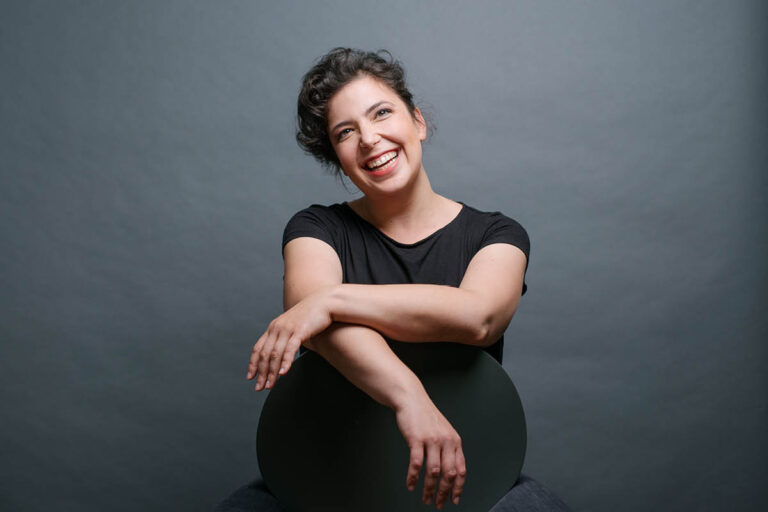
Holly Moore. Photo supplied
Flood’s journey began in 2020 when the Melbourne International Jazz Festivals program Take Note commissioned Moore to write a new suite of music to be performed for the MIJF digital festival These Digital Times.
Moore’s classical training and compositional strength merged with the improvisational spark of long-time friends and collaborators as a new Jazz sextet. Moore was reawakened to the depths of the collaborative spirit.
“Because of all the lockdowns, we had minimal rehearsals for the performance,” Moore says. “We were all just really excited to actually be able to play music at that time. And so everyone was really open to the music and, really keen to do the best that they could.”
Between the lines of fantastic composition and vibrant improvisation, the album oozes emotion, having developed within an intensely reflective period in Moore’s life.
Is this a personal piece?
“Yeah, it’s the first big body of work that I’ve written, instead of just individual tunes,” Moore says. “I was writing on, what I was going through at the time. I had been living in New York for a year and a half, and I really loved it and was really surrounded by a lot of amazing music there. It is very rooted in the jazz tradition.”
“And then my visa was up, I’d come back, and then COVID happened, and I’d gotten this commission from the [Melbourne International] Jazz Festival [in 2020] to write this suite.”
“I was kind of grappling with a loss of identity through all the lockdowns, which I think everyone was kind of feeling. And then losing the community that I’d built and my life in New York.”

Holly Moore. Photo © Roger Mitchell
Moore says her band (Niran Dasika, trumpet; Paul Cornelius, tenor sax; Kade Brown, piano; Robbie Finch, bass, and drummer Luke Andresen) was critical to crafting the suite and expressing her feelings of loss and displacement.
“When we recorded two years later, I had more of an idea of what I wanted, and they all knew the music better. I try and be as collaborative as I can with my tunes. Though they are my compositions, I want to hear what everyone thinks. So, everyone seemed to work on it and develop it.”
Did the people that you worked with connect to what you were composing about?
“Something that helped for sure is that I’ve known all of them for a really long time, and had more of a developed relationship with them,” says Moore. “Bringing new music is quite a vulnerable experience and bringing that to a larger ensemble was vulnerable for me. But I just felt super safe with all of them and knew that kind of safety and being that comfortable with the musicians was really important.”
The structure of Flood also serves the idea of a deeper exploration, with each successive track diving further into Moore’s emotions.
“A lot of it is in putting together the flow of an album,” Moore explains. “So, we open with stuff that’s a bit freer to, get the palate kind of cleansed. I was also trying to figure out my different musical influences. It’s a response to something. I’m not sure exactly what.”
But it seems Moore knows intuitively what she is reacting to. There’s a sense that she is communicating the importance of slowness, sitting with one’s own body and emotions.
“I think a lot of what I felt when I was coming up and studying, was that everything needed to be really virtuosic, impressive, fast and technically difficult. Moore continues, “And while it’s really amazing to have the facility on your instrument to do that, it’s just as important to play a simple melody well, to make it sound good and to transmit the emotion you’re feeling to a listener. I think that requires something different.”
Moore says that teaching has helped her better understand her own processes and how she thinks about music.
“I’ve almost been having to tell myself – like I would tell a student – to slow down and just work on the basics. It’s made me analyse how I play the saxophone and think about music on a much deeper level. It’s been really beneficial to my music-making practice.”
This reflective attitude skilfully and playfully ties the chaos of life to the inescapability of nature – the isolation of lockdown with the freedom found in collaboration.
Flood is an album that beckons a return to unity, a poignant homecoming to all we feared lost in the wake of the pandemic. Through it, Moore affirms that with resilience, patience, and the strength of shared bonds, we can rediscover ourselves, reconnect with our bodies, and rise above the flood that threatened to overwhelm us.
In Flood, Holly Moore offers herself and listeners space to process and release all that’s changed in the past four years. Now she is looking forward, eager to challenge the landscape even further:
“I’ve had lots of these tunes waiting to be released and I’m really excited to take what I’ve learned and write some new music and write for a different ensemble configuration as well. Maybe even less traditional in the jazz sense.”
Holly Moore’s Flood is launched live at the Melbourne Women’s International Jazz Festival, presented in conjunction with the Melbourne Conservatorium of Music and Melbourne Jazz Co-op on December 11 at The JazzLab, Bennetts Lane Jazz Club, Brunswick.
This feature has been created with the support of 2024 Music Writers Lab Commissioning Fund.







Comments
Log in to start the conversation.