




Anne Boleyn, Mary Stuart and Elizabeth. Or, to give them their Italian renderings, Anna Bolena, Maria Stuarda and Elisabetta. As has been well established already, Gaetano Donizetti never conceived of his three operas about these three Tudor queens as a trilogy. The perception of the so-called Tudor Trilogy was in fact created by the canny American soprano Beverly Sills, who sang all three queens at New York City Opera in one season in 1974, an astonishing achievement.
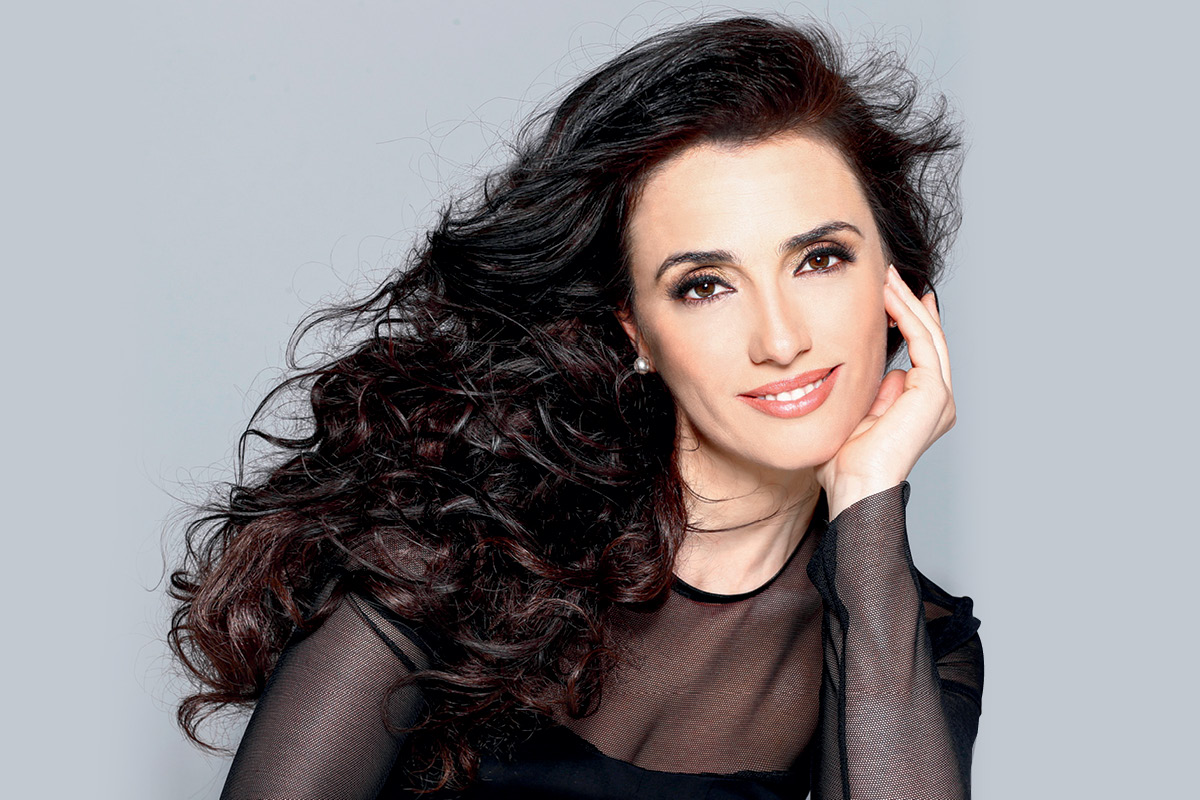 Ermonela Jaho. Photo © Fadil Berisha
As further proof of their stand-alone natures, each opera features a libretto by a different author: Felice Romani drew on two Italian plays to fashion Anna Bolena (1830), a 17-year-old Giuseppe Bardari adapted Schiller’s 1800 play for Maria Stuarda (1835), and Salvadore Cammarano drew on French literary sources for Roberto Devereux (1838).
Nor do these three operas represent Donizetti’s only foray into Tudor territory, pipped to the post by his little-heard Il castello di Kenilworth, composed in 1829 and marking the composer’s earliest exploration of the tempestuous love life of Elizabeth I.
Five centuries after their reign, modern audiences remain just as fascinated by the Tudors as ever. One need only consider Hilary Mantel’s Man Booker-winning novels Wolf Hall and Bring Up the Bodies, which inspect the court of Henry VIII through the eyes of the shadowy Thomas Cromwell. Having spawned similarly acclaimed adaptations for both television and stage, this extraordinary snowballing suggests our appetite for the Tudors is not only voracious but demonstratively unsated by just one medium (or three!).
Other significant treatments include the novels of Philippa Gregory, with her The Other Boleyn Girl adapted for film in 2008, and the bodice ripping Showtime series The Tudors, which ran for four seasons. Closer to home, playwright and actor Kate Mulvany adapted Schiller’s Mary Stuart for Sydney Theatre Company, the opening of which coincided with the 2018 film Mary Queen of Scots, starring Hollywood heavyweights Margot Robbie and Saoirse Ronan. And that’s not to forget Cate Blanchett’s memorable turns as Gloriana in Shekhar Kapur’s lavish Elizabeth (1998) and follow up Elizabeth: The Golden Age (2007).
If that incomplete list suggests a glut of material, rest assured that Italian audiences in the first half of the 19th century had to live through an even higher degree of Tudormania. Just like our current artists, composers of the day identified in the lives of the Tudors a heightened sense of drama perfect for the stage. Although Donizetti’s Trilogy remains the most significant example of how composers leapt to dramatise this turbulent brood, he was far from the only one.
The older Rossini had already explored Elizabeth’s love life in Elisabetta, regina d’Inghliterra (1815), while Carafa’s singularly named Elisabetta in Derbyshire (1818) focuses on the queen’s exploits in Fotheringhay. Her cousin Mary Stuart was not neglected either, given her obvious importance to Italians as a Catholic martyr. Before Donizetti’s full-blooded but luminous portrayal of the monarch came Mercadante’s Maria Stuarda, regina di Scozia (1821), which focuses on a young Mary’s conflicts with rebellious Scottish leaders. Other composers that tackled the Queen of Scots include Pasquale Sogner, in 1851, Carlo Coccia, in 1827, and Pacini, in 1843.

Just like today, the glamour and novelty of royalty was a significant attraction for composers and audiences of the first half of the 19th century. Not only were queens in scarce supply at the time in continental Europe, composers were all too aware that the Catholic-Protestant conflicts of the Tudor era were catnip for their largely Catholic audiences. And just as dystopian fiction experiences a boom in times of political turmoil, operas depicting the whims of rulers had obvious resonance for subjects of a divided Italy presided over by foreign powers. For it is how the personal inevitably shapes the political that these composers were most interested in. Donizetti shows us that in a world of absolute monarchs, statecraft is dictated by allegiances of the heart as much as dutiful considerations of the populace.
“Roberto Devereux – and Anna Bolena and Maria Stuarda – are not really about history,” writes critic Michael Shae. “Though they are based on historical figures and events, as operas they are more faithful to the conventions of the genre – in which characters torn by love, jealousy, revenge, and other outsized passions are created in great vocal outpourings – than to the history of Tudor England.”
Shae’s assessment is correct. Donizetti unashamedly wrings every bit of drama out of the three queens, he and his librettists throwing caution (and often fact) to the winds. Both Bolena and Stuarda culminate in the execution of their titular heroines, but not before the former essays a magnificent mad scene and the latter engages in a knock-down, drag-out verbal altercation with her cousin Elizabeth, labelling her a “vil bastarda” – no translation necessary. Devereux also sees its titular character sent to the block, with Elisabetta ordering Roberto’s death in a jealous rage, suspecting he has been unfaithful to her. It’s more than fair to say that these operas are ultimately concerned with affairs of the heart.
“Anna Bolena has a reality and a power that Anne Boleyn, tied down by truth, will never possess, just as Maria Stuarda has a tragic grandeur that Mary Queen of Scots could never quite achieve,” writes the author and historian Adrian Tinniswood. “In their different ways Anne and Anna are both products of the imagination; and in their different ways they both enrich our lives.”
“The result is melodrama,” Shae writes. “It is overwrought, even at times absurd, but so is most nineteenth-century Italian opera. It is also the occasion for some of Donizetti’s most powerful music, which is what makes Roberto Devereux, Anna Bolena, and Maria Stuarda worth reviving today.”
 Beverly Sills as Elisabetta in Roberto Devereux, 1975
Opera Australia is the latest company to undertake such a revival, presenting the trilogy over the next three years under the direction of Davide Livermore. Remarkably, it won’t be the first time that Australian audiences will have seen the works performed as a trilogy – the enterprising Melbourne Opera staged the Tudor Queens from 2015 to 2017, directed by Suzanne Chaundy. This time around audiences will be treated to productions using the large-scale LED screens OA unveiled in its digital staging of Aida last year, also directed by Livermore. And in a casting coup, the star Albanian soprano Ermonela Jaho is planning to take on all three queens, beginning with Anna Bolena this month. She follows in the illustrious footsteps of not only Beverly Sills, but the Turkish soprano Leyla Gencer, who had already sung all three queens in Europe before Sills, and more recently the American soprano Sondra Radvanovsky.
“It has always been a dream and desire for me to sing the Three Queens. Always, always, always,” Jaho emphasises. “When [Opera Australia Artistic Director] Lyndon Terracini spoke to me about returning to the company with this kind of repertoire, beginning with Bolena, I said ‘of course, let’s go!’ To have this sort of challenge is a dream come true. They are roles I really love because of the drama – maybe it’s the Mediterranean blood that Donizetti gives them, I don’t know.”
Although most audiences will know of Jaho as an experienced interpreter of verismo – her Butterfly and Suor Angelica are increasingly spoken of in hushed, reverent tones – she has form with the Queens. The soprano has appeared in staged productions of both Anna Bolena and Maria Stuarda, with Elisabetta in Devereux the only queen still evading her, something she hopes to rectify when she debuts the role with OA.
Each opera is a prime example of the bel canto tradition, meaning vocal fireworks are par for the course. But, as Jaho is quick to emphasise, there is more to each role than spectacular coloratura. “Technically speaking, it’s a complete challenge, and it’s always difficult from the first to the last note. Yes, there is coloratura and you have to demonstrate good bel canto style, but there is also a lot of heavy, dramatic singing you have to do. It’s not enough just to make beautiful sounds, you have to put the drama in all the notes. You also have to remember that you are dealing with real people, historical figures in fact, even though they are of course Donizetti’s version. One of the most challenging things is knowing how to deliver the recitative, which are so dramatic – that’s where the drama comes from. If it’s just beautiful coloratura then it’s not very interesting. Every time I sing I try to present a complete package, with technique and drama together.” It’s a sentiment unsurprising to those who saw Jaho’s fiercely committed Violetta in 2017 for OA, the occasion of her company debut.
 Maria Callas as Anna Bolena, 1957. Photo © Erio Piccagliani
Her first encounter with the Queens was a recording of Anna Bolena, with the Slovakian soprano Edita Gruberová in the title role. Jaho says she was stunned by the singer’s technical facility, marvelling at how a human being could sing with such speed and accuracy. But it was a live recording of Maria Callas’ Bolena, widely regarded as definitive, that made Jaho long to take on the opera.
“When I heard Callas sing it – I’m not saying it was like listening to a completely different opera – but I could suddenly feel all the drama, the pain, and the fight that was in this soul. It made me read about Anne Boleyn and learn about the story of this queen and see this tormented soul with so many sides, and I thought to myself I would love so much to sing this part and give her all these colours and really do justice to it.”
Another singer associated with the Donizetti Queens is Joan Sutherland, who performed and recorded both Anna Bolena and Maria Stuarda to acclaim. Jaho admits she is daunted to be bringing her own interpretations to a theatre bearing the diva’s name, labelling Callas and Sutherland her idols in the bel canto repertoire.
“When I was asked to do the Three Queens in Sydney, my first thought was ‘oh my God, how can I possibly do it in Sutherland’s country and theatre?’ But all I can do is do something that Ermonela feels, to give the audience my personality, to give something real and do it from my own heart. Always with these great roles there is this fear because of the legacy that these singers have left behind. They both made Bolena a special role, before it was really known to audiences at all.”
Jaho says that one of the greatest dramatic challenges of the role is the concluding 20-minute mad scene. Held in the Tower of London, Anna awaits her execution as she slips in and out of delirium, imagining it is her wedding day to the king. She is only shaken out of her delusions when she hears the king and his new bride, Jane Seymour (or Giovanna), acclaimed by the people, building to an aria of forgiveness, Coppia iniqua, that is musically anything but.
 Joan Sutherland as Maria Stuarda, 1977. Photo © Donald Southern
“It’s a moment of pure la pazzia [madness],” says Jaho. “She’s completely crazy because she realises that her life has come to an end. It’s tragic – she is going to be executed and it’s even more tragic because before this moment we saw a woman fighting for power and love but in the end, we understand even someone with as much status that she does can’t have everything in life. Somehow she must pay for everything she’s fought so hard for. In the end you see this human being, actually this young woman, who suffers just like everyone else. You see into her soul, and that’s what makes Donizetti’s queens so special. You never forget that underneath everything they are human.”
Another moment Jaho considers crucial in understanding the character of Anna is her climactic confrontation with Giovanna Seymour, who is tormented by her queen’s impending doom and her own love for Henry. Initially enraged to learn that her rival is in fact her lady-in-waiting, Anna forgives her in one of the opera’s most sublime moments, telling Giovanna it is Henry she ultimately holds accountable.
“The duet [Va infelice e teco reca] with Giovanna is so beautiful, it’s something unbelievable,” says Jaho. “In her forgiveness you see Anna’s beautiful heart and soul, because through Giovanna she realises that you can’t control your heart or who you choose to love, and it reminds her of the beginning of her own relationship with the king. Again, Donizetti shows us how human, how normal she is. I’ve sung this duet with different colleagues and every time it’s something so emotionally special. Donizetti writes the duet so that Anna and Giovanna are repeating the same notes and phrases to each other, to show that they share the same struggles. Their souls are in torment, but they find comfort in each other. It’s such a beautiful moment.”
Jaho sees in Bolena, as she does in Maria Stuarda and Roberto Devereux, Donizetti’s interest in the precariousness of these women’s lives, possessed as they are of a power unavailable to the majority of their gender. She points to the moment where Anna is arrested for adultery as the composer’s understanding of her relatively limited authority at court.
“You see in that moment how hard she has had to fight for her life, not just to be alive but to live happily. She is an ambitious woman who wants political power as well, and she is not only furious that she is being falsely accused of something, she’s also outraged that they would dare to treat her like that. That is why she repeats ‘giudici… ad Anna?’ so many times – she is saying ‘you dare to judge me?’ It is a moment where she tries to [assert] her own value, to stand up for herself.”
The soprano says that it is this fight that unites all three of Donizetti’s queens, describing them as different faces of the same woman battling for control and leadership. This sense of conflict, both interior and exterior, is key to her understanding of the queens, a dramatic challenge that she can’t wait to undertake, daunting as it is. “They fight like men, maybe even harder because they have to, and they don’t give up even in the end. Both Anna and Maria go to their deaths with a sense of hope, believing in their countries, and Elisabetta has the same attitude as she prepares to give up the throne. They all fight in different ways but ultimately it is the same struggle to lead.”
“The courage of these queens, that’s the example I want to follow. I’m never going to be them, but I’ll try and do my best to have a little of their strength.”
Opera Australia’s Anna Bolena plays in the Joan Sutherland Theatre, Sydney Opera House, July 2 – 26





Comments
Log in to start the conversation.