




Thanks to the recent controversies surrounding Adelaide Writers’ Week and Creative Australia’s Venice Biennale backflip, the relationships between our cultural institutions, their Boards and the public are being scrutinised more than ever before.
Writer, arts management professional and pianist Samuel Cairnduff has unpacked many of the issues for Limelight readers over the last year. In his new book, Harmonising Cultural Leadership in Professional Orchestras, he examines cultural leadership in the Australian orchestral scene and what needs to change to ensure it thrives in years to come.
Here, Cairnduff speaks to Limelight about the unique issues facing our orchestras and his hopes for their future.
What interests you about orchestral leadership, or arts leadership in general?
Orchestras are fascinating because they sit at this compelling intersection of tradition and transformation. They are custodians of centuries of repertoire, yet they are also expected to be innovative, relevant, and responsive to contemporary social expectations.
Australian orchestras occupy a particularly unique position. They navigate not only the Western classical tradition but also the opportunity to reflect the richness and deep continuity of First Nations culture, where music holds such profound significance. They also have the capacity to reflect the evolving diversity of Australian society. That tension between heritage and change is what drew me to study cultural leadership.

Sam Cairnduff. Photo supplied
When I returned to Australia from London in 2016 and worked at one of our state orchestras, I saw how orchestras grapple with issues of purpose, public value,and legitimacy that go far beyond programming or ticket sales. Those questions stayed with me and ultimately became the foundation of my doctoral research. I wanted to understand how cultural leadership actually happens in these complex organisations, not just how we talk about it in strategic plans.
But there’s a much bigger issue at stake here. We’re at a moment globally where the role of cultural institutions in society is being fundamentally questioned and redefined. When we see what’s happening in the United States with the Trump administration’s takeover of the Kennedy Center, or closer to home with controversies around institutional responses to social movements, it becomes clear that we need to have a critical conversation about the role of culture in our society.
The experiences that orchestras and cultural organisations provide are transformative. They create spaces where our diverse voices can come together, where we find language to express what words alone cannot capture. They help us imagine different futures and understand different perspectives. In a privileged, diverse society like ours, moving forward with all its complexity and possibility, our cultural institutions have a vital role in shaping who we are and who we might become. The question is whether those institutions have the courage and clarity to embrace that responsibility.
What are some of the key takeaways from your research?
The most significant finding is that cultural leadership is not about individuals. It is an institutional capability. We have become fixated on charismatic CEOs or visionary artistic directors, but real cultural leadership requires alignment across the entire organisation. It is about harmonising artistic purpose with social responsibility, and then determining how that is interpreted, translated, and expressed through all aspects of an orchestra’s activity, ensuring that what an orchestra says it values is reflected in how it operates, who it employs, what it programmes, and how it engages with communities.
The book develops what I call the Harmonising Purpose framework, which centres on three interconnected elements: purpose alignment, authentic social participation, and stakeholder value creation. My research revealed that when these elements are misaligned (when there is a disconnect between stated values and actual practice) organisations struggle with legitimacy and public trust. It actually comes back to a deep sense of empathy for the social context in which orchestras operate, and determining their role within that environment so they can create genuine value for their communities, rather than simply meeting transactional objectives.
Another critical insight is that many orchestras suffer from what I term ‘purpose uncertainty’. Despite their confidence in artistic excellence, there is a deeper ambivalence about their role in society. Are they cultural institutions serving a public good, or entertainment businesses competing for market share? That unresolved tension shapes everything from programming decisions to stakeholder relationships, and it often prevents genuine cultural leadership from emerging.
What became clear through the research is that neutrality is no longer viewed as impartiality but as equivocation. Contemporary cultural organisations are assessed not only by artistic outputs but according to values, civic engagement, and public accountability. The concert hall is no longer a refuge from politics but a site of public meaning. And that’s not a problem to be solved, it’s a reality to be embraced.
How do Australian orchestras compare to international orchestras in terms of leadership?
The challenges facing Australian orchestras are universal, both within Australia and internationally. The questions about purpose, relevance, and public value that emerged in my research are not unique to our orchestras. What differs is often how frankly these conversations happen and how much institutional courage exists to address them.
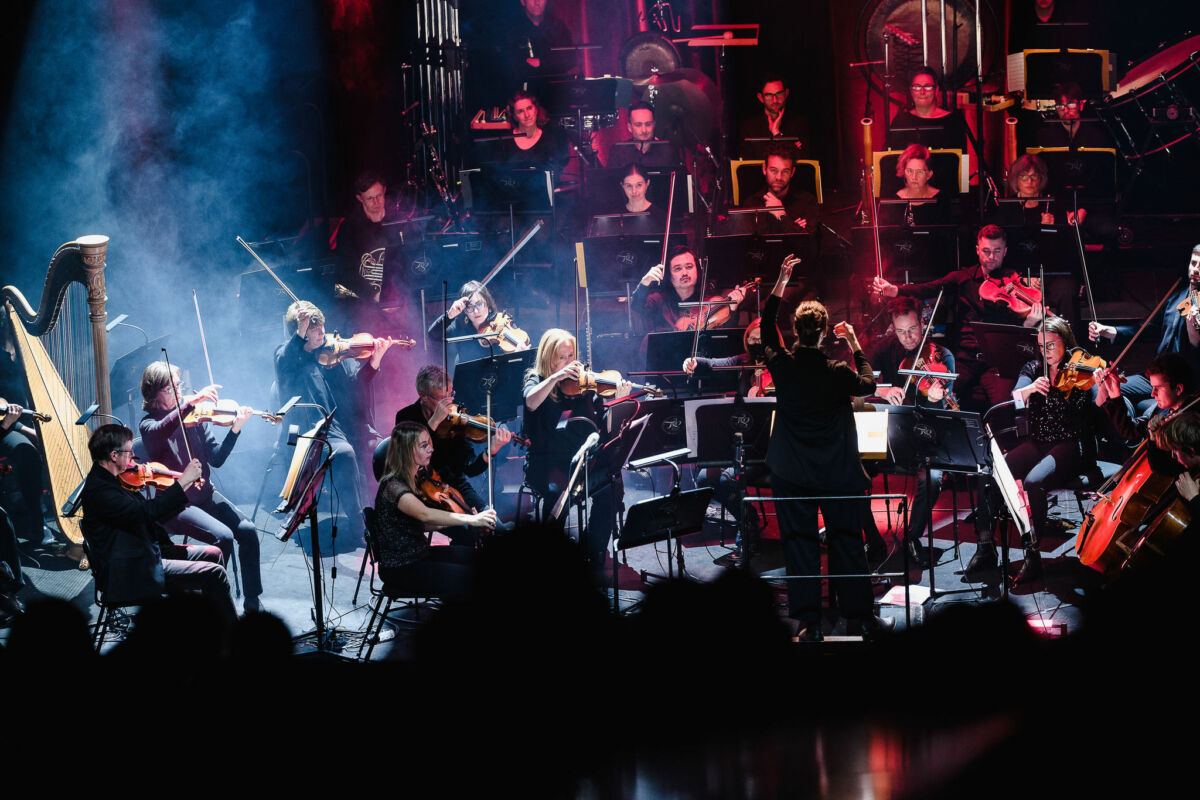
The Tasmanian Symphony Orchestra in Obscura III – Al(chem)y. Photo © Moss Geordi Halliday-Hall
Australian orchestras do face some distinctive contextual pressures. Our relatively small population base, geographic spread, and particular funding structures create challenges around sustainability and reach. There is also an important dynamic around Australian orchestras’ relationship to European cultural heritage versus contemporary Australian identity. These are questions about whose stories get told and who feels ownership of these institutions, particularly in relation to First Nations communities and culturally diverse audiences.
What struck me most in the research was the consistency of organisational patterns across different orchestras. Whether it was governance structures that inhibited artistic risk-taking, communication cultures that prioritised caution over candour, or stakeholder relationships built on transactional rather than participatory models, these patterns repeated across contexts.
The issues are not about individual organisations failing. They are systemic challenges that require sector-wide rethinking of what cultural leadership means and how it is practised.
Were there any surprises that came up while researching or writing?
The biggest surprise was the degree of self-awareness among the leaders I interviewed. These were thoughtful, committed people who could articulate the contradictions and tensions within their organisations with remarkable clarity. The problem was not a lack of insight. It was the structural and cultural barriers that prevented them from acting on that insight.
I was also struck by how often ‘cultural leadership’ was invoked in strategic documents and public discourse without any clear definition of what it meant. It had become a kind of aspirational slogan rather than a framework for action. Everyone agreed it was important, but no one could quite say what it entailed or how to achieve it.
The 2017 Marriage Equality plebiscite emerged as a genuine watershed moment. The Sydney Symphony Orchestra’s decision to remain neutral became a lightning rod for public condemnation, and the lasting impact was still evident when I conducted interviews five years later. One respondent told me that everyone within the organisation was horrified about how that was handled and that nobody wanted it to ever happen again. What was once seen as diplomatic restraint now appeared to undermine public trust and internal cohesion. That moment forced the sector to confront, perhaps for the first time in their nearly century-long histories, their responsibilities as value-bearing civic actors.
Another fascinating discovery was around stakeholder relationships. The research revealed that orchestras often operate with quite transactional models: audiences as ticket buyers, donors as revenue sources, governments as funders. But the moments when orchestras generated real cultural leadership were when these relationships became participatory and co-creative. The challenge is that participatory models require vulnerability and a willingness to share power, which many institutional structures actively resist.
How hopeful are you about the future of arts leadership in Australia?
I am cautiously optimistic, though my optimism is qualified by urgency. We are at a critical juncture where cultural institutions face enormous pressure to demonstrate relevance, accountability, and public value. The events of recent years (from pandemic disruptions to governance crises at major cultural organisations, from the Marriage Equality plebiscite to the Voice to Parliament referendum) have exposed fault lines that can no longer be ignored.
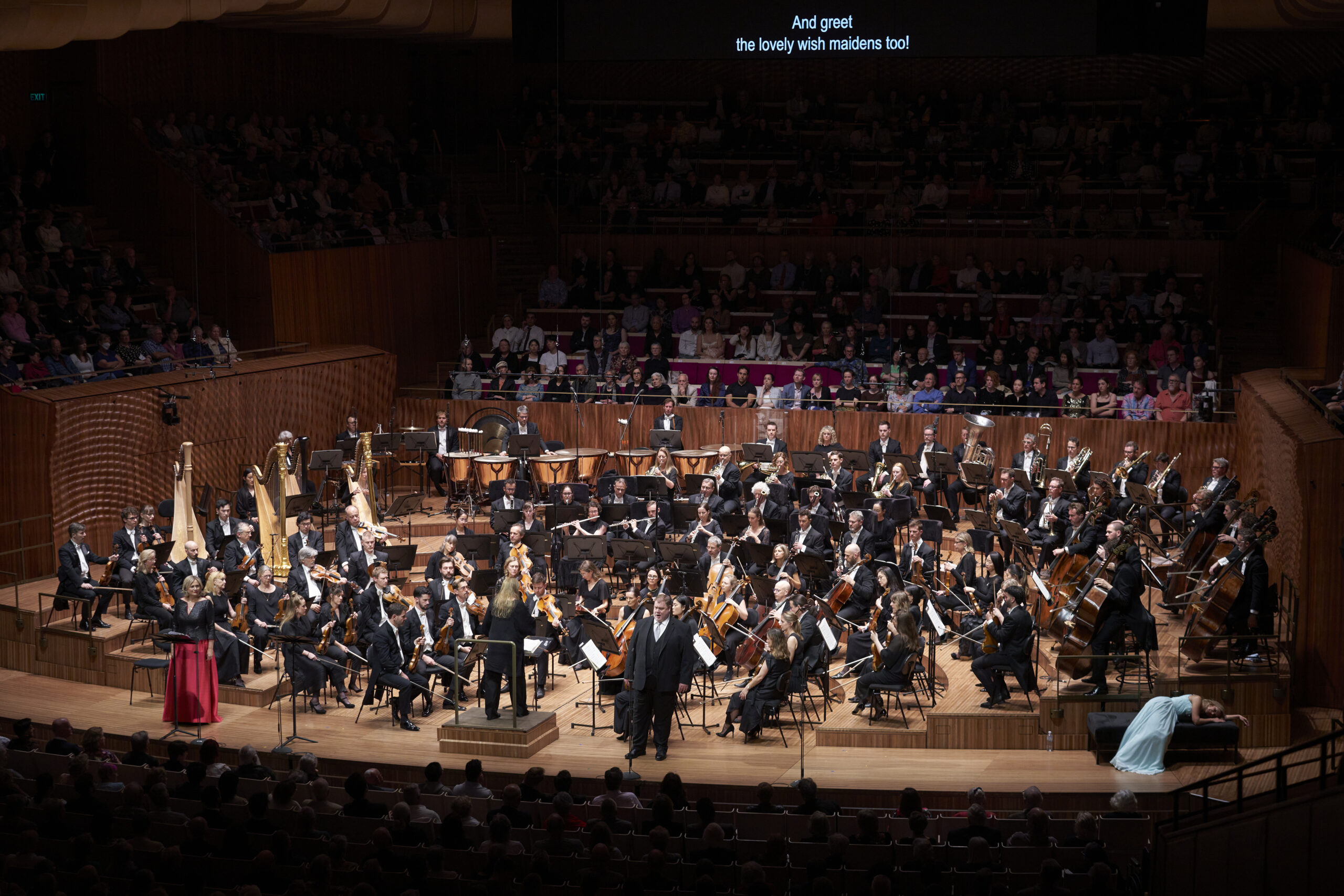
Simone Young conducts Die Walküre with the Sydney Symphony Orchestra. Photo © Jay Patel
What gives me hope is that the conversations are changing. There is less patience for empty rhetoric about cultural leadership and more demand for genuine institutional transformation. By the time of the Voice referendum, there was a changed posture among many orchestras. The question was not ‘should we say something’, but ‘what do we say, and how do we say it meaningfully?’
The next generation of arts leaders and practitioners is asking harder questions about equity, representation, governance and purpose. There is growing recognition that cultural institutions must be genuinely accountable to the communities they claim to serve. Through my podcast, Decoding Cultural Leadership, I’ve had the privilege of speaking with over 50 international cultural leaders, and what strikes me is the shared commitment to grappling with these questions honestly, even when they’re difficult.
But I remain concerned about the gap between aspiration and action. Transformation requires more than new strategic language. It requires structural change, investment in different kinds of expertise, and a willingness to challenge deeply embedded cultural and organisational assumptions.
And frankly, the stakes have never been higher. When we look at what’s happening globally, with political interference in cultural institutions and growing pressures to retreat into supposed neutrality, we need our cultural sector to step up. Our cultural ecosystem has a vital role to play in shaping who we are and who we want to become.
The book is both a critique and a call to action. We have the capacity to create cultural institutions that genuinely serve the public good, but only if we are willing to do the difficult work of aligning our artistic values with our organisational practices and social responsibilities. The future of arts leadership in Australia depends on whether we are prepared to make that commitment, and whether we understand that cultural leadership is practice, not performance.
Harmonising Cultural Leadership in Professional Orchestras is available on Booktopia.







Comments
Log in to start the conversation.