




Tasmania Promotion
Stephanie Eslake explains how Tasmania’s secluded, idyllic location has inspired a creative movement, making the remote island state an ideal place for music and arts lovers to visit.

When Marta Dusseldorp planned to move from Sydney to lutruwita/Tasmania, she had strong impressions of what her new home might feel like.
“Peaceful, serene, natural,” she recalls. “Isolated.”
But as the actor would discover, instead of fearing the isolation of life on Australia’s southern island, we lean into it. We drive through hours of wilderness, passing ancient forests and rocky capes, gazing in awe at the natural world that surrounds us.
Sometimes, we’ll arrive at a destination as picturesque as Bay of Fires, or sleepy as Strahan, and embrace the serenity. Other times, we’ll break the silence, swapping isolation for the warmth of community.
We visit towns at the end of the road that not only welcome us but put on a show for visitors and for themselves.
From boutique local chamber ensembles to internationally recognised music festivals, Tasmanians don’t discriminate; we love the arts, and we’re proud of our creative communities. Similarly, our artists are proud to invite visitors from across the world, whether they come to listen or play along.
Together, local artists and audiences are shattering the illusion that Tasmania is one of the best-kept secrets in the country. The quality of our art is no secret at all.
With her family’s 2018 move, Dusseldorp found new inspiration in her isolated surrounds and the rural communities that welcomed her. She founded Archipelago Productions with her husband Ben Winspear and co-produced the 2023 comedy-crime series Bay of Fires. Filmed on the west coast, it had a highly successful run on the ABC in the year of its release and has “sold all over the world”, says Dusseldorp.
When the stage and screen star later returned to the region, she bumped into pleasantly surprised tourists, who’d seen her in those towns on TV.
“I’m really excited that it’s encouraged people to visit these places that they might have overlooked if they’d just decided to drive through,” says Dusseldorp of Bay of Fires.
When I ask if she launched Archipelago Productions to fill a gap in the creative market, she is quick to say “no” before diving into a list of Tasmanian arts initiatives that most locals know and love, and that interstate guests travel to experience – Mona’s festivals, Ten Days on the Island, Festival of Voices, Tasmanian Theatre Company and puppet theatre Terrapin, to name a few.
Dusseldorp expresses a desire to collaborate with the Tasmanian Symphony Orchestra, which she describes as “one of the best symphony orchestras in the world”.
It’s a well-backed assessment of the award-winning orchestra. In 2020, Norway’s Eivind Aadland became Chief Conductor and Artistic Director of the TSO, having worked with major orchestras across Europe and Asia.
He tells Limelight, “In Tasmania, I think the musicians of the TSO are so committed to making good music and bringing that to the people. It is something really special, and I hope that this year, more people from all over Australia come to experience this unique and exceptional orchestra.”
It’s not just audiences who come for the experience. International and interstate performers join the TSO as celebrated guests throughout its seasons.
This year, conductor Benjamin Northey and percussionist Claire Edwardes (June), pianist Alexander Gavrylyuk (July), opera singer Joyce DiDonato (November), and cellist Daniel Müller-Schott (November) are among the big-name artists set to perform with the orchestra in nipaluna/Hobart’s Federation Concert Hall.
“A totally life-changing experience”
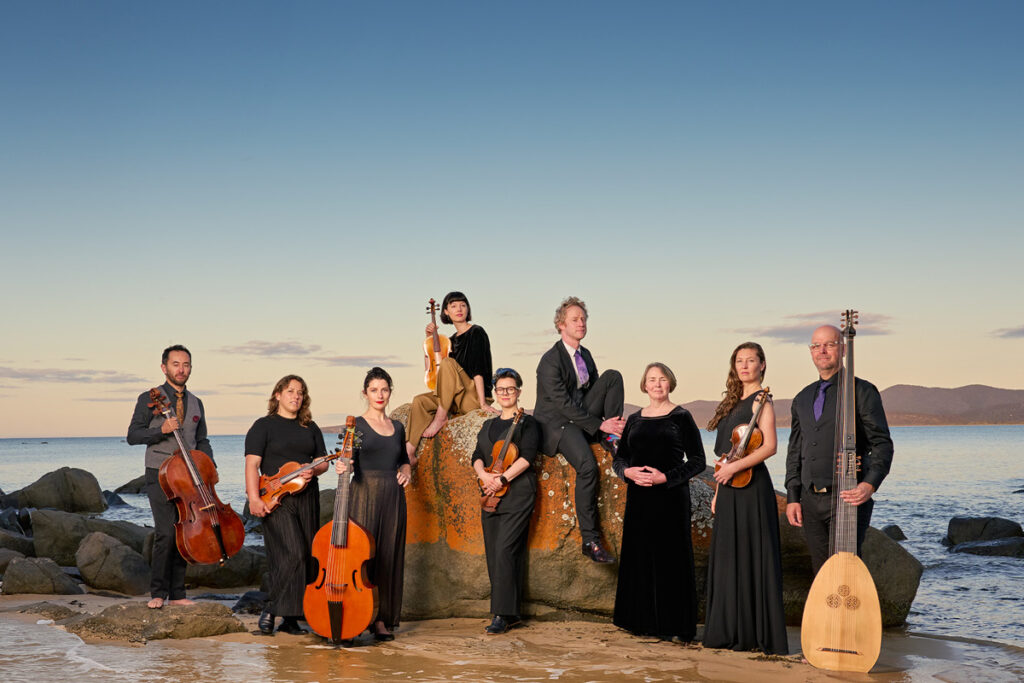
Australian violinist Julia Fredersdorff studied music in the Netherlands, spent about a decade living in Paris, and built a career performing with leading European ensembles. Back in Australia, she helped build major arts organisations and initiatives from the ground up, from the ARIA-nominated Latitude 37 to Ironwood and the Peninsula Summer Music Festival.
Like Dusseldorp, Fredersdorff made the move to Tasmania with a dream of raising her family in a more peaceful environment. She’d been living in Melbourne when she thought long and hard about “the quality of life that we could have in each of the places”.
In 2013, she made the choice – and promptly fell in love with the possibilities of her new island home.
At first, Fredersdorff wondered if her dreams would come at a cost. “It was a bit of a risk for me at that stage,” she says. She’d worked busily in Melbourne and Sydney and was conscious that her move might be “like walking away from everything – all of my work”.
Perhaps this is what drove her to work even harder after she arrived. In 2016, she founded Van Diemen’s Band. It’s since become a local institution known for its historically informed performances, which it shares with listeners from all rocky corners of the state.
The musicians of VDB have played as part of Mona’s festivals, Ten Days on the Island and Musica Viva’s touring program, in addition to the ensemble’s own successful concert series.
This year, VDB will headline the finale of the Tasmanian Chamber Music Festival. The concert is being touted as an early Baroque extravaganza featuring period brass and wind instruments and a six-piece vocal ensemble. The musical feast will be capped off with a three-course lunch at picturesque Home Hill Winery.
The most recent VDB event I attended (and like many Tasmanians, I’ve attended a few) was packed out with concertgoers. I squeezed into a seat at the back of the Hobart Town Hall for a Lunchbox Concert – a series featuring 35 short-and-sweet performances a year in venues spanning Hobart, Burnie and Launceston.
Fredersdorff says visitors to Tasmania will often go out of their way to attend. “They know if they’re coming this week, there’s probably going to be a Van Diemen’s Band concert on.”
The 2025 Lunchbox Concerts will include music from Scandinavia and Tasmania performed by VDB in string quartet formation (May), and renowned guests including pianist Stefan Cassomenos (April) and Ensemble Offspring (May).
The concert I attended last year featured Fredersdorff herself with Irish harpist Maria Cleary, who played VDB’s new German-crafted Zampieri triple harp. It has been nicknamed the “thylacine harp” – a charming homage to Tasmania, and to the crowdfunding community. More than 90 donors banded together to bring this $50,000 instrument to the state.
“I just feel like there’s still so much possibility here, and the audiences are so supportive. I really feel that they love the sense of ownership they have over their arts organisations here,” says Fredersdorff.
“I think that’s one of the biggest motivators for me, because every time we put on a concert, you sort of get the fuzzy feeling at the end when you see these happy faces.”
Fredersdorff recalls one regional tour in which a woman approached her “in tears, and hugged me and she said, ‘Oh my God, nobody ever comes here.’”
“It was a totally life-changing experience for me, and I thought, that’s it – that’s why we do this.”
When arts leaders like Fredersdorff send music through the regions, they are enriching the lives of people who live and travel beyond the state’s capital. Hobart does not hold a cultural monopoly; even the tiniest of towns benefit from touring acts.
One of her favourite places to perform is the Scottsdale Mechanics’ Institute Hall, a 19th-century building restored by the local community. She describes the “blood, sweat and tears” that went into the upkeep of this “most gorgeous hall . . . we love going there.”
She also names the Stanley Town Hall as having “one of the best acoustics in the state”. This led to her decision to perform and record music within its Art Deco-style walls.
In typical Tasmanian fashion, where everybody knows everybody, my own family was on the hall’s restoration committee.
“In Stanley, you can be on the stage, and it sounds glorious in the hall,” says Fredersdorff.
She shares a similar sentiment towards Hawley House on the shores of the Rubicon River, adding that in Tasmania, there are “not only great halls, but really lovely communities”.
An island with global recognition

While the TSO has in recent years focused on attracting new audiences through its multi-sensory Obscura concerts in Hobart’s Odeon Theatre, the orchestra has also found a loyal following through its own rural events. The popular Music at Woolmers series invites listeners to hear chamber music at a UNESCO World Heritage site in Longford, 31 kilometres south of Launceston.
This year, the TSO will perform across the state, including in Launceston for the 2025 Australian Musical Theatre Festival (21–25 May).
In Some Enchanted Evening, charismatic conductor Guy Noble leads the TSO through well-known hits by Andrew Lloyd Webber, Stephen Sondheim and Rodgers & Hammerstein. The concert will also feature this year’s headline performers Alinta Chidzey, Caroline O’Connor and Mark Vincent.
“The addition of the TSO takes the festival to new levels and is a pinnacle event in a program that encompasses five days, many venues [and] a range of engagements,” says AMTF Artistic Director Tyran Parke.
From boutique local chamber ensembles to internationally recognised music festivals, Tasmanians don’t discriminate; we love the arts, and we’re proud of our creative communities.
Parke believes Launceston’s heritage architecture, incredible natural scenery and exceptional food, wine and coffee make the city the ideal backdrop for music, art and theatre.
In fact, one of this year’s festival events, Food, Glorious Food, encourages audiences to explore local produce at the Harvest Market while listening to songs along the way.
The festival is one of the newer additions to Tasmania’s vibrant cultural sector and is fast establishing itself as a key player in the local events calendar. Parke says the AMTF program evolves each year to feature “new works and classic musicals reinterpreted in modern contexts and unusual spaces”.
Another example of the collaborative nature of Tasmania’s cultural scene is the new partnership between the TSO and Launceston Airport, which will help to fund the orchestra’s activities across northern Tasmania. This includes workshops and events in schools, community halls and aged care settings.
From live music to creative development

The TSO’s appearance in the AMTF program touches on the interconnected nature of Tasmania’s creative communities. Local musicians share common stages; audiences follow where they go.
Both the TSO and VDB have played in Mona’s festivals, and they will soon perform at Ten Days on the Island (21–30 March), with soprano Siobhan Stagg joining the TSO for Strauss’s Four Last Songs, while Van Diemen’s Fiddles (a VDB offshoot) plays a program dedicated to the myth of the siren.
The Tasmanian Chamber Music Festival (25 October – 2 November) will also feature VDB as well as TSO musicians including wife-and-husband duo Ji Won Kim (violin) and Caleb Wright (viola).
This year’s Festival of Voices (27 June – 6 July), which celebrates its 20th anniversary, will showcase the state’s rich musical talent. A key part of Tasmania’s winter cultural season, it typically attracts 30,000 people during the festival period. While local and interstate audiences are again likely to flock to its headline events, one of the major drawcards in 2025 is a series of FoV workshops – positioning Tasmania as a prime location not only for live music but for professional and creative development.
The FoV program provides educational opportunities to singers looking to learn more about their craft, yet it also unites members of the community who may never have sung before.
For instance, people with choir experience can take part in Adam Majsay’s Music Theatre Choir Workshop, although the event listing also welcomes participants who are more familiar with belting out a tune “with friends, in the shower, or the car”.
In FoV’s Classical Choral Workshop, participants will rehearse alongside professional choristers and give a performance of Verdi’s Requiem with the TSO Chorus, while UK conductor David Lawrence joins FoV for the sixth time.
On a more intimate scale, US choral expert Christopher Kiver will deliver a Chamber Choir Workshop for a smaller group of voices that culminates in a concert, while choir leaders and conductors can delve into contemporary techniques in a Choral Professional Development Day with interstate educators, including Joshua Clifford, Annie Kwok and Mark O’Leary.
Music to match every taste

While Festival of Voices caters for broad musical tastes, the Tasmanian Chamber Music Festival draws audiences keen to combine classical music with the island state’s famous food and wine.
Now in its ninth year, the TCMF begins with a prelude weekend of events including a concert in historic St Luke’s Anglican Church in Richmond. A lunch at the Richmond Town Hall for all festival-goers will highlight local produce, including the wines for which the Coal River Valley region is renowned.
The following weekend, a series of keynote events will be held in central Hobart at the Ian Potter Recital Hall (part of the University of Tasmania’s creative arts precinct) and St George’s Church in Battery Point.
As well as TSO and VDB musicians, artists include the Australian String Quartet, pianists Aura Go and Ian Munro, and the Australian Chamber Orchestra’s Principal Cellist Timo-Veikko Valve and Principal Violist Stefanie Farrands.
The festival’s tickets tend to sell out rapidly each year. Asked about this, Festival Director Stephen Block says, “I think it’s the intensity of these shared experiences that draws repeat visitors each year. We find that people are keen to hear new ensembles, visit new venues and renew friendships forged at previous festivals.”
More than our rugged coastlines
Tourism Tasmania’s strategy for appealing to interstate travellers has been to “come down for air,” as the campaign slogan reads. And last year, 1.3 million people did exactly that, with more than half of those visitors arriving for the main purpose of enjoying a breezy holiday, according to Tourism Tasmania’s Tasmanian Visitor Survey (year to September 2024).
Yes, our air is among the cleanest on Earth. If you attend a concert in the Stanley Town Hall, you can drive west for an hour afterwards to catch a breath of the purest winds sweeping over the Kennaook/Cape Grim coastline.
But as rugged and isolated as our landscape may be, locals like Dusseldorp and Fredersdorff know Tasmania is more than a remote getaway. It flourishes with the lively thrum of music, which fills our halls from cliff to countryside.
As Dusseldorp says, Tasmania is a “hotbed of authentic exploration and investigation into some of the best ideas in Australia”.
It’s our stillness that “allows creatives and artists to really think quite deeply, and I think that resonates in the work that you see down here,” she adds.
“It can really take your breath away.”
More information can be found at the following websites: the Australian Musical Theatre Festival, amtf.org.au; Festival of Voices, festivalofvoices.com; the Tasmanian Chamber Music Festival, taschamberfestival.com.au; the Tasmanian Symphony Orchestra, tso.com.au; Ten Days on the Island, tendays.org.au; and Van Diemen’s Band, vandiemensband.com.au.





Comments
Log in to start the conversation.