




The alemba had its beginnings when I was a postgraduate student in the mid-Seventies at the Cologne University of Music (Musikhochschule). My teacher was Mauricio Kagel. A sculptor, Helfried Hagenberg, had rocked up to him and said “Hey, I’ve got 27 triangles. Are you interested?”
Well, no, he wasn’t. It was something that he very easily passed on to me, and I was interested. Only one of them actually looked like a triangle, but all behaved like one.
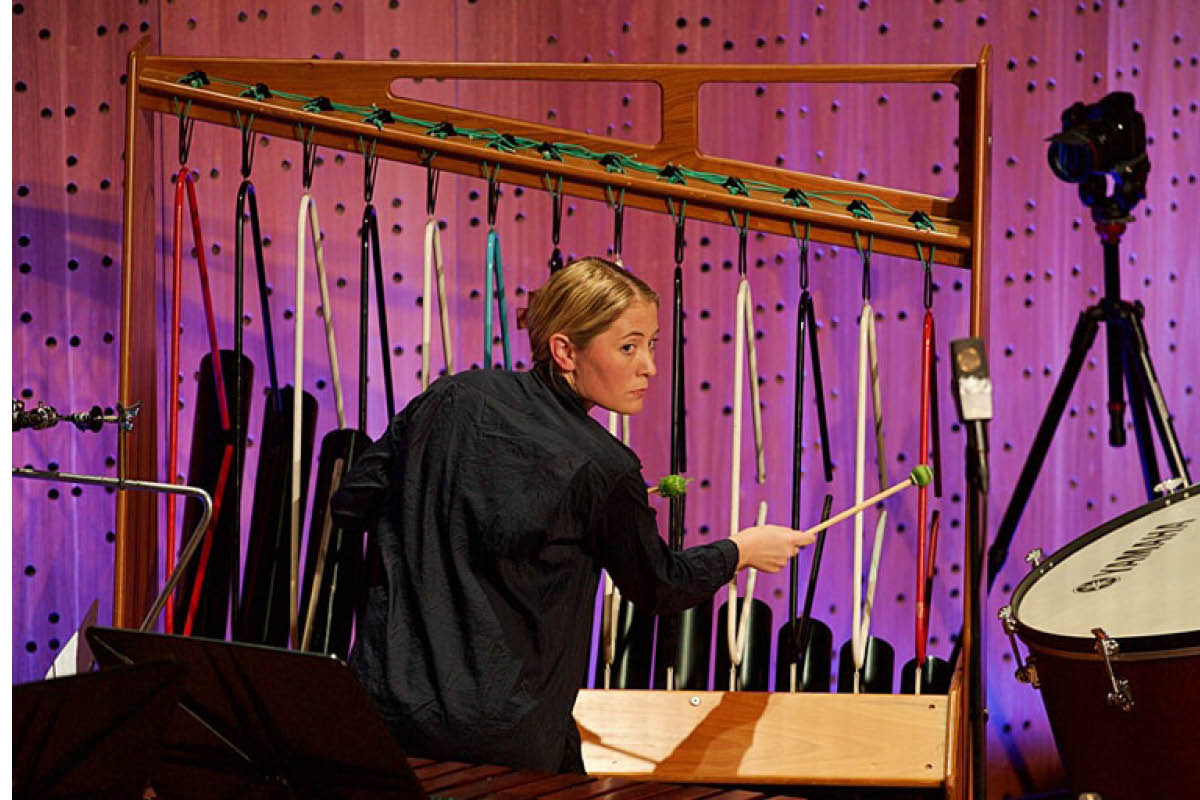
Rebecca Lloyd-Jones playing the alemba for Moya Henderson’s Alanbiq. Photo © Jared Underwood
They were beautiful and shiny. It was a wonderful-looking setup, but it turned out not to be much of an instrument because of the lack of variety of sounds. Each triangle was the same length, so they produced virtually the same note.
I began hitting them with anything and everything. I started using the bottom half of plastic mineral water bottles. They acted as resonators, and that intrigued me mightily.
When I came across this beautiful, single, pure identifiable sound of the triangle, I was hooked. I knew there was another whole side to the triangle that no one had exploited, and I wanted...
Continue reading
Get unlimited digital access from $4 per month
Already a subscriber?
Log in





Comments
Log in to start the conversation.