




This week, 100 works by 100 women composers will be performed in Perth, Western Australia.
Hear Her Now, organised by the Mirabilis Collective, spans centuries of musical history, from early repertoire to new Australian commissions. Its scale makes the increasingly familiar description of music created by women sound rather odd: ‘rediscovered’.
Classical music has become a master of rediscovery. Composers emerge from archives; forgotten scores receive modern premieres; recordings promise to restore neglected voices to history. This work matters. As a music historian, I spend much of my time among manuscripts, letters and music that has fallen out of the repertoire.
But ‘rediscovery’ must have an expiry date.
If we find a composer’s music, perform it once, mark the occasion and return it to the archive, we have not changed the repertoire. We have only created an event.
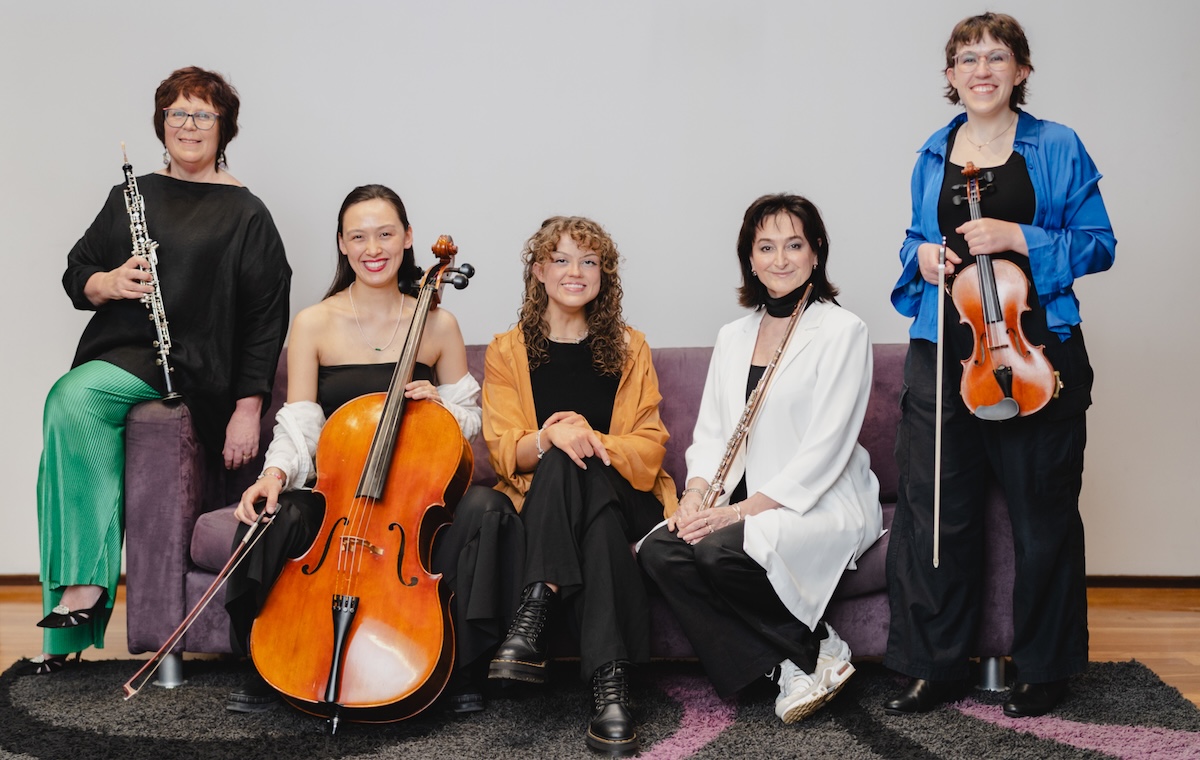
Mirabilis Collective. Photo © Tallulah Chong Photography
The musical canon was formed through repetition. Works were performed, published, taught, discussed and performed again. Generations of musicians encountered them during their training and passed them on. Audiences learnt to recognise them. Familiarity gradually took on the appearance of inevitability. If repetition created the canon, it is also necessary to change it. But simply asking performers to play different music overlooks how complicated that process is.
Consider an orchestra programming Mahler. At this year’s BBC Proms, audiences could hear Das Lied von der Erde, while the Metropolitan Opera Orchestra performed his Rückert-Lieder and Fourth Symphony. Mahler comes with more than a century of infrastructure: readily available editions and parts, recordings, scholarship, performance traditions, musicians who know the works and audiences who know what the name ‘Mahler’ promises.
That matters economically too. Concert organisers have halls to fill and musicians to pay. They cannot ignore whether audiences will buy tickets simply because another work deserves greater historical recognition.
A rediscovered composer presents the opposite problem. Someone may first have to locate a manuscript, transcribe it, compare surviving sources, make editorial decisions, prepare a performable score and parts, publish or digitise them, catalogue the work and perhaps record it. This can take years, and it requires an entire community.
I encountered this problem in my research into the 19th-century Russian princess, salonnière and composer Zinaida Volkonskaya.
Her opera Giovanna d’Arco was staged in Rome in 1821, but studying her musical world two centuries later means following materials that have travelled extraordinary distances. Harvard’s Houghton Library now houses an extensive collection of her musical manuscripts, including material from Giovanna d’Arco and scores from which Volkonskaya and her circle performed. Their survival is remarkable. But survival is not the same as accessibility.
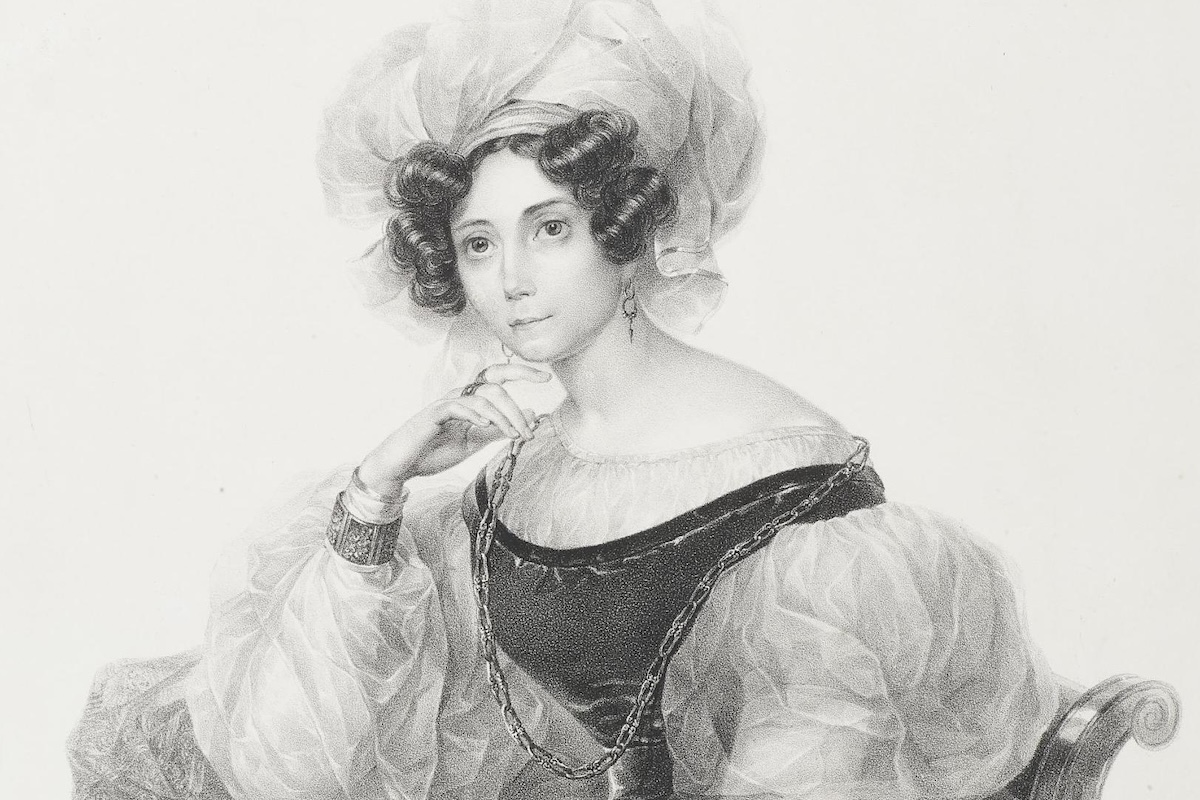
Zinaida Volkonskaya by P.I. Razumikhin (after K. Brullov, circa 1835-9)
A manuscript in an archive is accessible to a researcher who knows where to find it. It is not necessarily accessible to a pianist choosing next season’s recital programme or a teacher looking for something for Tuesday afternoon’s lesson. And even after the research is done, why should that pianist learn Volkonskaya? ‘Because she is a forgotten woman composer’ cannot be the answer forever.
Revival gives a work the opportunity to compete for our attention; it does not guarantee the outcome. Some forgotten music will prove captivating, offering an unusual sound world, a technical challenge or a different way of understanding the culture surrounding composers we already know. Some forgotten works, by women or men, may simply not merit repeated performance. Recovery should give musicians a genuine opportunity to choose music that historical circumstances previously made difficult to choose.
That process begins surprisingly early. Examination boards and teachers wield enormous, often underestimated influence over repertoire. ABRSM acknowledges that its syllabuses depend upon published music. Its 2026 Repertoire Diversity Report states that women account for 14 per cent of composers across its syllabuses, rising to at least 20 per cent in Practical and Performance Grade piano, bowed strings and harp lists.
A young pianist does not usually encounter a composer because they have decided to investigate canon formation. A teacher puts several pieces on the music stand and asks which one they would like to learn. They hear another student perform one or discover it in a music library. Years later, they may teach it themselves. The canon is being formed, almost imperceptibly, in the classroom.
This is what makes Hear Her Now more interesting than its headline figure of 100 works. Its program extends beyond professional concerts to UWA Conservatorium students, community musicians, educational activities, repertoire from the AMEB syllabus, new commissions and recordings.
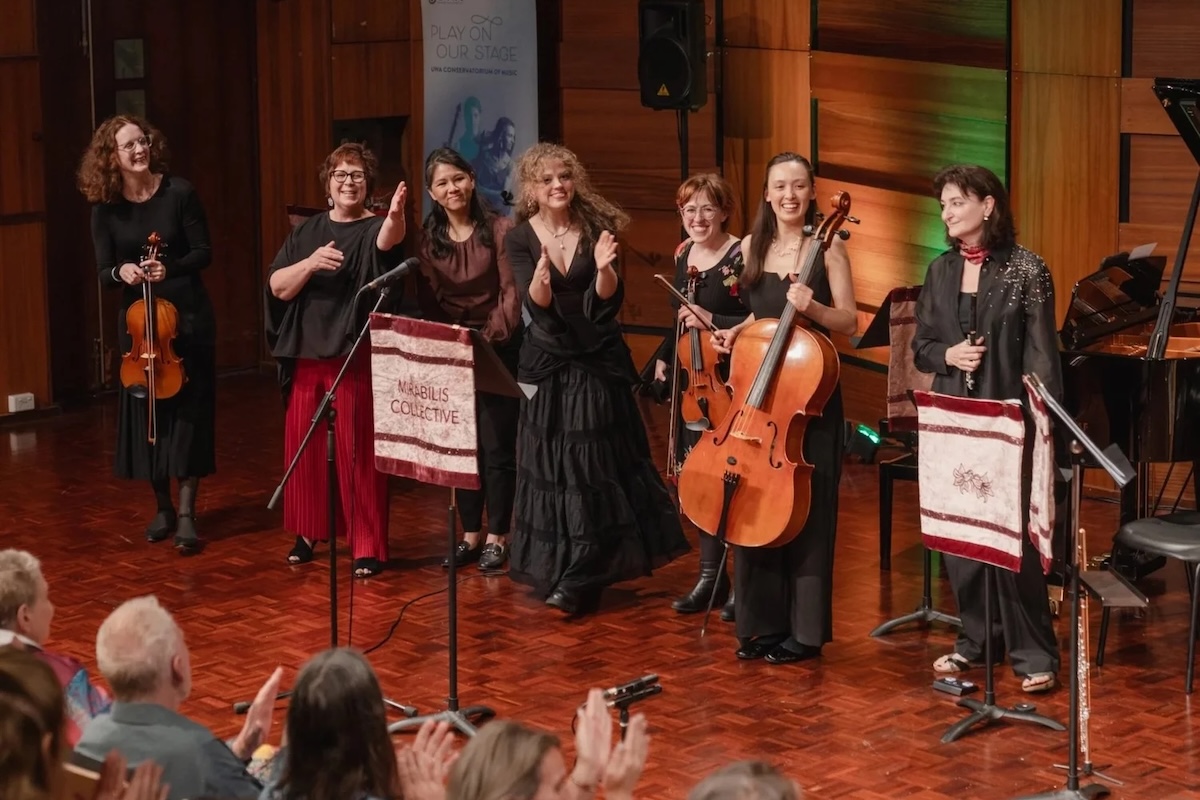
Mirabilis Collective. Photo © Tallulah Chong Photography
Mirabilis Artistic Director Stephanie Nicholls has written that the difficulty in programming the festival was not finding enough music by women: she found more than she could include. The harder task was choosing from it. The music exists.
The greater challenge is building the channels through which it can circulate. My research into 19th-century salons repeatedly brings me back to the same conclusion. Music travelled because people carried it: performers played it, teachers passed it to pupils, publishers printed it and travellers carried scores between countries. Listeners heard something they liked and wanted to hear it again.
The modern chain is different, but just as dependent on people. A scholar finds a manuscript. An editor makes it playable. A publisher makes it obtainable. A library makes it discoverable. A performer learns it. A recording lets others hear it. A teacher gives it to a student. An examination board puts it on a syllabus. A programmer puts it before an audience. Someone buys a ticket. Then, crucially, somebody performs it again.
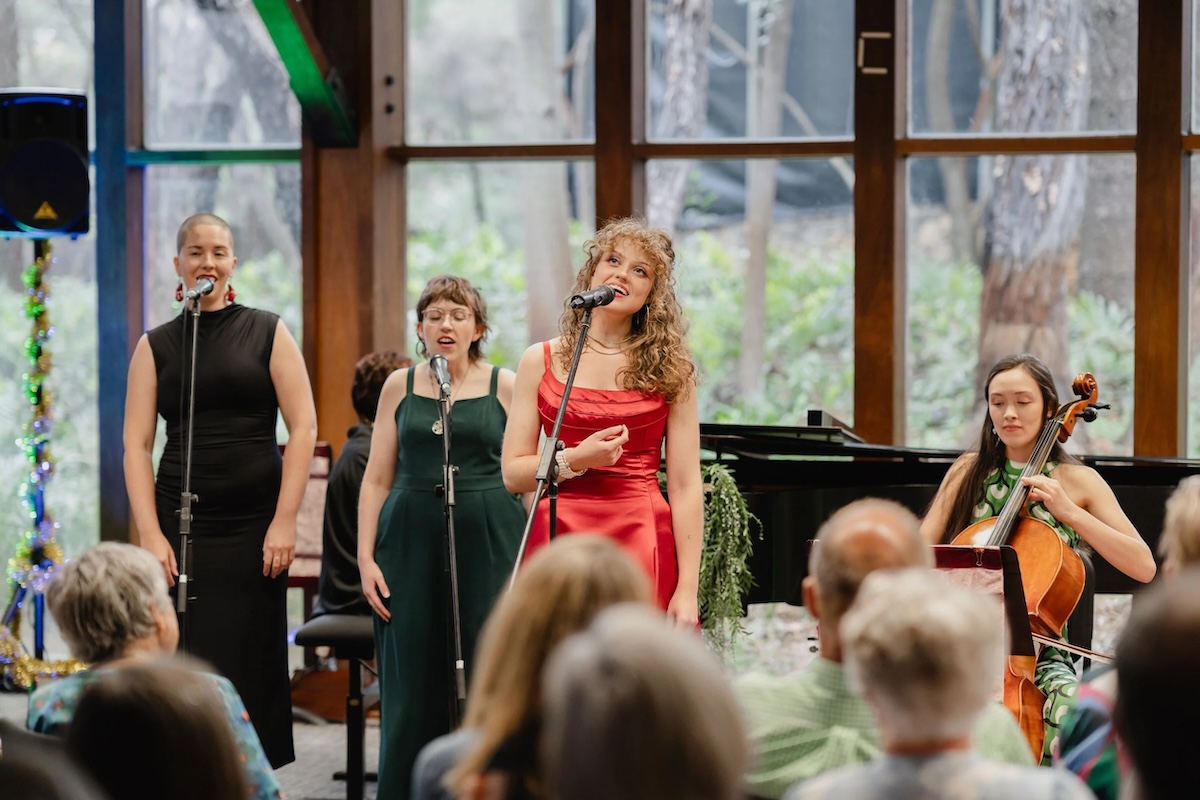
Mirabilis Collective. Photo © Tallulah Chong Photography
No musician can do all of this alone. So instead of continually asking performers why they are not changing the canon, perhaps we should also ask whether we have created a musical ecosystem in which changing it is practically possible. That is why festivals such as Hear Her Now matter.
But the most telling measure of this festival may come afterwards.
After 100 works have been performed, which one receives performance number 101?
Which will be taught to a student?
Which recording will send another musician looking for the score?
Which will appear beside Mahler five years from now without requiring a paragraph explaining why its composer matters?
There will always be music worth recovering from archives. But the ambition cannot be permanent residence in the category of ‘rediscovered women composers’.
At some point, recovery must become familiarity. Rediscovery is an act. Repertoire is a habit. And sustaining that habit requires an entire musical community.
Hear Her Now Festival takes place at venues across Perth. For more information and bookings, visit this link.
Stacy Olive Jarvis is a PhD candidate in Musicology at the University of Birmingham. Her research explores the origins of the piano nocturne, focusing on the Irish composer John Field and the musical culture of 19th-century Europe.








Comments
Log in to start the conversation.