Independent music organisation Lazy Thinking has announced that it will shut its doors this month after being evicted from its Dulwich Hill home by the venue’s landlord. It will host its last gig on 29 August.
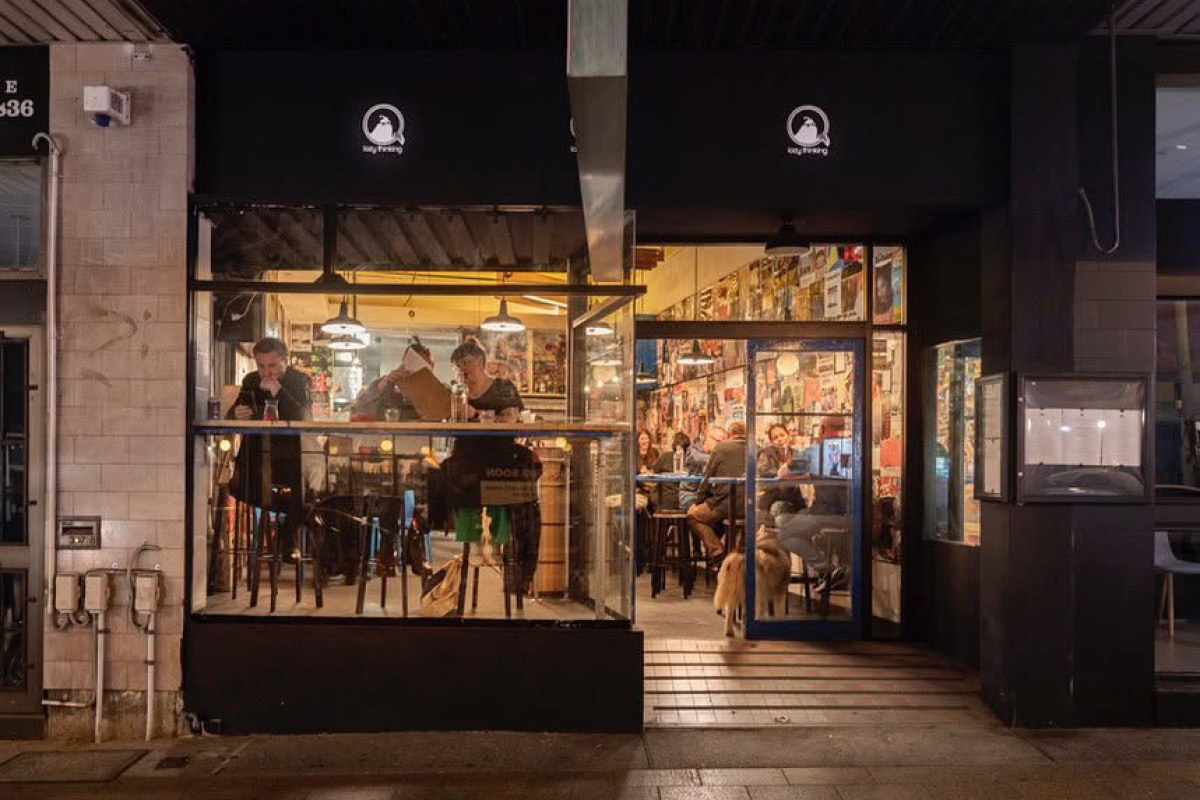
Lazy Thinking. Photo courtesy of Lazy Thinking
Run by founder Jim Flanagan, Lazy Thinking is an intimate space with a unique presence in the Australian musical landscape. Operating as a non-for-profit organisation, Lazy Thinking runs on an artist-first ethos – no venue hire fees regardless of ticket sales and no turning away audience members due to lack of ticket funds.
“The venue loses money every month it’s open. That’s never changed. We keep the doors open via a handful of extraordinary donors, the occasional government grant, one-off donations and, increasingly, our members. Every month we’re open means another month of fundraising to cover those losses,” wrote a Lazy Thinking spokesperson in an Instagram post.
“Three years of doing that is pretty tiring, has taken a toll, and we’d rather spend the next four months building something than subsidising a building we already know we’re going to lose. So it goes.”
Operating from an old butcher’s shop on New Canterbury Road since July 2023, Lazy Thinking has hosted more than 850 shows and offers a collection of initiatives for local artists both established and emerging.
It runs a record label and a year-long artist residency program which offers accommodation, access to studio equipment, a weekly $300 stipend and resident performance slots, amongst other opportunities (its current resident artist is neo-instrumental three-piece jetrio).
The organisation also offers a sync arm for early-career artists, to assist in bringing their music to the screen, and was “two weeks off” launching a new education and training program before the eviction.
This news comes weeks after Lazy Thinking announced a pivot to a new funding model, introducing two different tiers of monthly memberships. A novel approach for a Sydney venue, the initiative aims to address what Flanagan identifies as a failing traditional model which has resulted in a string of music venue closures in recent months.

Lazy Thinking. Photo supplied
“[Lazy Thinking] was never going to work commercially. The live music industry still largely survives off a very old, simple social contract that sees artists taking most or all of the door, while venues survive by selling beer and chardonnay. People are generally drinking significantly less than they once did, while younger audiences increasingly have substantially less disposable income than previous generations,” Flanagan wrote.
“The smaller the venue, the more acute that reality becomes. Running a small music venue in the early mid 2020s cannot work as a commercial enterprise if the old world model is applied.”
A post on the venue’s site notes that between 1 February – 30 May, the venue brought in $89,000 in revenue, while operating costs sat at $133,000. The remainder is met by donations, grants and fundraising campaigns.
After taking “a tiny breather”, Lazy Thinking will look for a new permanent home that will be able to sustain it on its new funding model and “reflects the way we now live and socialise”.
“This is life. We remain eternally optimistic about the future, both of Lazy Thinking and the local industry, despite the extreme challenges the latter faces.”
Last week, The Moshpit, Erskineville’s small heavy music haven, also announced that it would close in November as a result of declining sales and rising costs.

Circular Quay venue Mary’s Underground, which announced its closure in June. Photo courtesy of Mary’s
It follows a worrying trend of Sydney music institutions forced to shut up shop due to financial pressure – dips in bar sales and climbing rent, transport and insurance costs. Circular Quay icon Mary’s Underground announced its closure in June; rehearsal space Zen Studios, established in 1990, shut its Tempe premises in May.
Prominent Aussie festivals including Splendour in the Grass, Byron Bay Bluesfest and MONA FOMA have also been forced to end or press pause indefinitely due to rising operating costs. In 2024, APRA AMCOS reported that 1,300 live music venues were lost due to pandemic-related closures.
While programs like the Federal Government’s Revive Live offer support for live music venues and festivals, a new report released by A New Approach (ANA) found that government spending on arts and culture hit an all-time low in 2023–24, with more recent government reports suggesting a further decline since then.
Music Australia’s recent The Bass Line report found that while audience attendance is growing at festivals and dedicated music venues, it’s falling in pubs and clubs. Ticket costs are the biggest barrier to entry for Aussie punters, who are also prioritising seeing international artists over local ones.
More about Lazy Thinking can be found here. Information about supporting the organisation can be found here.

Comments
Log in to start the conversation.