Season Preview: Your guide to the arts in 2027

The Sydney Symphony Orchestra will mark its 95th anniversary in 2027 with a season that places some of the great monuments of the orchestral repertoire alongside major new Australian works.

Designed to span “centuries of music”, from the Classical masters and Romantic symphonic tradition to contemporary composers, Chief Conductor Simone Young’s sixth season opens with Mahler’s Seventh Symphony, includes a two-week Beethoven festival airing all nine symphonies in chronological order, and concludes with Young conducting Richard Strauss’s Salome in concert.

At the centre of the season’s commitment to Australian music is the world premiere of Ross Edwards’s Seventh Symphony, commissioned by the Sydney Symphony and developed in close collaboration with Young.

The season will also feature Australian premieres by US composer John Adams, Australian Alex Turley and Finland’s Lauri Porra, electric bassist, composer and great-grandson of Sibelius.

A year of Mahler, beginning with the Seventh
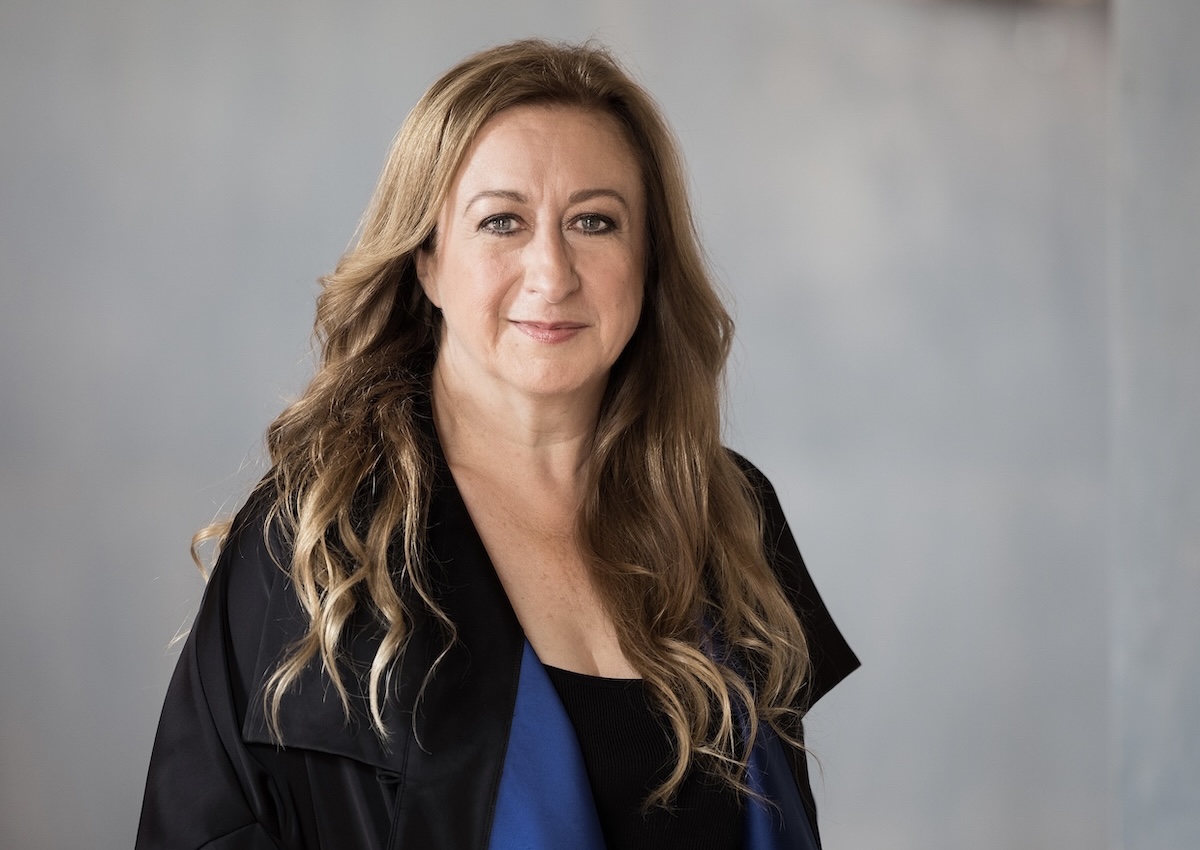
Simone Young. Portrait supplied.

A wave of the “magic Mahler wand” (Limelight) has become customary during Young’s tenure. 2027 builds on the tradition with a season-opening Mahler Seven, performed from 17–20 February.

For Young, the choice is both personal and musical. Describing the work as “endlessly surprising”, she has spent considerable time revisiting its complex architecture ahead of the Sydney performances.

“Of all the symphonies, I think Mahler Seven is the most complex,” she says. “It is enormous. The opening is revolutionary, the orchestral writing is vast. It’s one of those symphonies that simply lives with a conductor.”

Young recently performed the work with the Polish National Radio Symphony Orchestra in Katowice, an engagement that gave her the opportunity to restudy the Seventh “from the ground up” ahead of the Sydney concerts.

Unlike several of the other programs in the season, Mahler Seven will stand alone, apart from an expanded Acknowledgement of Country by composer Adam Manning.

“It’s such an immense journey that it deserves to stand alone,” Young says.

The performance continues an unusually concentrated engagement with Mahler by the orchestra. By the end of 2027, Young will have conducted Symphonies Nos 1, 2, 3, 5, 6 and 7 with the Sydney Symphony, bringing the orchestra close to completing the cycle.

Young says Mahler is now “part of the orchestra’s DNA”, following the Sydney Symphony’s earlier complete cycle under Vladimir Ashkenazy.

Beethoven in concentrated form

Simone Young conducting the Sydney Symphony Orchestra, 2026. Photo © Ken Leanfore

The season’s other major historical project comes in June, when Young leads a two-week Beethoven Festival presenting all nine symphonies between 16 and 26 June.

Rather than scattering the symphonies across the season, the Sydney Symphony will perform them in chronological order, allowing audiences to hear Beethoven’s development as a composer in a concentrated period.

Young believes that sequence is crucial.

“Usually it’s No. 2 with No. 7, then something else. We’re doing them in order because I think it’s fascinating – for me, for the musicians and therefore for the audience – to experience Beethoven’s development,” she says.

The festival marks 200 years since Beethoven’s death and as well as the nine symphonies, the program incorporates the two Romances for violin and orchestra and Missa solemnis, offering a broader portrait of the composer.

For Young, the project has a personal motivation. The Beethoven anniversary planned for 2020 was effectively lost to the COVID-19 pandemic, when projects including her first Missa solemnis in Paris and performances of the Ninth Symphony in Japan disappeared overnight.

“So I thought: right, 2027,” she says. “There won’t be another Beethoven anniversary for quite some time. I probably won’t be alive for the next one. It’s time to do it.”

The Beethoven programs are also characteristic of the broader approach to programming Young describes for 2027: familiar works are placed alongside less frequently performed repertoire and new responses to the canon.

Dutch composer Jens Joneleit’s Symphony No. 10, for example, responds to Beethoven’s unfinished and fragementary Tenth Symphony without attempting to imitate him, while Joneleit’s Memoria draws on Beethoven’s sketches and late string quartets.

“The whole season has been carefully thought through,” Young says. “Everything connects. It’s happening with a real sense of purpose.”

From Wagner to Strauss

Simone Yojng and the Sydney Symphony Orchestra. Photo © Jay Patel

If the Ring Cycle was the defining operatic project of Young’s earlier Sydney tenure, 2027 turns to Strauss.

The Sydney Symphony will present Salome in concert on 12 and 13 November, with Young conducting a cast led by Irish soprano Shané Campbell Wallace. Gerhard Siegel and Wolfgang Koch, both of whom appeared in the orchestra’s Siegfried, return, alongside Jonathan Lemalu, Warwick Fyfe and Deborah Humble.

For Young, Salome represents a natural continuation of the orchestra’s Wagnerian journey.

“We’ve travelled that road,” she says of suggestions that the orchestra might continue with Tristan und Isolde or Parsifal. “Salome is like a perfectly cut jewel.”

A concertante staging will also give Sydney audiences the opportunity to focus on Strauss’s original orchestration. Young believes the city has never experienced the work with the very considerable forces specified by the composer.

“The orchestra itself becomes part of the spectacle in a concert performance,” she says.

“You won’t need anything else. “You’ll suddenly notice the astonishing solo writing for the strings, the oboe, cor anglais, flute, harp, celesta…”

A new symphony for Australia

Ross Edwards. Photo © Keith Saunders

One of the season’s most significant events arrives in November, when the Sydney Symphony premieres Ross Edwards’s Seventh Symphony.

The work has a particularly strong connection with Young. Edwards taught her composition at the Sydney Conservatorium in 1979 and has written extensively for the orchestra, including the Oboe Concerto premiered with Diana Doherty.

Young says the idea for another Edwards symphony emerged after the composer’s 80th birthday, when he told her he thought he had “one last symphony” in him.

“How could you not respond to that?” she says.

The Sydney Symphony’s commission represents a substantial investment in a new Australian symphonic work at a time when commissions are often shorter orchestral pieces.

“For a composer of Ross’s experience and stature to say, ‘I want to write another symphony for this orchestra,’ is extraordinary,” Young says. “That’s a legacy. It’s something that will remain in the Australian repertoire for generations.”

Young also hopes to take the work overseas, continuing her advocacy for Australian composers with international orchestras.

New faces and familiar friends

Gautier Capuçon, Dalia Stasevska and Kirill Gerstein. Portraits supplied

The season brings a substantial roster of international artists to Sydney.

Víkingur Ólafsson returns for John Adams’s After the Fall, receiving its Australian premiere in March (17–19), paired with Bruckner’s Symphony No. 6 (Lawrence Renes conducts).

Gautier Capuçon comes back to the Sydney Opera House for the first time in a decade to perform Dvořák’s Cello Concerto (25–28 February), with Young at the podium.

Canada’s James Ehnes returns for Sibelius’s Violin Concerto, while Xavier de Maistre, Kirill Gerstein, Pierre-Laurent Aimard, Alexander Gavrylyuk and Andrea Lam feature across the season. The orchestra also welcomes cellist Jean-Guihen Queyras, Korean violinist Inmo Yang and Lauri Porra, alongside first appearances from conductors Ryan Bancroft, Eva Ollikainen, Joshua Weilerstein and Bernard Labadie, who conducts Brahms’s Violin Concerto with Karen Gomyo (14–17 July).

Pianist Joyce Yang returns to Sydney to play Sibelius’s First Symphony (1-3 July); Andrea Lam plays a recital program, Romance and Reflection, on 5 July featuring music by Schumann, Chopin, Caroline Shaw and Prokofiev.

Sir Donald Runnicles continues as Principal Guest Conductor (leading concerts of music by Schumann and Mahler and Beethoven’s Missa solemis, among others) while Dalia Stasevska returns to conduct Dvořák’s Symphony No. 7 and the Australian premiere of Lauri Porra’s Entropia (April 21–24), a concerto for electric bass. 

Pietari Inkinen will conduct musicians from her Australian Youth Orchestra in Shostakovich’s Leningrad Symphony from May 19–22. 

Finnegan Downie Dear returns to conduct Infernal Dances (17–19 September) with pianist Kirill Gerstein. The Australian-born conductor won the Mahler Competition in Bamberg and is, Young says, one of her protégés.

The season also makes prominent space for the orchestra’s own musicians, with Andrew Haveron, Harry Bennetts, Emma Sholl, Richard Waters, Shefali Pryor, Olli Leppäniemi, Todd Gibson-Cornish and Samuel Jacobs appearing as soloists.

Beyond the Concert Hall

The orchestra will launch a new subscription series in Wollongong as part of an expanded regional touring program, while its new On-Country initiative, led by William Barton, will develop longer-term relationships with First Nations communities across NSW.

A new series called Spotlight will replace Classics in the City, offering shorter, curated programs at City Recital Hall. Smaller ensembles will allow repertoire to be presented with greater intimacy, with programs ranging from Bach and Mozart to harpsichord repertoire, harp music and performances highlighting the Sydney Symphony’s percussionists.

Rufus Wainwright and Ben Folds. Portraits supplied

The season also embraces a broader definition of orchestral entertainment, with John Williams music performed live to film, collaborations with the Art of the Score team, and appearances by singer-songwriters Rufus Wainwright and Ben Folds.

Wainwright’s residency (7–11 April) includes the Australian premieres of his Dream Requiem and Want Symphonic, while the season ranges elsewhere from Tchaikovsky and Sibelius to Berlioz, Liszt, Thomas Adès and Mozart.

For Young, however, the variety is not a departure from the orchestra’s central purpose. It is part of what the Sydney Symphony can be when its programming is driven by curiosity rather than a single stylistic identity.

“I don’t believe music belongs in a museum,” she says. “But I do believe that if you’re going to be an honest performer and an honest conductor, you have to make every effort to walk in each composer’s footsteps.”


For information on Sydney Symphony Orchestra in 2027, subscription purchases and concert bookings, visit sydneysymphony.com

Get our free weekly round-up of music, arts and culture.