


The Victorian State Election is coming up, so it’s pertinent to look at and compare the policies of Labor, the Liberal-National Coalition, the Greens, and One Nation relevant to the Music Industry.
It’s important to recognise that Governments make choices about where they spend the tax dollar. Given the value that live music delivers to the Victorian economy, it is and has long been an under-invested sector. By comparison, over the last term of Government, the F1 Grand Prix returned $520m to the economy for an investment of $280m while grants to the music industry cost $35.4m for a return of an estimated $2.54 billion. The upgrade to the Grand Prix’s pit and corporate hospitality building alone is costing $400m for a once-a-year event.
Perhaps it’s time to question each contesting party’s investment and policy priorities for the next term of a Victorian Government. The narrative that there is no money in the state budget isn’t the case if spending priorities can be reshuffled and reprioritised.
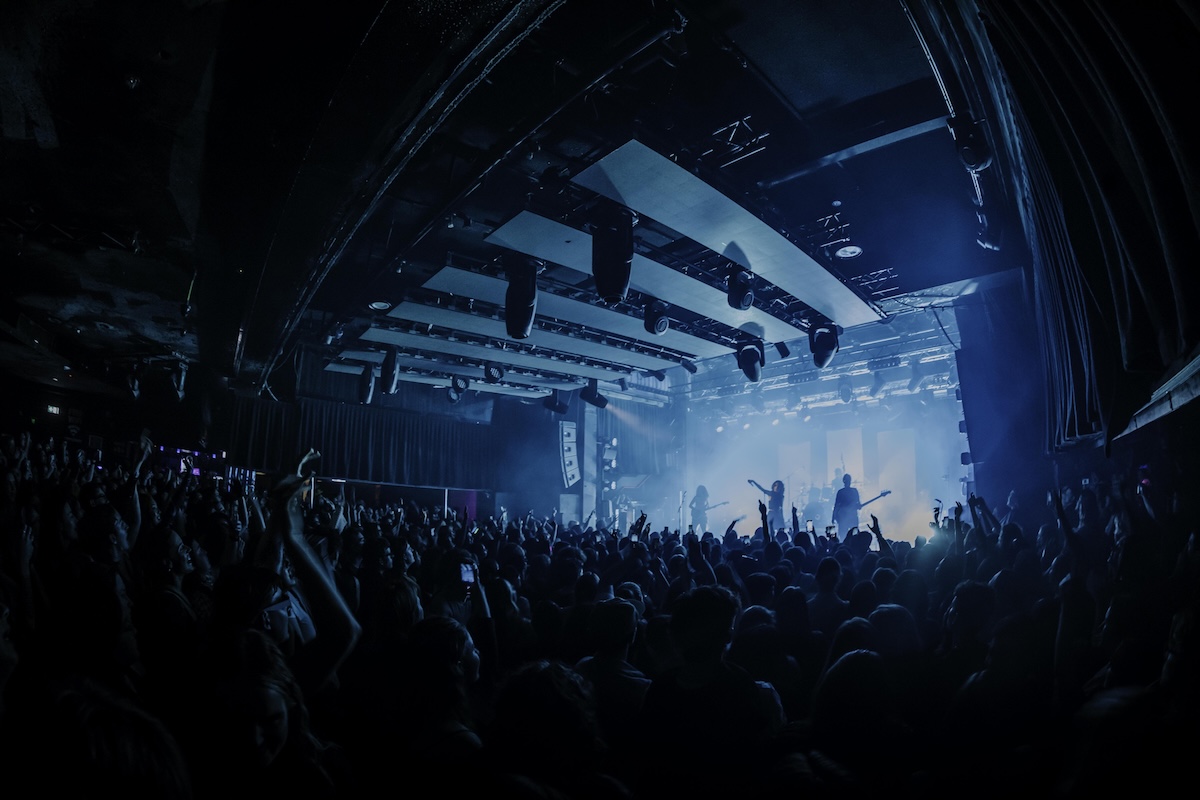
Melbourne’s 170 Russell St. Photo supplied
On the 13 August 2026, Music Victoria launched its vision – the Vote Victorian Music campaign. It is a comprehensive, widely consulted and fully costed series of four asks from the next Victorian Government. Any serious contender for Government should respond to this document.
I emailed the Victorian Labor Party, the Victorian Liberal National Coalition, the Victorian Greens and One Nation. As of the time of writing, only the Greens replied and have formerly fully backed Music Victoria’s Vote Victorian Music. As yet, Labour has only partially backed the policy in relation to law reforms with a sprinkling of extras.
Vote Victorian Music
The asks are:
Establish the Victorian Music Trust
A permanent, independently governed fund for Victorian music, protected by legislation, funded by a 1 percent levy on ticket sales for major live music events at stadiums, arenas and government-owned venues. This means reliable and sustainable funding for Victorian artists, venues and the grassroots Victorian music ecology year in, year out.
Cost: Approx $4.4m a year once established
Support
Back Victorian artists and the music they make and expand investment in contemporary music to at least $9 million a year.
Commit over multiple years so artists, labels, managers and publishers can plan ahead. Fund creative work as well as commercial release, add a business development stream, and commission Victorian artists first for government-funded campaigns and events.
Cost: Approx $9m a year
Grow
Build careers, skills and audiences across Victoria with a single statewide approach covering every stage of a career and every part of the state, including stronger education pathways and support for young people.
Engage our kids with more classroom and instrumental music, and improve support for the teachers delivering it. Build on that passion with paid traineeships in production and technical roles. Target support to regional touring and high impact subsectors – recorded music, screen, games and export.
Cost: Approx $6m a year
Protect
Protect and grow the places where music happens with a regulatory framework that ensures the state’s world-famous live music scene continues to thrive.
This includes: Simplify and align regulation so requirements are consistent and proportionate to risk; the Identifying and establishing of priority Live Music Precincts across metropolitan and regional Victoria; Strengthening protections for existing venues; investment in music places and infrastructure, and the creation of a permanent Live Music Desk to resolve regulatory barriers across government.
Cost: Approx $8.5m a year

Photo © Matthew Jungling/Unsplash
The Party positions
Victorian Labor
The official Victorian Labor Government’s arts policy is the Creative State 2028 strategy. It contains little for music.
Hilariously, the main tenet for the arts policy relating to the music industry is a plan to write a plan. This apparently is a strategy.
- “Develop a contemporary music strategy in partnership with the Victorian Music Industry Advisory Council to leverage and enhance Melbourne and Victoria’s position as a global music destination and exporter.”
The other item is to:
- “Back new Victorian musical theatre works to increase export potential and meet growing demand locally and worldwide”.
Thankfully, Music Victoria’s Fiona Duncan has stepped into this void with the new Vote Victorian Music strategy, which the Carroll Labor Government has adopted point four – PROTECT.
However, this is not the entire story. Behind the scenes, there has been important regulatory work going on for some time that has not been widely publicised but deserves to be credited to this Labor Government. This includes,
- The implementation of Live Music Precincts in the Victorian Planning scheme through the implementation of a Cultural Overlay. These changes mandate that developers must always soundproof apartments within a live music precinct.
This follows on from the November 2022 Victorian Labor election commitment: “If re-elected we will introduce a new planning overlay that will protect the use of a venue for a specific cultural purpose – in this case live music. This will protect our iconic live music [venues] from being demolished to make way for high rises”.
- Reform of the Environmental Noise regulations within Live Music Precincts to a simpler, less complex methodology.
- Reform of Outdoor Event noise regulations to increase flexibility around event times and allow for more than six events per year upon application.
- Reform of the Place of Public Entertainment (POPE) permits to remove duplications with local council planning and event permits (paused and pulled from the POPE provisions from the Building Legislation Amendment (Buyer Protections) Bill 2025 in June 2026). The fate of the POPE reforms is in limbo.

Photo © Tijs van Leur/UnSplash
On 23 September, the Carroll Labor Government announced that they will gazette live music planning overlays before the November election. This announcement is not new policy but a commitment to a date when cultural overlay will become law.
The Labor announcement went further.
“We will create targeted live music precincts in inner Melbourne and regional Victoria, including Fitzroy, Collingwood, Geelong and Ballarat.
These precincts will have reformed noise rules that shift the balance away from objectors. The onus will now be on them to prove their case, rather than falling on beloved local venues to plead their survival. These venues are the reason people want to live in these suburbs – and Labor will protect them.
Labor will also help venues meet compliance costs, including soundproofing, acoustic assessments and accessibility with new grants.”
A detail that stands out is that the City of Port Phillip’s St Kilda Live Music Precinct is not included in the list of live music precinct implementations in the announcement. Reading between the lines, this may be due to regulatory technicalities as the City of Port Phillip’s live music strategy predates the State Government’s work on a cultural overlay.
Other items in the announcement are
“A permanent Live Music Desk to coordinate planning, licensing and permits. It’s a simple change that means venues get answers instead of the runaround.
Simplify the EPA’s noise regulations for everyone, not just venues in the new live music precincts.
Our changes will make it easier for live music venue operators to comply – and protect venues from complaint-driven closures.”
Delivery of “a $2.5 million Live Gigs Fund to help venues stage live gigs and all ages shows.
We will also invest $1.5 million to activate underutilised spaces for live music and the arts.
It will support established venues and support new spaces in former industrial areas.
Labor will mandate that all music used in Victorian Government advertising will be Victorian music or performed by a Victorian artist.”
The other reforms are not likely to eventuate before the election. Never the less, the impact of these reforms on live music venues and events will be significant. Why this work is not acknowledged and included as ongoing work in Creative State 2028, considering the music industry has been advocating for these reforms for over a decade, is beyond me.
Shortly after this announcement Music Victoria announced the Carrol Labour Government would, if reelected, also commit to
- $4 million for regional touring grants, directed to local promoters to help bring touring artists into regional Victoria, and
- $1 million for regional live music festivals, recognising the growing pressures from insurance, extreme weather, permits and rising costs.
These announcements are all welcome.
Other commitments.
Contemporary Music Programs
- Music Works: Restored and funded after being cut in the previous budget, providing grants for artist and project development. This program was originally launched by Labor in 2015.
- Songwriting in Schools: Ongoing support for youth music education and songwriting programs.
- Victorian Music Development Office (VMDO): Continued operational backing for industry growth and export. The VMDO was initiated by Labor in 2015.
Infrastructure and Events
- Hamer Hall: $12.1 million allocated for infrastructure upgrades to help the venue host major music events.
- Regional Touring: $1.2 million dedicated to supporting live music and arts touring across regional Victoria.
- Cultural Facilities: Part of a $7.1 million package over four years directed at state-owned cultural infrastructure.

Photo © Edward Cisneros/Unsplash
Victorian Liberal/National Coalition
The Coalition’s arts policy is much less developed with no policy specific to music. The Coalition’s arts brief sits with David Davis MP, Shadow Minister for Arts and Creative Industries (also Leader of the Opposition in the Legislative Council). His public positioning has been mainly reactive and so far has centred on:
- Opposing Labor’s funding cuts — Creative Victoria cut a number of organisations (e.g., Snuff Puppets, Abbotsford Convent, Writers Victoria, Musica Viva’s Strike A Chord program) to zero funding in the Creative Enterprise Program in late 2025/early 2026. Davis has criticised this repeatedly and the Opposition has lodged an FOI request (currently before VCAT after Creative Victoria refused to release documents) to find out how the decisions were made.
- Attacking Labor’s COVID-era record by citing Victoria’s 263 days of lockdown as harmful to the sector, framed as a contrast point rather than a forward policy.
- A general motherhood statement to the effect that “a Jess Wilson Government recognises the importance of the arts and creative industries… for the soul of our state and for our economy,” but without any detailed costed platform.
- From the 2022 campaign, Davis flagged music education in state primary schools as a priority — a legacy position, not confirmed as reissued for 2026.
So far, there is no public Coalition response or commitment to Music Victoria’s Vote Victoria Music Campaign.
Previously in Government (2010-2014), the Victorian Liberal-National Coalition established the Victorian Live Music Round Table, which introduced the Agent of Change principle into the Victorian Planning Provisions, which was directly responsible for saving several live music venues including the Gasso, Howler, The Tote and Whole Lota Love.
Reform was also achieved in the Building Code of Australia so that live music didn’t necessarily change the use (class of building) of a bar or hotel if it staged live music, avoiding unnecessary and expensive building upgrades. They also achieved reform, to a degree, around under-18s and all-ages shows in licensed premises.
Victorian Greens
The Greens have a standing, quite detailed four year old state policy platform (last formally amended by State Council in March 2022). The policy is a statement of principles and aims, one of which is,
“A vibrant and economically viable local live music industry through removal of barriers which affect a venue’s ability to host live music”
In general, their arts policy seeks to:
- Develop the Southbank Arts Precinct to better connect major arts institutions.
- Create/maintain safe, non-exploitative working conditions and fair pay across arts industries.
- Develop simple, independently evaluated, politically-neutral grant processes.
- Provide low-rent working/performance spaces for artists in under-utilised buildings.
- Provide increased funding for suburban and regional cultural infrastructure and touring.
- Support community radio, LGBTIQA+ arts practice, and First Nations creative/cultural priorities.
I emailed Gabrielle de Vietri, their spokesperson for the Arts, for more detail specific to Music and to respond to the Music Victoria’s Vote Victorian Music campaign.
They replied that “The full 2026 platform hasn’t gone live yet (which is why it’s four years-old) but I believe it will be released in the next week or so. All our policies are fully costed, we go through the parliamentary budget office. Funding the arts is a good investment – it returns money to the economy and is a major tourism focus for Victoria.
…
We also have a focus on revenue raising through increasing taxes on banks, ultra wealthy landlords and gambling corporations.
…
Some of our current policies are:
- Restore and increase the funding to Creative Victoria and VicScreen, with a focus on supporting small-to-medium arts organisations and individuals,
- A trial for an artist living wage, paying 2,000 artists a wage for 2 years so they can engage in their creative practice without pressure from other jobs or filling in constant applications,
- For the Vic government to underwrite insurance at live music venues (security was also raised as an issue at the forum last week)”.
Importantly, de Vietri backed Music Victoria’s Victorian Music election asks in a recent speech in parliament.

Photo © Yvette de Wit/Unsplash
Victorian One Nation Party
One Nation has no arts policy or any policy relating to the music industry. Their current policies specifically address cost of living, energy, education, crime, firearms, housing, health and infrastructure.
The party has, however, flagged cutting what it calls “vanity projects” to redirect money toward land release and housing – arts/cultural infrastructure like the Melbourne Arts Precinct redevelopment, including the $12.1 million allocated for infrastructure upgrades at Hamer Hall, and it may also impact venues like the Recital Centre. This could conceivably fall under that kind of rhetoric.
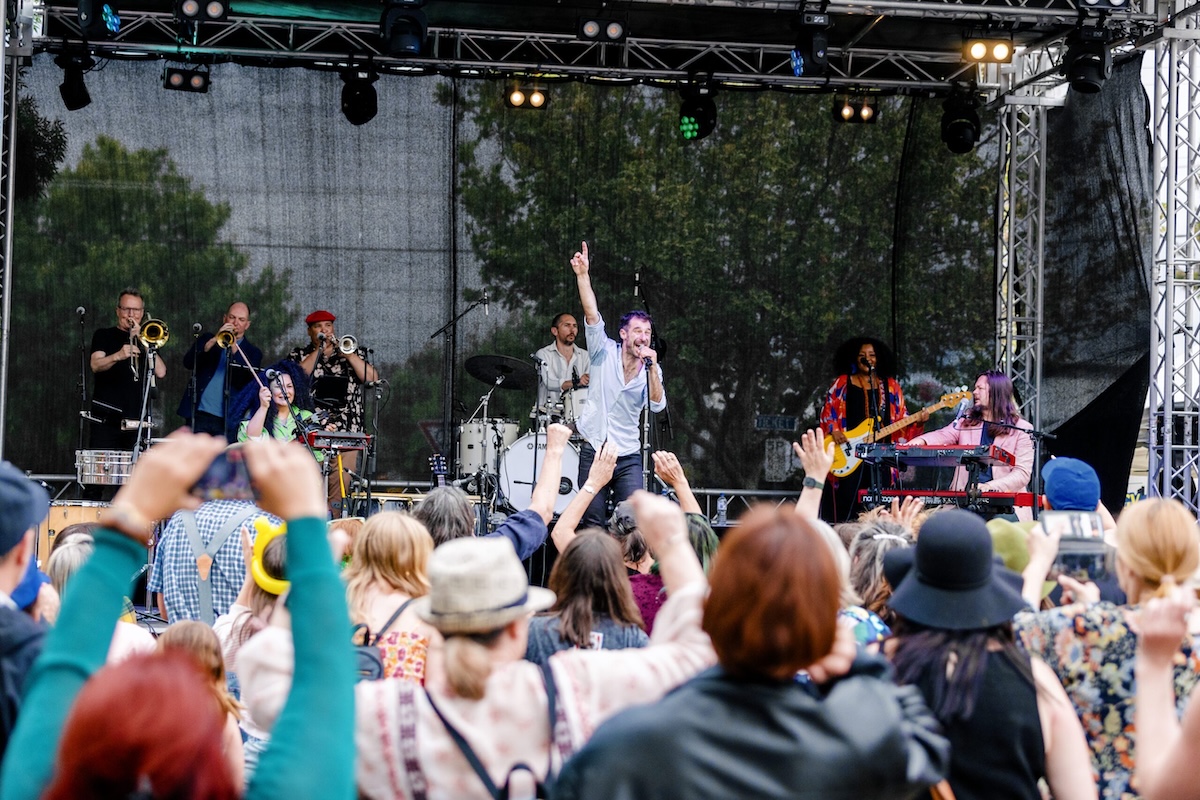
Melbourne’s Collingwood Yards. Photo © Music Victoria
What’s missing …
Music Victoria claims Victoria currently invests $0.48 per person in contemporary music, compared with $3.10 in New South Wales and $1.46 in South Australia.
Clearly, this disparity needs to be addressed in any political party seeking to be elected as the next Victorian Government. For a state regarded as the hub of Australian music, this is simply negligent compared with other states. The latest Corrol Labour announcements go some way to claw back this disparity if re-elected but fall short of Music Victoria’s Vote Victorian Music plan.
The music scene in Melbourne is a pillar of the city’s identity with equal stature to the AFL. We have all heard the statistics – more venues per head of population than anywhere else in the world; more audience than the AFL; the live music industry generated $483.9 million in 2023; 31 per cent of Australia’s live performance revenue –, yet this crown jewel continues to be underinvested in relative to any measure.
The law reform agenda for live music has been moving at a snail’s pace since the beginning of the pandemic. Although the implementation of live music precincts has been on the agenda for five years, the City of Port Phillip’s planning scheme amendments have been sitting on successive Planning Ministers’ desks for two years, holding up the implementation by the council of a Live Music Precinct in St Kilda while its once-famous music scene continues to wither. Meanwhile, in other States we see NSW with 12 precincts, Queensland with three, WA (one), SA (one), the ACT (one), and Victoria with zero finalised but four awaiting approval.
Victoria had a Regulatory Round Table until March 2020, with representation from both the Music Industry and the relevant silos of Government. It achieved more regulatory reform in its 10 years than in the period since federation and was copied in many other states. But since it was dissolved at the start of COVID, the pace of reform dramatically slowed. Reform is an ongoing process; new issues constantly arise: the massive increased costs for festivals, venues and touring; the increased unsustainability of music businesses; discoverability; AI and the impact of climate change, etc.
On 24 September, the NSW Parliament passed Music Bill 2026 which
- Enshrines a set of principles for government agencies and local councils making decisions affecting the contemporary music industry,
- Introduces a three-tier Music Venue Recognition Scheme, with venues recognised as dedicated, significant, or live music venues, providing access to extended trading hours and government grants, incentivising venues to regularly program new and original live music,
- Requires certain disputes involving dedicated and significant live music venues to go to mediation before court proceedings can begin,
- NSW Small Business Commission will provide free mediation support,
- introduces a new methodology for assessing noise from outdoor entertainment,
- prohibits state government agencies and local councils from making decisions about live music events solely on the basis of music genre, including in licensing conditions, development applications, event approvals and ensuring fees are reasonable and avoid basing risk assessments solely on genre, and
- formally includes DJs, music producers and songwriters within the definition of performer, while distinguishing between performer managers and booking agents.
Clearly there is a need for the reestablishment of the Regulator Round Table with fresh terms of reference to spearhead the next Victorian Government’s music policy foundation in a fast-moving policy space.
Music Victoria’s call for the now promised creation of a permanent Live Music Desk by Labor to resolve regulatory barriers across government, I believe, is a weak ask. Such a position, by itself, will not confer seniority and risks serving as a government gatekeeper and as a stakeholder management role. It would be advantageous for this role to also serve as a secretariat for a reconstituted Live Music Round Table that continues to drive a reform agenda that reports directly to a Government Minister.
It’s time that the music industry received both better, more timely policy attention and investment priority from the parties competing for your vote. With nine weeks to go, let’s insist they do.
Writer Jon Perring was a member of the 2004 Victorian Live Music Taskforce that established the Agent of Change Principle and a co-signatory of the 2010 Live Music Accord between the Victorian Government and the Live Music Industry. He was also a member of the Victorian Government’s Live Music Round Table and a two-term elected board member of Music Victoria. He has also operated several venues.
Read more of his thoughts on music and goverment policy here.
The Victorian State election is held on 28 November, 2026.






Comments
Log in to start the conversation.