




Jeffrey Hatcher’s 2022 refit of English playwright Frederick Knott’s Dial M for Murder preserves the clockwork plotting of the 1952 original while slipping in several canny shifts that make dated material feel newly supple rather than merely polished. Honouring the mechanics of a well-worn classic, this Dial M slyly reveals how much was lurking in its margins.
The skeleton of the story remains intact: impecunious husband Tony Wendice meticulously arranges the murder of his wealthy, romantically distracted wife Margot (she has a lover, Max) by recruiting a shady university acquaintance from his university days.
But Hatcher’s recalibrations alter the dramatic chemistry. In Knott’s original – also the basis for Alfred Hitchcock’s film with Ray Milland and Grace Kelly – Tony was a washed-up tennis pro clinging to his last shreds of privilege. Here, Hatcher rewires the triangle: Max is now Maxine, a wise-cracking New York pulp novelist in an on-again, off-again relationship with Margot, while Tony is reimagined as a failed author turned book publicist working for Maxine’s publisher.

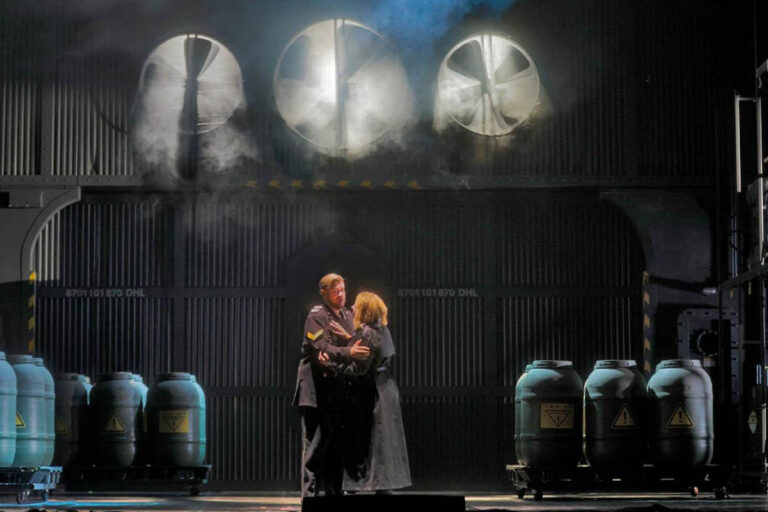
Garth Holcombe and Anna Sampson in Dial M for Murder. Photo © Phil Erbacher
This restructuring does more than modernise – it...
Continue reading
Get unlimited digital access from $4 per month
Already a subscriber?
Log in







Comments
Log in to start the conversation.