




British playwright Ella Road’s Fair Play comes at you straight out of the blocks. Focused on a pair of gifted young women runners, it runs headlong into one of sport’s cherished myths: that you can be a winner if you just try hard enough, long enough.
Londoners Ann and Sophie are teenaged 800m prospects at the start of their athletic careers. They post similar times and share the same dream but come from very different backgrounds. Sophie attends a blue-ribbon private school, with all the advantages that brings. Ann is from far-off Hounslow, near Heathrow, and from a working-class family.
Sophie blanks Ann at first, cleaving to the ‘no friends on the track’ ethos. After repeated encounters, however, she thaws and becomes intensely admiring of Ann and her ability. Sophie is good, no doubt about it. Ann, it seems, could be great.
But when Ann is pulled aside after a routine blood test, everything crashes down. Her testosterone levels are deemed too high and she is disqualified from running in a women’s event.

Rachel Crossan and Elodie Westhoff in Fair Play. Photo © Robert Miniter
Echoing the story of runner Caster Semenya – though without fully engaging with the ugly politicisation of gender non-conformity in sport – Fair Play spotlights a hot issue at a deeply personal level. The irony of Ann falling foul of rules designed to “protect” women’s sport is not lost and the inconsistencies in the policing of women’s bodies – those of Black women in particular – are exposed. The damage to Ann’s hopes for a better life for herself and her family lends further weight to the drama.
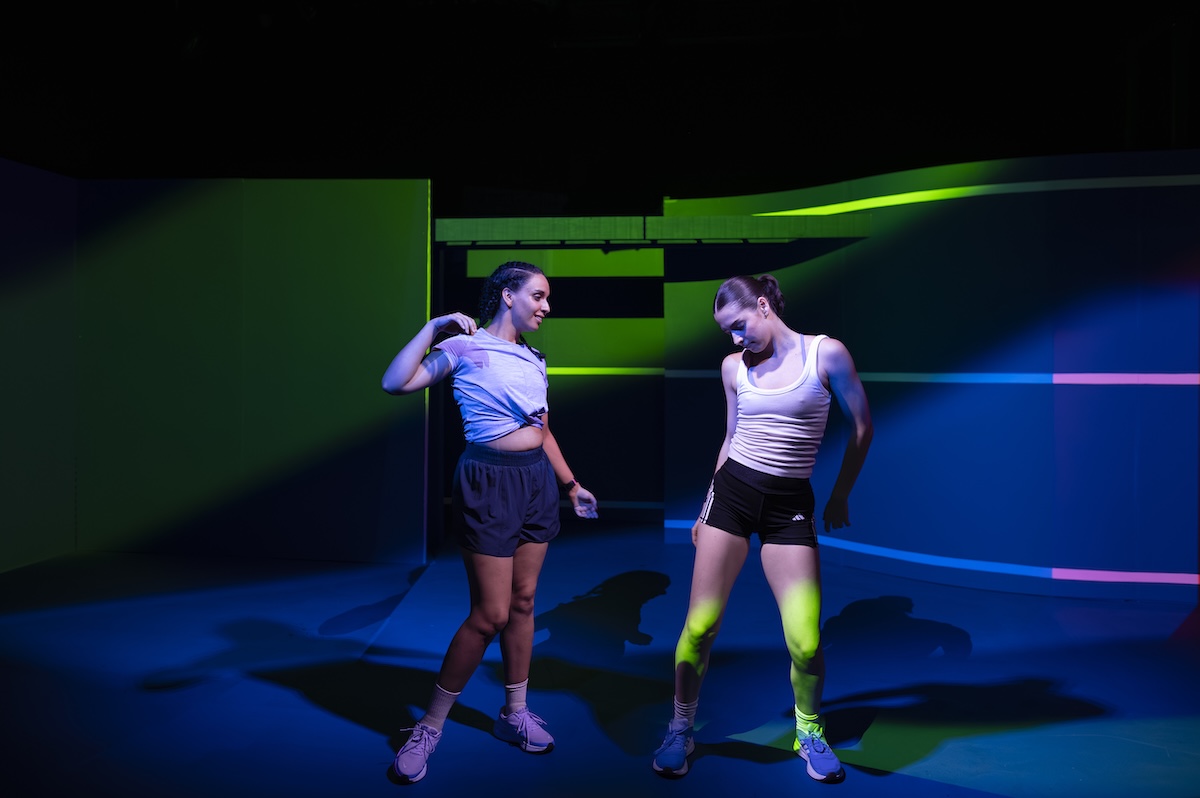
Rachel Crossan and Elodie Westhoff in Fair Play. Photo © Robert Miniter
Fair Play is made up of around 60 scenes, some lasting only seconds, and requires its two performers to stay in high-tempo motion for about 90 minutes. Director-producer Emma Whitehead’s production serves it very well. The transitions are sharp (though some extra heft in the soundtrack might sharpen them a touch more), and actors Rachel Crossan (Ann) and Elodie Westhoff (Sophie) are thoroughly convincing, both as competitors and as giggling friends growing up in a hothouse environment under the beady eye of coaches with agendas of their own.
Kate Beere’s set design – the curving lanes of a running track flipped to serve as a backdrop – is a winner, too.
Fair Play is at the Old Fitzroy Theatre, Woolloomooloo, Sydney until 21 March.






Comments
Log in to start the conversation.