We are sometimes so awestruck by the music of JS Bach that we forget it did not spring out of some musical womb fully formed. Rather, it was in part the product of an insatiable musical curiosity and lifelong learning, which included the painstaking practice of copying out the music of others. 

We would know very little indeed about the music of Bach’s distant cousin Johann Ludwig Bach (1677-1731) unless his younger, more famous relative had not copied 18 of his cantatas and performed them in Leipzig’s Thomaskirche. Johann Sebastian was so impressed with these works, they were performed not just once, but some three times: in 1726, 1735 and in the final year of his life, 1750.
 

Johann Ludwig was descended from one of the earliest known members of the legendary musical family, Veit Bach, a persecuted Lutheran who died before 1578. JL spent his professional life at the court of Meiningen where, apart from church music, he produced operas, scenic ballets and occasional music for the ducal court and visiting dignitaries. Sadly, most of his music has been lost.

The survival of JL’s cantatas is a story of good luck. After the death of Johann Sebastian, his second son, Carl Philipp Emmanuel sold the copies to a Berlin cantor, Rudolph Buchholz. They eventually passed from his successor into various libraries, ending up today in Berlin’s State Library. 

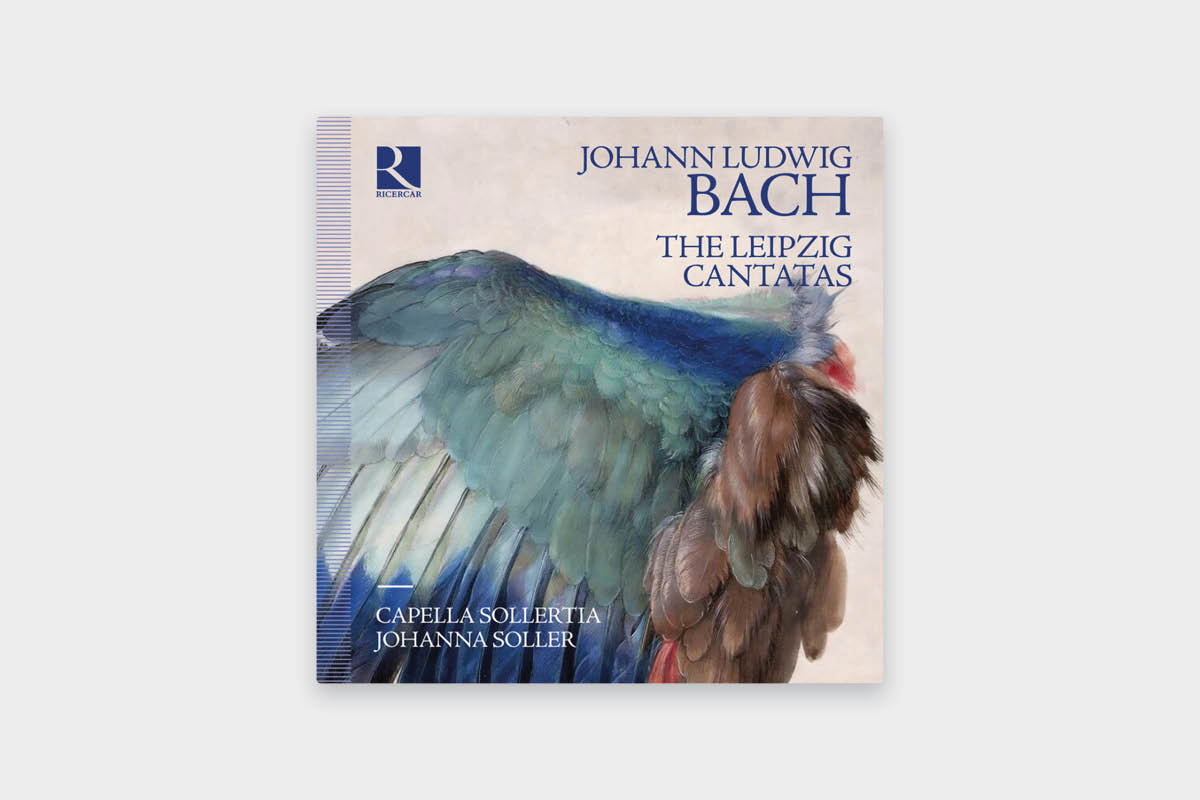
Johanna Soller and Capella Sollertia have rendered a great service in bringing these attractive works to life for the first time in centuries. Representing a style and structure preceding that of the famous Bach, the cantatas abound in assured and sympathetic settings of the texts.

Essentially, each cantata begins with a “dictum” or quote from the Old Testament, followed by an arioso recitative, an aria, another “dictum” from the New Testament, a further recitative and aria, concluding with florid choral writing. 

Oboes are added to strings in most of the cantatas, a few spiced with trumpets, horns or flutes. Rhythmically lithe and always astutely balanced, the instrumental playing matches the characterful tone and vocal agility of the ten vocalists who divide the various solos amongst themselves.

The cantatas (which are all that survive from a complete year-long cycle) reveal a mature, independent compositional voice that had assimilated influences from Pachelbel, Telemann and the Italian school.

Sample the drama in Die mit Tränen säen for the second Sunday after Easter where the contrast between sowing in tears and reaping in joy is deftly depicted, especially in the change between the peaceful second dictum for tenor and bass and the spiky soprano aria calling down rain and rage.

Trumpets and drums set a more festive mood in Denn du wirst meine Seele nicht in der Hölle lassen for Easter Monday which uniquely includes a short instrumental sonata before a triumphant finale. Such an innovation is indicative of Johann Ludwig’s approach in varying compositional elements. He certainly did not write cantatas “by numbers”.

While the great Bach may have taken the cantata form to another level, he was not ashamed to acknowledge the work of his forebear, and for his preservation of these works we should be ever thankful.

Listen on Apple Music

Composer: Johann Ludwig Bach
Works: The Leipzig Cantatas
Performer: Capella Sollertia/Johanna Soller
Label: Ricercar RIC482 (4CD)

Contribute to Limelight and support independent arts journalism.