




Beethoven’s Grosse Fuge, the final movement of his Quartet No. 13 in B-flat major, has long divided opinion. Written when he was profoundly deaf, the double fugue is known for its unrelenting intensity and occupation of the extremes. Composer and violinist Louis Spohr once described it as “an indecipherable, uncorrected horror,” while Stravinsky predicted it would remain forever contemporary.
In Trois Grandes Fugues, a triple bill of dance performed by the Lyon Opera Ballet, this plurality of opinion is not the problem, but the answer. Three different interpretations of the infamous fugue by three leading female choreographers have been curated into a single evening program. It’s a thrilling series that illuminates the genius of both composer and choreographer; where equally sophisticated systems are expressed via different mediums.
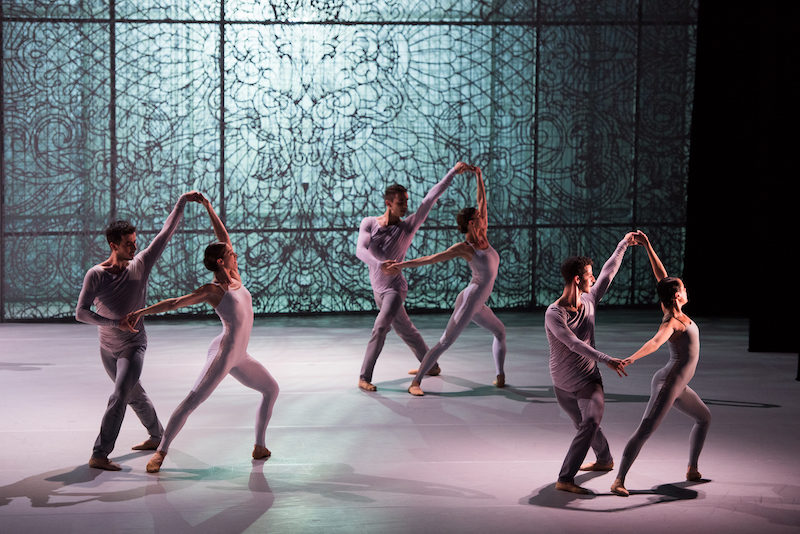 Lucinda Childs’ Grande Fugue. Photograph © Bertrand Stofleth
American choreographer Lucinda Childs opens the evening with her “sparse ballet” for six couples dressed in grey, originally created in 2016. The movement – which is classically academic, littered with arabesques and sissonnes along strong diagonal lines – unfolds in short looped phrases. This mirrors the subject of Beethoven’s fugue, which, like the dancing, is repeated with progressive variations.
Accumulation...
Continue reading
Get unlimited digital access from $4 per month
Already a subscriber?
Log in






Comments
Log in to start the conversation.