Swiss new-music powerhouse Ensemble Contrechamps makes its first Australian visit with two strikingly different programs in this year’s Canberra International Music Festival that showcase the breadth of its artistry.
In Récit des sensations fragiles (Tales of Fragile Sensations), the Geneva-based ensemble performs a major late work by Swiss composer Jürg Frey, whose luminous sound worlds have made him one of the most distinctive voices in contemporary music. Lasting nearly an hour, the score invites audiences into a landscape of stillness, timbral beauty and heightened listening.
The ensemble also appears in Tissages du Temps, an ambitious program tracing centuries of French musical imagination – from Charpentier, Couperin and Rameau to Ravel and Gérard Grisey.
Ahead of the concerts, Limelight spoke with Serge Vuille and Antoine Françoise of Ensemble Contrechamps.
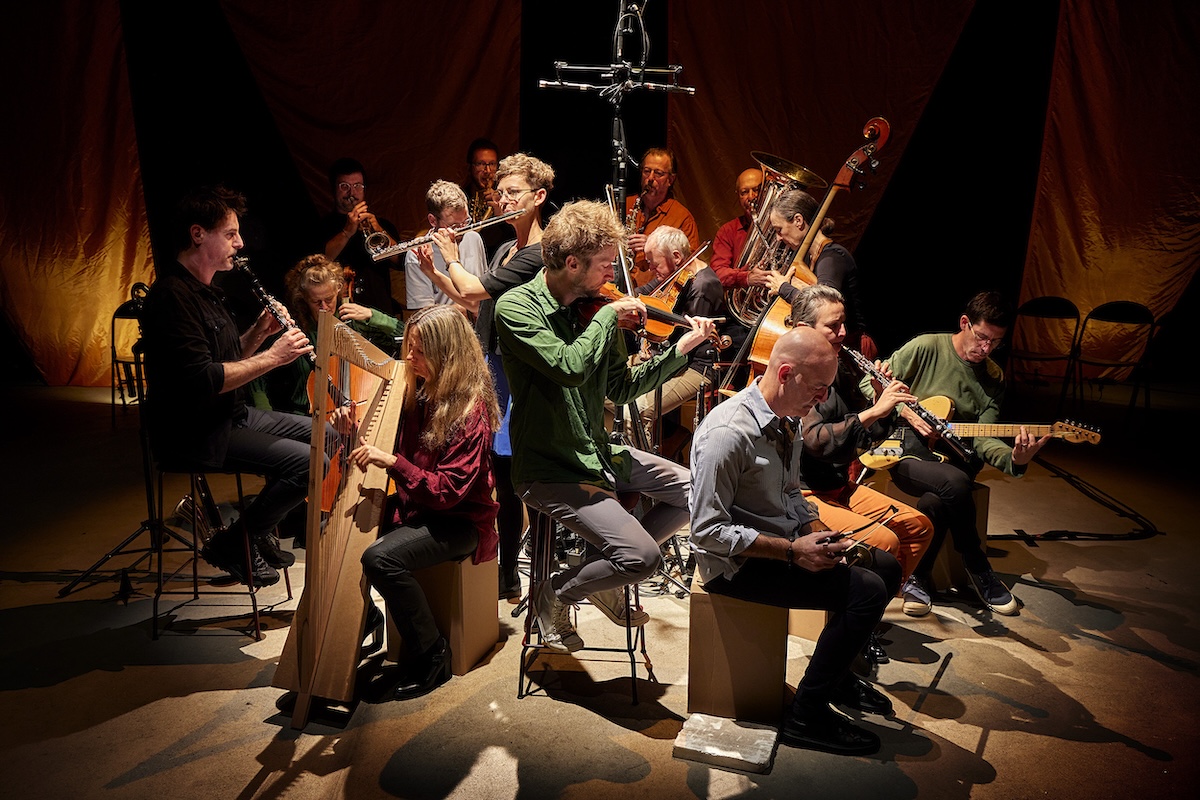
Ensemble Contrechamps. Photo © Guillaume Collignon
Will this be your first trip to Australia as an ensemble? How are you feeling?
Serge Vuille: Yes, this is Contrechamps’ first trip to Australia. We’re excited, and particularly grateful for the many opportunities to collaborate with Australian artists, including those from the Ngarra-Burria First Peoples composers program.
We’re also planning a concert back in Switzerland next year featuring works we’re developing here in Australia, and many connections are already building at home in Geneva that we hope will lead to long-term cultural exchange.
What kind of music inspires you and the ensemble the most?
SV: It is the diversity that makes the work inspiring. We’re grateful to collaborate with such a wide range of contemporary composers and artists, while also continuing to champion 20th-century classics.
It demands a great deal from the players – maintaining many different skills and adapting to very different musical languages – but I think that is exactly what makes Contrechamps exciting for us and for audiences.

Serge Vuille. Photo © Morgane Meys
How did you go about choosing the works to bring? Do you have a favourite?
SV: This trip brings a perfect balance of music from our home country, Switzerland, collaborations and new work by Australian artists, and some seminal works from the European 20th century repertoire. The choice is always a conversation with festival directors, collaborators and host organisations.
We’ll present Gérard Grisey, a large open-score work by Jessie Cox in collaboration with Conservatorium students in Melbourne and Sydney, a Contrechamps commission by Jürg Frey, four new works by First Peoples composers, and take part in an Australian composer portrait of Fiona Hill, among many other things. They are all favourites – and most projects involve performing alongside Australian musicians in different combinations, which is particularly thrilling.
Récit des sensations fragiles is a substantial chamber work. What is it like to perform – and to hear?
SV: Jürg Frey wrote this 55-minute work for 20 players for us two years ago. It is conducted by our pianist Antoine Françoise. As the title suggests, it creates a highly sensory, almost narrative listening experience. The music features beautiful combinations of timbre, with each instrument given its own space.

Antoine Françoise. Photo © October House Records
Antoine Françoise: Jürg Frey has a unique way of treating time. Sometimes it feels stretched, sometimes almost frozen, and at other moments suddenly accelerated. The piece begins as though it started long before we arrived, and it ends abruptly, leaving the feeling it could continue forever. We are dealing with a 55-minute frame taken out of eternity. Seen that way, it feels quite short.
What are the soundscapes in the work like? How do they evolve?
AF: Jürg Frey opens many different windows in the piece, each presenting a story within a fragile emotion. There may be a principal instrument taking the lead – the delicate viola solo in the first section, or the lonely trumpet in the middle – or perhaps a slowly shifting harmonic block, or pointillistic melodies shared among the ensemble.
We are invited to observe what happens within each window before moving to the next. Many of those windows relate to each other, but they never simply evolve into one another.
How do you create the meditative atmosphere in performance?
AF: Performing the piece requires immense concentration. The apparent simplicity of each part must be balanced by each player’s complete presence in the sound and in listening to the ensemble. There is no meditation within the ensemble itself, that’s for sure.
The beauty of the piece lies in the abstraction of narrative. Ideally, each audience member projects their own emotions into it. For me, some long, louder sections feel full of tenderness, while others feel vertiginous – as though gravity itself has stopped. That unexpected journey through personal emotional states is what makes it a masterwork.

Ensemble Contrechamps: Tissages du Temps. Photo suppplied
You’re also performing in Tissages du Temps and a concert of Georges Aperghis.
SV: Tissages du Temps brings together various artists to interpret important works from the French repertoire. I love that we’ll perform Grisey’s seminal Vortex Temporum alongside musicians playing Couperin and Ravel. It makes us feel very European as a Swiss ensemble.
Aperghis is another great Greek-French composer. He will feature in a breakfast concert at the Greek Embassy, including a work written for our saxophonist Pierre-Stéphane Meugé, titled PS.
You’re playing new Australian works while you’re here. Do you sense a distinct ‘Australianness’ in them?
SV: I love the idea that music can carry a feeling of cultural identity from a country or a continent. It is hard to define exactly what that is, and I wouldn’t claim I could identify ‘Australianness’ simply by listening.
For me, it is more about encountering ways of writing that do not feel immediately familiar to us. The spirit of sharing and inclusiveness we have felt especially from artists in the Ngarra-Burria First Peoples composers programme has been deeply inspiring, and I can’t wait to hear the music take shape next week in Canberra.
Ensemble Contrechamps performs Tissages du Temps at Snow Concert Hall, Canberra on 2 May (7.30pm) and Tales of Fragile Sensations at Snow Concert Hall on 3 May (2pm).
For more information on the 2026 Canberra International Festival of Music, visit cimf.org.au


Comments
Log in to start the conversation.