For Fiona Hill, music is an act of connection, a vehicle for forming a deeper understanding of ourselves, each other, and our inescapable entwinement with mother earth. 

That conviction sits at the heart of everything she writes, and it is why, at the 2026 Canberra International Music Festival – where she takes up the role of Composer in Residence – collaboration is not a technique she reaches for but the very ground her work stands on.
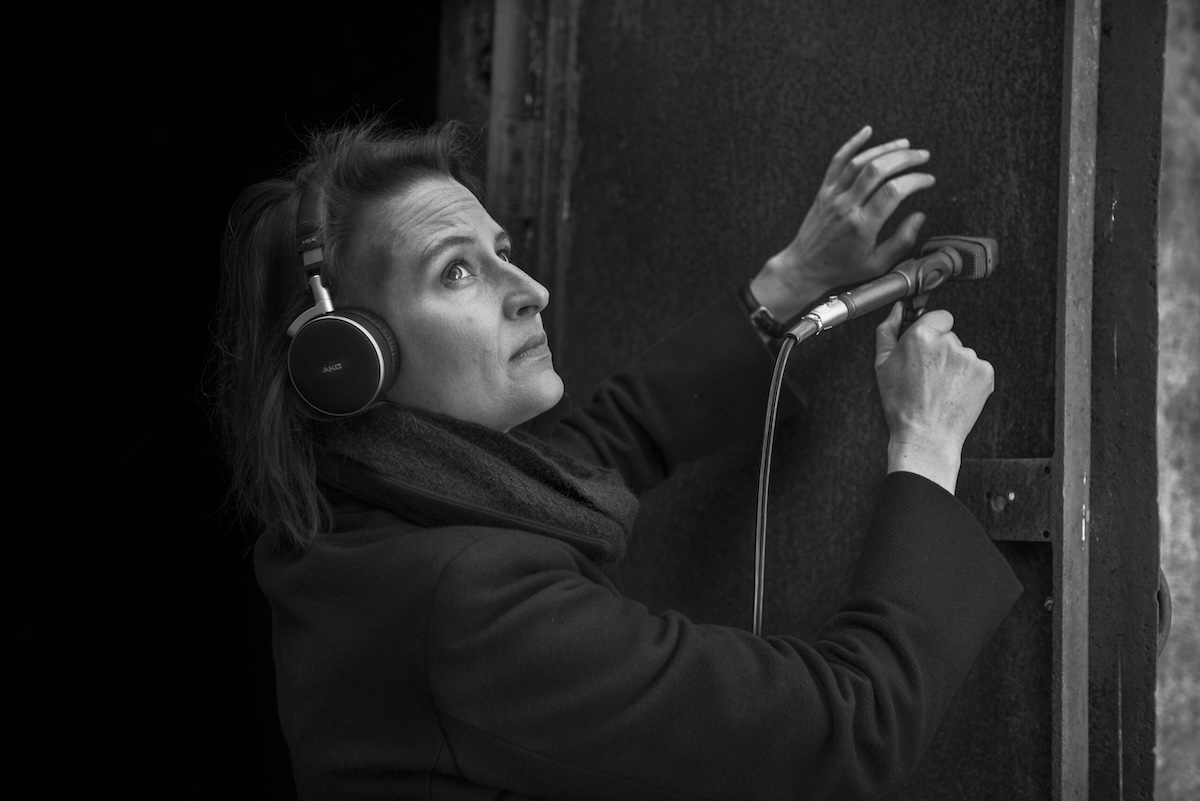
Fiona Hill. Portrait supplied

Across three concerts, audiences will encounter a body of work that sculpts and layers sound across film, dance, improvisation, voice and the symphonic stage. Two of those concerts sit within MOSSO: music in motion – the festival within the festival, devoted to experimental music and held across an entire day at the National Film and Sound Archive.

It is the ideal frame for Hill’s practice: a space where the boundaries between disciplines are porous, and where the collaborators who shape her music can be heard as clearly as the notes on the page.

UnderOnBelow: the world beneath our feet

The MOSSO Portrait Concert opens with the world premiere of UnderOnBelow, written for Geneva-based saxophonist Joshua Hyde. Developed through deep workshopping with Hyde, the work explores the hidden life of the saxophone through amplification, looping and live effects.

“Exploring how musical notation can accurately reflect every nuance and detail of the music, while incorporating the live looping instructions, has been important in developing the core musical material,” Hill says.

Joshua Hyde. Portrait supplied

Making full use of the Arc Cinema’s surround sound system, the musicians wanted an immersive work in the truest sense. “Creating the work together from the ground up means that each layer is aware of the other right from the beginning,” Hyde explains. “The cross-modal connections are inherent to the work, and not a superficial addition or awkward juxtaposition. The sound comes out of the video, and at the same time the video is inspired by the sound.”

Enter, stage left, a third collaborator: Fausto Brusmolino, internationally recognised for his lighting and visual design. An early conversation between Hill and Brusmolino quickly fixed on a shared fascination with the nuanced patterns and depth of the world around us.

Hill began sending videos taken on walks – ants moving in formation, feeding on larger insects; underwater detail; the small, furiously alive world that moves beneath notice. From that raw material, and images he captured himself, Brusmolino developed a bespoke responsive video, filtering and warping speed to reveal the abstract within the familiar. Together, sound and video transport the listener into a space in which to contemplate our place in the world, under, on and below.

Circumstance: place as collaborator

Film-making is a truly collaborative art, so featuring the internationally award-winning contemporary dance film Circumstance as part of the Portrait Concert was, Hill says, “a no-brainer”.

Shot at the Paddington Reservoir and Bombo, the film threads themes of isolation and connection through locations that reveal place itself as an equal – and often overlooked – collaborator.

Sue Healey – Circumstance

Directed and choreographed by Sue Healey, Circumstance features artists Billy Keohavong and Allie Graham alongside dancers from Sydney Dance Company Training, with cinematography by Ken Butti. At the Arc Cinema, it will be screened in full resolution with the score played live by the Australian String Quartet and members of Geneva’s Ensemble Contrechamps, under the baton of festival Artistic Director Eugene Ughetti – a genuine treat for audiences.

Mappa: wayfaring in the gallery

Where UnderOnBelow and Circumstance fix their collaborators within a score or a frame, the newly devised Mappa throws the doors open. Taking over the gallery space at the National Film and Sound Archive, the work places collaboration and improvisation at its very core.

Devised with choreographer Miranda Wheen, Mappa explores wayfaring and the contemplative processes of thread-making. It draws connections between social fabric, community, women’s history and our deep connection with the earth – a line traced from the transformation of plants into fibre, and from fibre into the things that bind us. The work invites audiences into a world where exploring is encouraged and perceptions are challenged.

Mappa. Photo © Wolfwerk Photography

Artists from across the globe are drawn together: Ensemble Contrechamps in Geneva, musicians from Western Sydney, and local Canberran artists. Hill and Wheen have devised an environment in which the boundaries between movement and sound dissolve, and each performer is invited to draw on their own practice – knotting, tying, weaving, threading, twisting, spinning and winding both sound and material to bind and to build.

Much of the formal development took place during a residency at Bundanon Trust, where dedicated time in a beautiful natural environment, away from the usual demands of life, was essential. A large-scale loom – warped until it became something closer to a web that both Hill and Wheen could move inside – emerged as a key structural and conceptual idea, fully embodying the work.

The residency offered something just as valuable: other artists. “The Friday sharing evenings were particularly enjoyable,” Hill recalls, “a chance to show each other what we’d been working on and talk through our creative developments. That sharing of ideas was so fruitful – appreciating artistic approaches from other perspectives fed directly into our own practice.”

In:Flux – a continuing conversation

That same collaborative impulse runs through Hill’s ongoing work with sculptor Phil Spelman. The two have been building a family of “sound objects” – instruments shaped as much by the sculptor’s material instincts as by the composer’s ear for resonance.

Not every prototype finds its way into the festival, but the inquiry continues: some of the instruments born in Spelman’s studio now live in In:Flux, Hill’s duo with pianist and accordionist Gary Daley, where sculpted object, field recording and improvised sound meet on equal terms. It is another thread in the same cloth – sound being built, literally, by many hands.

If Only We Could Listen: the finale

Hill’s festival culminates in the finale at the Snow Concert Hall with the world premiere of If Only We Could Listen, a CIMF commission for pianists Kristian Chong and Timothy Young with percussionists Eugene Ughetti and Kaylie Melville, programmed alongside Stravinsky’s Rite of Spring and Rachmaninov’s Symphonic Dances.

The work asks what might happen if we truly listened – to ourselves, to each other, and to the more-than-human world. Each moment, Hill suggests, presents an opportunity: a chance to sit with unknowing, curiosity, open-mindedness.

In a global climate overwhelmed with crisis, we find ourselves in a trap of our own making, the constant barrage on our senses commodifying our own existence. With a nod to the dance origins of the Rite, and to the pre-WWI moment in which it was born, If Only We Could Listen moves through distinctly contemporary landscapes: transcribed sheet-metal factory recordings contemplate the futility of constant “progress”, and an unhinged waltz turns the endless churn of global politicking into music.

Within this architecture, the musicians are asked to find moments of resonance – openings that transcend these restrictive entrapments and discover connection through acts of deep listening. Semi-improvised passages invite them into a collaborative stance, asking them to engage deeply with the score and with each other on stage. The dichotomy between the machine-states of not listening and the open states of deep listening produces a genuine philosophical charge: how do we relate with the world around us, and with one another?

A practice built on trust

Each of these works represents a different facet of the same practice. Drawing other artists into her music creates a depth and richness a singular voice cannot reach – because it is through connection with others, Hill believes, that we arrive at a truer sense of ourselves and our relationship with everything around us. Her music aims to transcend time and space while revealing fundamental truths, and it does so from a place of openness and trust. Something she notes, the world could do with more of right now.


The 2026 Canberra International Music Festival opens on 29 April. For more information and bookings, visit cimf.org.au


Contribute to Limelight and support independent arts journalism.