


When did you first realise that making music, rather than performing it, was what you really wanted to do? And what was it about composing that drew you in?
I was in the fourth year of my five-year undergraduate degree in jazz and classical piano in Kyiv, Ukraine. I was only 18 at the time, having started university at the age of 14.
As part of our jazz studies, I played piano in a jazz ensemble with some of my closest friends, who all played different instruments. It was my job to arrange music for the group, and I remember jokingly complaining that it would probably be easier just to write brand-new pieces from scratch. My friends thought that was a brilliant idea!
A few weeks later, I turned up to rehearsal with handwritten scores for two little jazz pieces I’d written for them. Their reaction genuinely moved me. They embraced the music with such joy and excitement, as though it were the best music in the world. It wasn’t, of course! But to my friends, in that moment, it really was.
I remember thinking how wonderful it would be to experience that kind of energy and connection with musicians through my own music. The following year, I was incredibly fortunate to have some of my early jazz compositions selected for performance on Ukrainian national television. By then, I was well and truly hooked. At 20, I entered Kyiv Conservatory to pursue a five-year degree in composition.
I genuinely believe you don’t choose composing — it chooses you. It’s a remarkable way to live: constantly imagining things that don’t yet exist, bringing them into the world, and then sharing them with other people.
I still perform regularly as a concert pianist, most often playing my own music. In a way, I don’t think I’ve ever really left the performer behind.
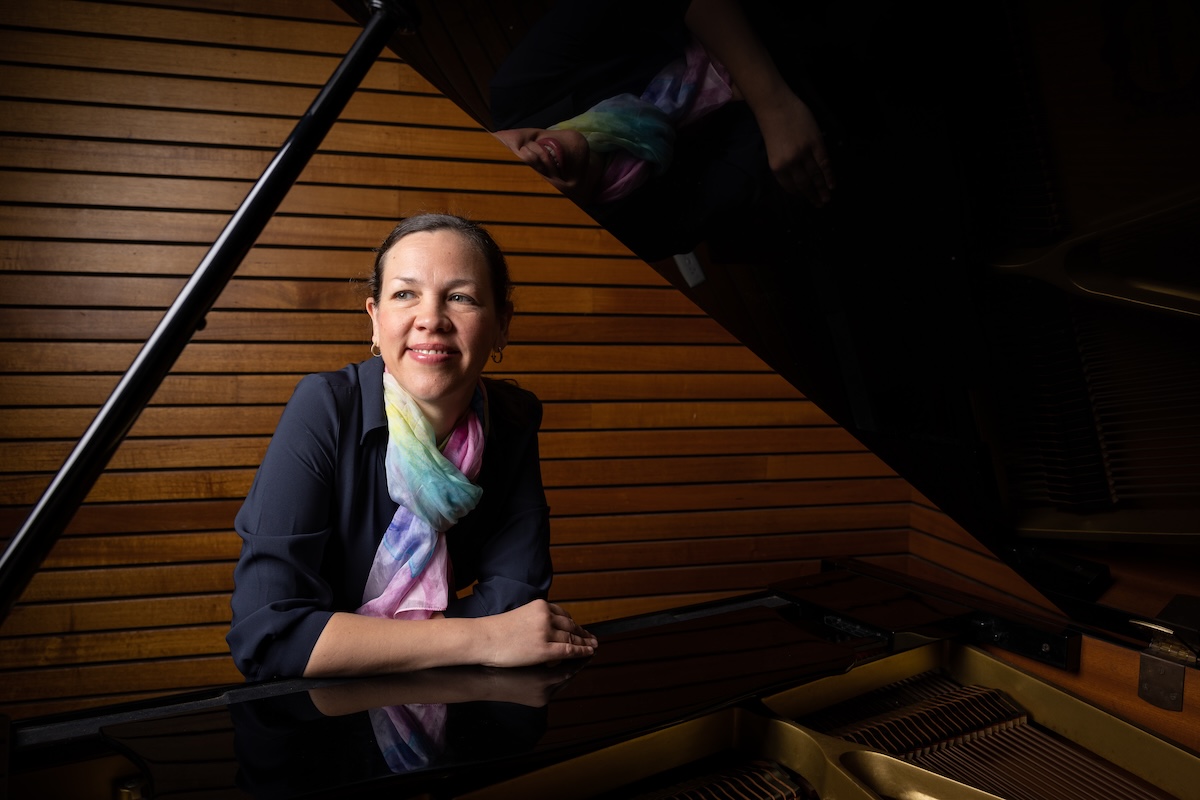
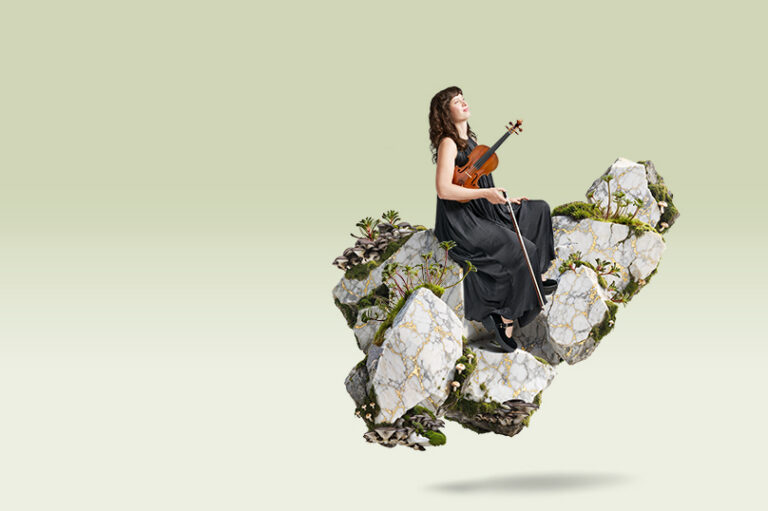
Catherine Likhuta. Portrait supplied
You use the phrase “premeditated improvisation” to describe your creative process. What actually happens when you sit down to compose?
Ohh! I alway get excited when someone asks about my PhD research! I’ve been practising premeditated improvisation since 2007, although I only coined the term during my PhD studies about a decade later. These days, it’s become something of a trademark associated with my music.
It’s a long story, but the short version is that I absolutely love storytelling through music. I usually come up with a title for a piece long before I write its first note. My titles tend to be programmatic, and more often than not, there’s a little film or animation running in my head when I listen back to the music I’ve written.
Back in 2007, while working on a new piece, I noticed something rather strange. My brain seemed to know exactly which notes it wanted me to write, but for every ten notes I managed to put on paper, another thousand seemed to evaporate before I could catch them. I had no idea what those missing notes were, but I could feel them passing through my imagination. So, in an attempt to become a kind of dream catcher for musical ideas, I started sitting at the piano, playing whatever came to mind and recording everything.
That experiment eventually became my compositional method. The process usually starts with a title and a concept, followed by a set of parameters: duration, mood, instrumentation, difficulty level and so on. I then give these ideas time to germinate in my brain — sometimes for days, sometimes for weeks — before sitting down at the piano and improvising freely while recording myself. I listen back to those recordings, and that’s when the actual composing begins: discovering, shaping and developing the musical ideas that emerge.
I’m still only describing about one percent of what is quite a complex, carefully tailored process. But ultimately, it allows me to be authentic through my music in a way I don’t think any other compositional approach could. It’s certainly not a method for everyone, but it’s my own little method in madness – and it works wonders for me.
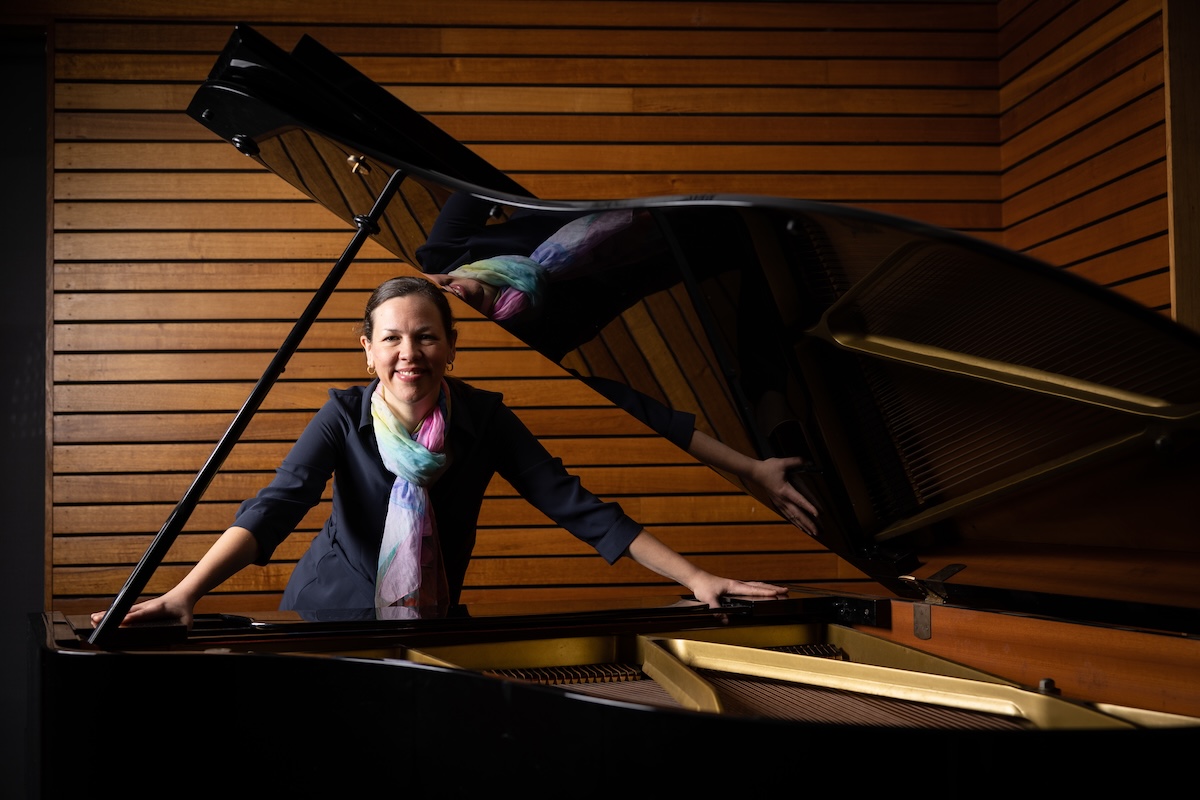
Catherine Likhuta. Portrait supplied
Your music seems to occupy several worlds at once, from contemporary classical music and jazz to Ukrainian folk traditions. Do you think of these as distinct influences, or have they become so much a part of you that they naturally find their way into your work?
I grew up surrounded by jazz music, with my father being a jazz percussionist, and went on to receive extensive jazz piano training. Classical piano was added to the mix when I was six.
I’m also a sixth-generation Ukrainian on both sides of my family, so Ukrainian culture and musical traditions have always been part of my identity, even if I didn’t initially recognise just how much they would shape my creative voice.
When I first started composing, it took me a while to realise that jazz, classical music and Ukrainian folk culture were not competing influences, but equally important parts of my artistic DNA. Initially, I made a conscious effort to become a ‘proper’ classical music composer. But after leaving Ukraine, something shifted. My Ukrainian roots seemed to be calling out for a place in my music, and eventually I let the floodgates open.
Jazz, meanwhile, has never really left me. Its influence comes through particularly strongly in my premeditated improvisations and in the way I approach rhythm, musical spontaneity and chord structure.
These days, I wholeheartedly embrace and celebrate all three worlds. I don’t really think of them as separate influences anymore. They’re simply different parts of who I am, and together they allow me to tell my stories through music in the most authentic way I know.
I was intrigued by the story of your daughter Skylie helping you develop the world of your 2022 work, Rituals of Heartland. Do you find that children have a particular kind of imaginative freedom that can be quite liberating for a composer?
This is such a lovely question, thank you! Skylie and I have been joined at the hip since the day she was born. Motherhood changes the way you do just about everything – for the better. You also learn to cherish your creative time because it becomes so precious, and you never quite know when you’ll next be interrupted.
When I was writing Rituals of Heartland for the Melbourne Symphony Orchestra, Skylie had just turned four. Like so many children of that wonderfully innocent and imaginative age, she was constantly inventing the most bizarre and wonderful characters through her drawings and paintings. I was fascinated by the freedom of her imagination. At that age, we’re not yet so influenced by the stereotypes, conventions and expectations of the world around us. We simply create. Our imagination seems limitless, and we’re wonderfully unconcerned with whether something makes sense to anyone else!
I decided to use Rituals of Heartland as a kind of time capsule for Skylie’s imagination at that particular age. I’m so glad I did. She’s a teenager now, and naturally much more aware of the world around her and the expectations that come with growing up. We absolutely love revisiting the piece together. It’s a little window into a time that neither of us can ever get back.
I also have a very fond memory from the premiere. Skylie had created the artwork for the piece, and the conductor invited her to stand up and take a bow with the performers. She was so tiny that, when she stood up from her seat, she somehow became even shorter and almost disappeared from view! It’s one of those memories that will stay with me forever.
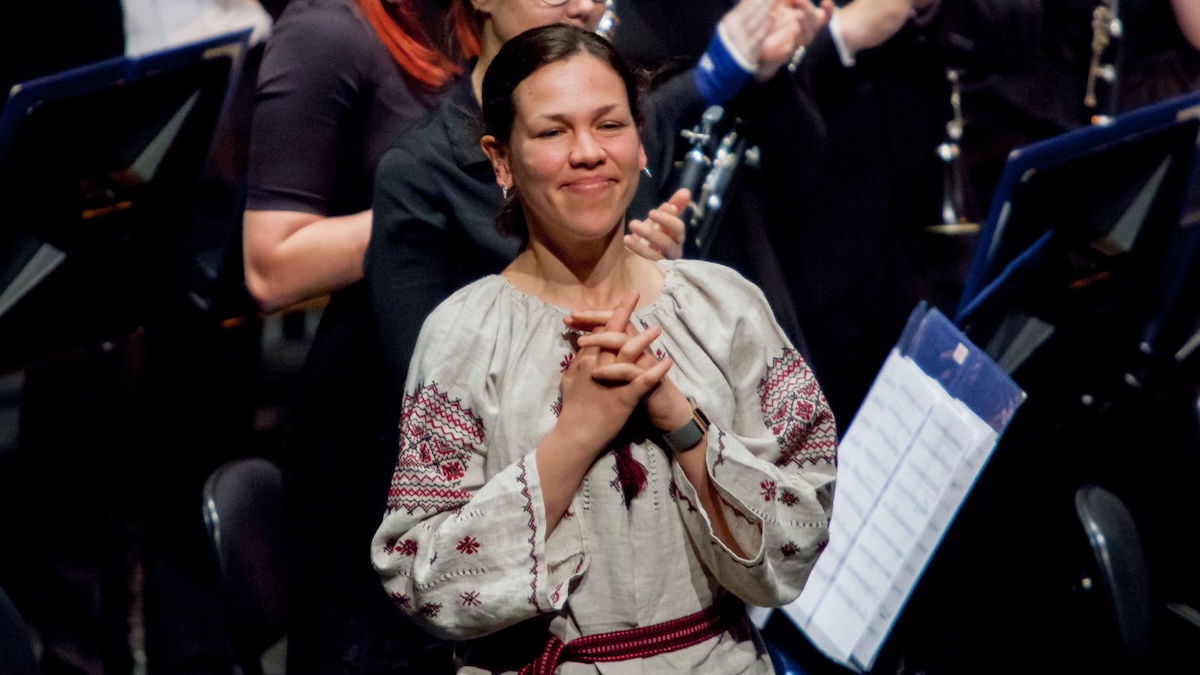
Catherine Likhuta. Photo supplied
There’s also a rather amusing side effect to this process: I get quite fit during those days of walking and thinking – almost buff, even! That doesn’t last long, though. Once I start putting the musical ideas down on paper, I switch to an ice-cream diet. By the time I’m preparing orchestral parts, it’s ice cream, chocolate and anything crunchy I can get my hands on. Every stage of composition has its own dietary requirements!
I’m a bricklayer when it comes to composing. By the time I sit down to write the final version, I generally know exactly what goes where, how long things should be and what’s still missing. I build the piece measure by measure, rather than discovering its direction as I go along.
I also don’t get much sleep when I’m deep into a project. My brain knows what it wants to do next, and apparently it refuses to be denied just because its owner is tired. It’s very much a gift-and-a-curse situation.
I’m quite aware that not all composers work this way, and that’s something I keep very much in mind when mentoring young composers. I might do things my way as Cathy the composer, but as Cathy the composition mentor, my job is to help each student discover their own way of working and allow their individual talents and ideas to shine.
My late mentor, Steven Stucky, used to say that there is more than one right note. I’ve always loved that sentiment. We’re all different, and the world needs all those differences. I simply compose in the way that works best for how my brain and heart are wired, embracing the techniques I’ve refined over the past few decades to allow me to be my most authentic self.
The world premiere of Catherine Likhuta’s Songs of Survival takes place in the Queensland Symphony Orchestra’s Maestro 10 concert Don Juan & Manfred on 27 and 28 November, QPAC Concert Hall, Brisbane.






Comments
Log in to start the conversation.