




Ahead of his performances as Enzo Grimaldo in La Gioconda for Opera Australia, Jonas Kaufmann, the world’s number one tenor talks to Jansson J. Antmann about his highly anticipated role debut and upcoming season.
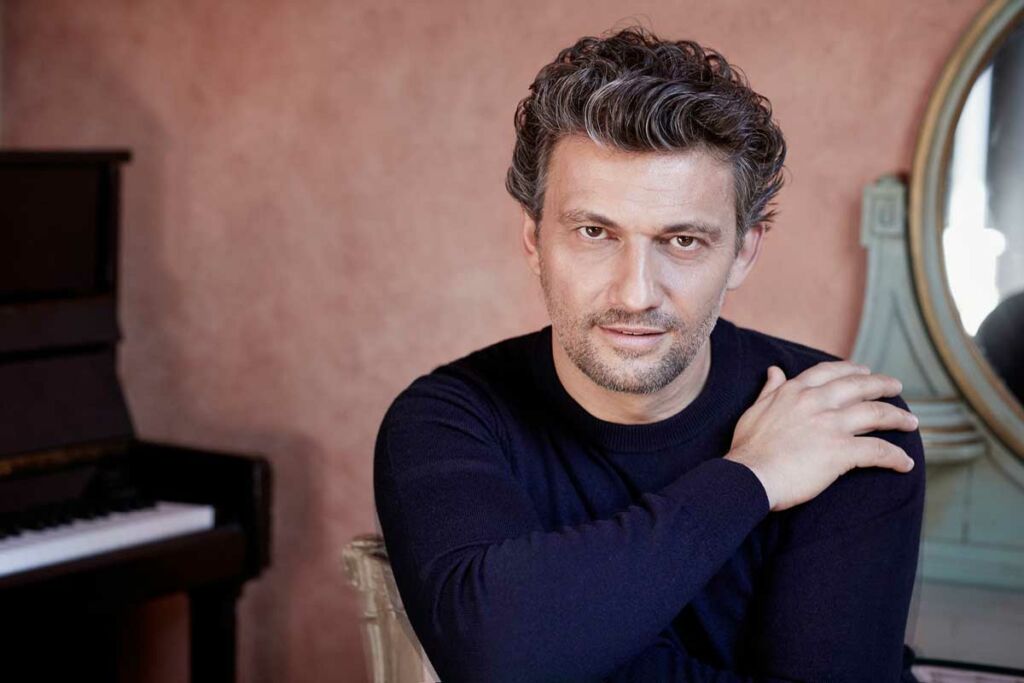
Jonas Kaufmann is back in the swing. Hot on the heels of performances at La Scala and Covent Garden, he has just put the finishing touches to his latest album, The Sound of Movies, which comes out next month. He is about to undertake a new appointment as Intendant of the biannual Tiroler Festspiele Erl in Austria, and this month he makes his role debut as Enzo Grimaldo in La Gioconda for Opera Australia.
The careful way he is adding Ponchielli’s 1876 opera to his repertoire is typical of his painstaking exploration of his Fach, relinquishing some roles as he takes up others.
Speaking to Limelight last year, he discussed the consequences of mastering a role and the risk of reaching a point where one says, “This is it,” and no longer attempts it. How does he reconcile striving for perfection without reaching that point of no return?
“I remember the rehearsals of Così fan tutte with Giorgio Strehler, which changed my approach to interpreting a part on stage. Working with him was one of the great theatrical experiences of my life. His great credo was that the action onstage should be reinvented each evening. Performers should avoid a fixed routine at all costs, and they should never just reproduce the same old stage business. That was anathema to him.”
Kaufmann says he always has Strehler’s tenet in mind, adding, “When I realise that I have ‘outgrown’ a role, as they say, then I have to put it aside, as I did with my Mozart roles, Alfredo in La traviata and some others.”
It is this commitment to excellence that saw him become a Rolex Testimonee in 2009 as part of the Perpetual Arts Initiative, alongside peers such as Dame Kiri Te Kanawa, who became the first testimonee in 1970.
Kaufmann is particularly proud of his affiliation with the Swiss watchmaker, not least because of its support of young artists during the pandemic through its Mentor and Protégé Arts Initiative, as well as his own 2021 debut at the Odeon of Herodes Atticus.
Kaufmann says, “It means a lot to me. The fact that Rolex not only supports the world’s leading opera houses, festivals and orchestras, but also promising young artists, cannot be appreciated enough. In May, Rolex celebrated two decades of mentorship with its own Arts Festival in Athens.”
The week-long event showcased the achievements and ongoing creative relationships of some 60 Rolex protégés and mentors at nine venues across the Greek capital. Drawing attention to the initiative’s sustainability, Kaufmann adds, “Rolex takes the Perpetual Arts Initiative really seriously by helping create new generations [for it] to take on, thanks to its support of [our surviving] musical institutions.”
If Rolex prides itself on being a “crown for every achievement”, what heights is Kaufmann yet to scale?
“Climb Ev’ry Mountain!” he laughs. “I performed that famous song from The Sound of Music at the Life Ball in Vienna.”
When it comes to crowning achievements, he mentions several, including his debut at New York’s Metropolitan Opera in 2006 with La traviata and his first inaugurazione (season opening) at La Scala with Carmen in 2009. He also cites several role debuts: Werther in Paris, 2010; Otello in London, 2017; Paul in Die Tote Stadt in Munich, 2019; and Tristan in Munich, 2021.
As for virgin peaks, Kaufmann says there can’t be many left, adding that “the greatest achievement of my career is probably the fact that instead of mountain tops it feels like a long plateau.”
Kaufmann’s career may be going from strength to strength, but he acknowledges that the industry still hasn’t returned to normal.
“Of course, this art form is like the air I breathe, but I fully understand that people are still hesitating to travel as they used to before the pandemic.”
Kaufmann notes that some opera buffs who used to follow his every step are yet to get back on the trail. “This crisis was very difficult for all of us, but it made us once more aware that our art is useless without our audience.”
If anyone can lure audiences back, it’s Kaufmann, especially given his ability to surprise as he develops his repertoire. A case in point is his survey of Schubert’s music.
He has previously recorded and toured with Die schöne Müllerin and Winterreise, and in September, he will perform the composer’s third cycle, Schwanengesang (Swan Song). Composed in 1828, in the final days of Schubert’s life, it will be staged at New York’s Park Avenue Armory by Claus Guth, who has also directed Kaufmann in Fierrabras in Zürich, Fidelio in Salzburg, and Lohengrin at La Scala and in Paris.

“He will also direct my stage debut as Calaf in Turandot later this year in Vienna. The pianist is Helmut Deutsch, my long-time partner in Liedgesang; our collaboration is one of the happiest things I have experienced as an artist. The stage production in New York will offer the songs from Schwanengesang in a new order, together with soundscape and repeated motives to create the dramatic journey of a young soldier. We call it Der Doppelgänger, after the last song of Schwanengesang.”
Before he heads to New York, however, Kaufmann is returning to the Sydney Opera House for Ponchielli’s La Gioconda, based on Victor Hugo’s 1835 play Angelo, Tyrant of Padua. This will be his fourth appearance with Opera Australia, having previously performed the title roles in Parsifal in 2017, Andrea Chénier in 2019 and last year’s Lohengrin.
Kaufmann will perform alongside his friend and onstage rival, Ludovic Tézier, with whom he recently released the album Insieme (Together). The French baritone takes on the role of Barnaba; Sydney audiences will remember him as Carlo Gérard in Andrea Chénier.
“Performing with Ludovic is always great fun and an inspiration. With him on stage, I can go full throttle. This became immediately clear during our scenes in our first new production of La forza del destino [in Munich], which are like a wrestling match. It’s difficult doing those scenes with someone when I constantly have to hold myself back. With Ludo it’s a terrific challenge every time, and I have to give everything I’ve got. And whenever I’m on stage with him, I feel I give a better performance.”
Kaufmann is also reuniting with Maestro Pinchas Steinberg, who conducted him in both Parsifal and Andrea Chénier at the Sydney Opera House.
“I like working with Pinchas very much. He’s very old school. When it comes to crunch time, he knows how he wants things to be done."
“He never stops halfway, and if he sometimes seems impatient, I can understand why. If you look at his biography, he’s seen it all – the best of the best – and whatever he comes across has to compete with that. And if it doesn’t come really close, it’s obviously going to be boring.”
Another reason Kaufmann likes working with Steinberg is the “elegant” way he has everything under control and doesn’t let anyone get away with anything. “I can’t say whether he’s the perfect match for every opera in the repertoire, but whatever I’ve done with him and what he achieved with the orchestra during rehearsals was really, really amazing.”
Unlike last year’s Lohengrin, La Gioconda will be performed in concert (as were Andrea Chénier and Parsifal ). Kaufmann says that when it comes to verismo operas, “the music is all you need. The musical score is so descriptive that the narrative emanates from the orchestra pit. Just by listening, you can see everything that’s happening before your eyes.”
Another reason Kaufmann is happy to make his role debut in concert is the opportunity to familiarise himself with La Gioconda before performing in two fully staged productions next season alongside soprano Anna Netrebko.
“With a piece scenically as complex and elaborate as La Gioconda, I find it very constructive to give it in concert first, so we can focus fully on the music. The next step is the scenic realisation, and I must say that La Gioconda is a special challenge for the production team.”
Apart from Venice’s regattas, gondolas and the Doge’s Palace which set designers must tackle, Kaufmann points out that the “crazy” story comes with its own unique challenges, including burning ships, a seemingly dead woman and another who is blind and later drowned. “I’m curious to see how that turns out,” he says, “first at the Salzburg Easter Festival and then at Teatro di San Carlo in Naples.”
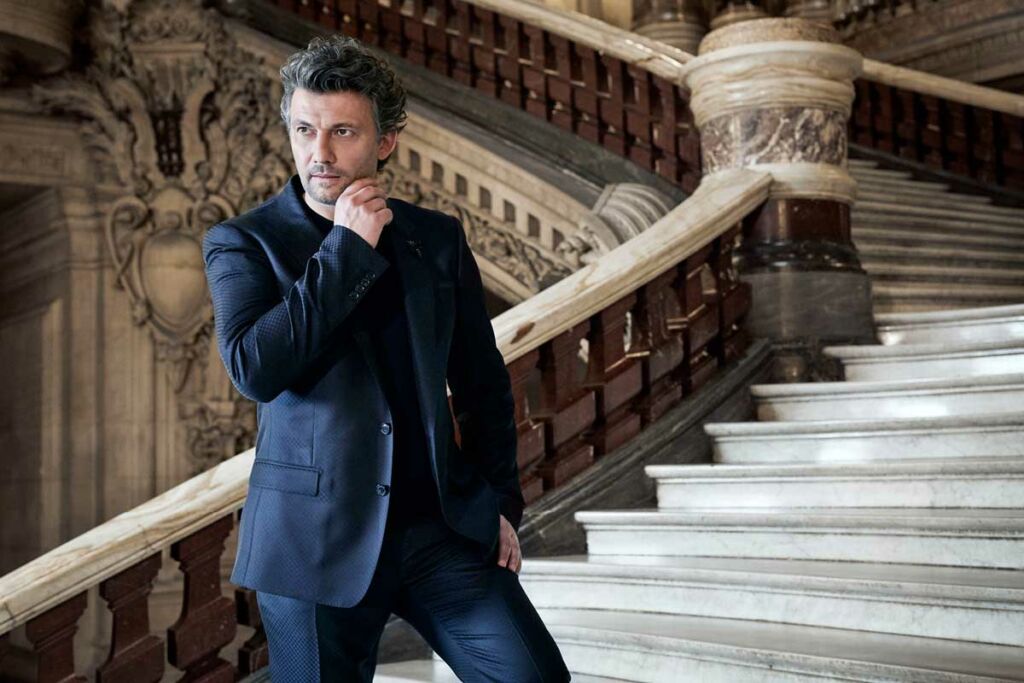
Following the premiere of Die Walküre in Naples earlier this year, Kaufmann stated that the Teatro di San Carlo took pride of place in his performance schedule. Asked to elaborate, he stands by his comments.
“I love that house – its acoustics, its magnificent auditorium, its atmosphere, its history and tradition. And with its leading team, I think the Teatro di San Carlo has a real chance to achieve the artistic level it had in the 1950s and 1960s. So far, I have sung performances of Otello, Tosca and Die Walküre and concerts of Cavalleria rusticana and Aida there, and I’m looking forward to La Gioconda.”
Kaufmann admits he isn’t just drawn to the opera house, but to the Neapolitan lifestyle as well.
“For me, it is the epitome of dolce vita, even if not every side can be dolce, of course. The climate, the sea, trips to Capri and Pompeii, meeting friends – whenever I’m in Naples, I feel like I’m on holiday, even though I’m usually there for work.”
And what of Sydney?
“The Sydney Opera House is a globally recognised landmark, therefore I was thrilled when I first arrived back in 2014. And with the newly installed acoustic [upgrades], I might be singing in the [Joan Sutherland Theatre] one day, although I’ve always appreciated the Concert Hall for its great acoustic.”
Jonas Kaufmann performs in La Gioconda at the Concert Hall, Sydney Opera House on 9 & 12 August.



Comments
Log in to start the conversation.