First performed in London in 1715 during the inaugural season of George I’s reign, Handel’s fifth opera, Amadigi di Gaula, is a dazzling tale of love, jealousy and enchantment centred on a sorceress, Melissa, consumed by her love for the knight Amadigi, who in turn loves another.

Elizabeth Quinn caught up with Pinchgut Opera’s Erin Helyard, who is about to make his conducting debut in the UK, leading The English Concert in a Buxton International Festival production of Amadigi di Gaula featuring the American countertenor Jake Ingbar and sopranos Rowan Pierce and Hilary Cronin.
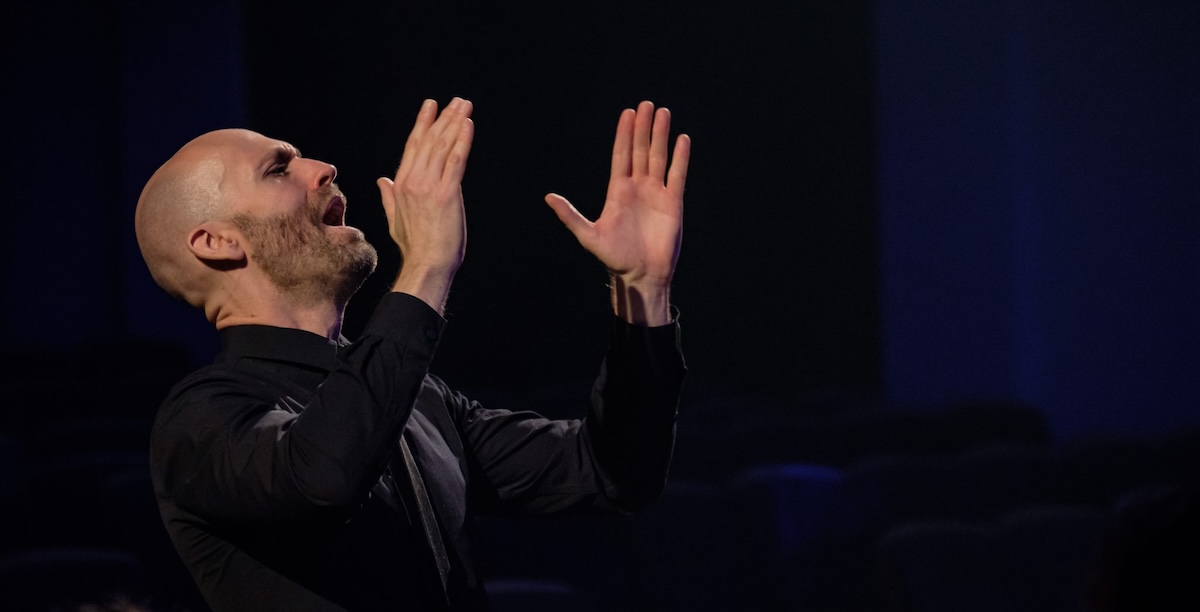
Erin Helyard. Photo © Robert Catto

Erin, what draws you to one opera or performance over another?

Usually it begins with a sense that the piece has something urgent to say in the theatre.

I’m drawn to works in which music and drama are inseparable – where the score doesn’t merely accompany the action, but generates it. That can mean a distinctive dramatic architecture, an unusually vivid emotional world, or a musical language that feels genuinely individual. I’m especially interested in works that reward close listening: pieces whose rhetoric, pacing, and expressive detail reveal more and more the deeper you go into them.

I’m also drawn to repertoire that still feels discoverable. Part of the excitement of my work lies in bringing audiences into contact with music that may be unfamiliar, but that can still feel immediate and compelling. In the end, I’m looking for works where intelligence, musical beauty, and emotional truth coincide.

What was it about the Buxton International Festival that decided you to accept the role of conductor for Amadigi di Gaula?

Buxton has a wonderful reputation for combining ambition with intimacy, and that’s an especially attractive combination for a work like Amadigi. It’s a festival that takes both music and theatre seriously, and it has a real appetite for repertoire that sits just outside the obvious mainstream. That makes it an ideal home for one of Handel’s most concentrated and imaginative operas.

Amadigi is an opera of enchantment in every sense – full of obsession, vulnerability, and psychological pressure. It dispenses with a lot of the machinery of grand spectacle and instead creates a very focused emotional and magical world. That kind of piece can be extraordinarily powerful when the audience is close to the drama and close to the expressive detail of the music.

I was also excited by the chance to make my UK debut in a context that values curiosity, craft, and adventurous programming. Festivals like Buxton can create a particular kind of artistic concentration, and for Handel that can be immensely fruitful. And I’ve admired and listened to The English Concert since I was a teenager, so it is a huge thrill to be able to conduct them.

Buxton Opera House. Photo supplied

How does conducting a small cast in a production such as this compare with conducting a larger production?

A smaller cast often creates a greater sense of exposure – but also a much greater sense of immediacy.

With fewer singers, every voice carries a significant share of the dramatic and musical weight, and the relationships between the characters become especially vivid. In Amadigi, that’s a real advantage, because the opera is so concentrated in its emotional focus. The audience can feel every shift in desire, power, jealousy, or vulnerability almost.

Musically, it also encourages a more chamber-like way of working. The dialogue between singers and players can become incredibly detailed and responsive, which is exactly what Handel thrives on: breath, timing, rhetoric, colour, and flexibility. A larger production offers different pleasures, of course, but with a work like this the intimacy can be a real strength.

Erin Helyard plays the harpsichord, mouth open and brow furrowed in awe.

Erin Helyard. Photo © Cassandra Hannagan

Could you expand a little on the collaborative process in a production such as this?

Opera is always collaborative, but in a work like Amadigi that collaboration becomes especially palpable.

In Handel, so much depends on shared style, trust, and responsiveness. The conductor, director, singers, and orchestra all have to be listening very closely to one another, because the drama is carried not only by the notes on the page, but by pacing, gesture, ornamentation, text, silence, breath and timing.

One of the great pleasures of working on a piece like this is that the rehearsal room becomes a place of genuine discovery. You’re shaping not only the architecture of the work, but the expressive language of each scene: how a recitative lands, how an aria turns, how a character reveals themselves through ornament, tempo, colour, or affect. Those decisions are never made in isolation.

For me, the best process is one in which scholarship, instinct, and theatrical imagination all meet. Historical understanding matters enormously, but it must always serve the living performance. The aim is never simply to reconstruct something, but to make it breathe.


Buxton International Festival presents Amadigi di Gaula at the Buxton Opera House, Yorkshire, UK on 12, 16 and 20 July. 

Contribute to Limelight and support independent arts journalism.