For most opera companies, staging Wagner’s Ring Cycle means surrendering to its enormity: four operas, roughly 16 hours of music drama, titanic orchestral and vocal forces and an audience commitment that borders on pilgrimage. 

The Adelaide Symphony Orchestra is attempting different, something more spin cycle than Ring Cycle.

On 29 and 30 May in the majestic Adelaide Town Hall, ASO Chief Conductor Mark Wigglesworth will lead the orchestra in Henk de Vlieger’s The Ring: An Orchestral Adventure – a concentrated traversal of Wagner’s mythic universe that compresses gods, giants, dragons, fire and redemption into a single symphonic arc. And it’s only 60 minutes long.

“Anyone can be daunted by The Ring in its 16-hour version,” Wigglesworth says. “I’d like to think that this hour version is a doorway for people. A gateway drug!”
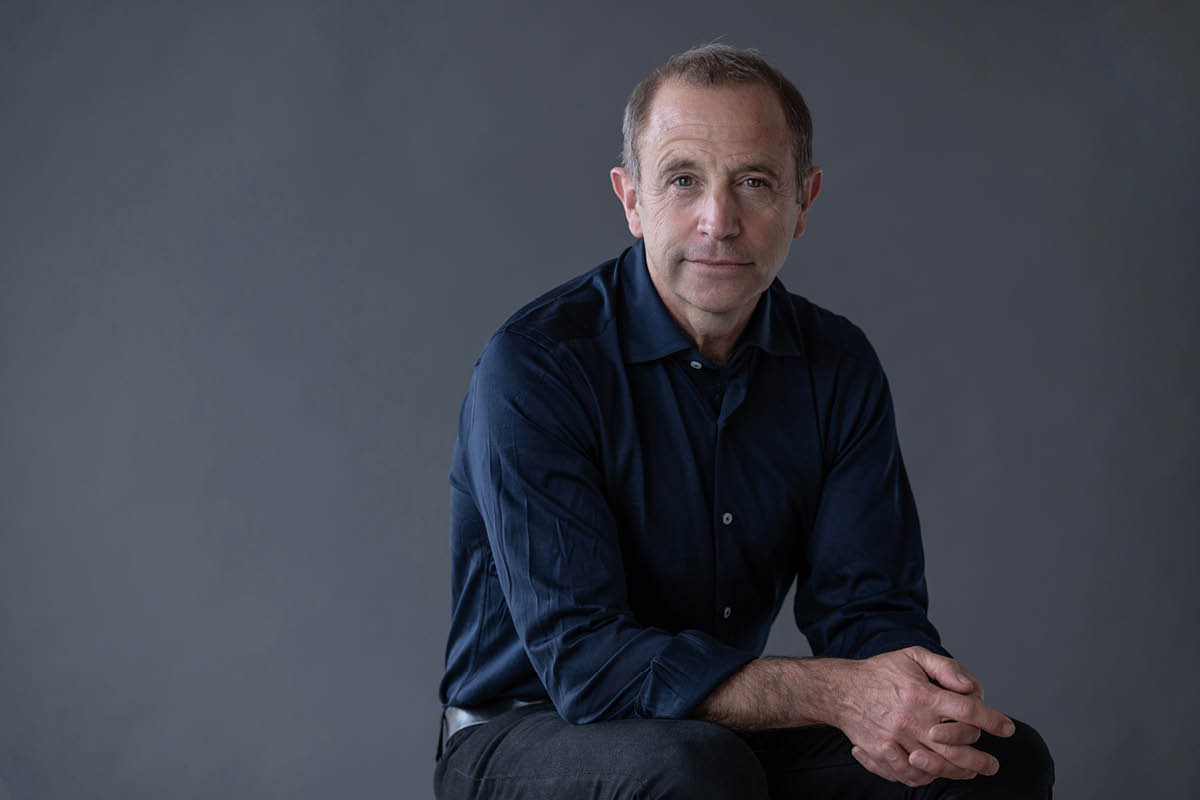
Mark Wigglesworth

Mark Wigglesworth. Photo © Sim Canetty-Clarke

Created in 1991 by Dutch percussionist and arranger Henk de Vlieger, The Ring: An Orchestral Adventure distils the sprawling architecture of Wagner’s Der Ring des Nibelungen into what De Vlieger described as “a solid one-part symphonic work” in which “the main plot lines, as in a symphonic poem, are clearly recognisable”.

His arrangement does far more than assemble a “greatest hits” sequence of orchestral showpieces. Through subtle alterations to Wagner’s original scoring, de Vlieger evokes entire dramatic scenes and delicately traces vocal lines within the orchestral texture itself, allowing listeners to follow the emotional and narrative contours of the drama without singers or staging.

Wigglesworth, who first conducted the work in the late 1990s, says what distinguishes de Vlieger’s version from other Wagner compilations is its loyalty to the underlying dramatic structure.

“There are various versions of the Ring without singers,” he says. “What I like about this version is he really does stick to the story and he uses that as the basis for what he wants us to play.”

“And the four operas work rather well as four movements of a traditional symphonic form: Rheingold is a good first movement; Walküre is a kind of slow movement; Siegfried is a sort of scherzo, and then Götterdämmerung brings it all together.”

That architecture, Wigglesworth argues, is precisely why the condensed version succeeds where longer orchestral syntheses can lose momentum. At around an hour, the piece retains a sense of dramatic propulsion and coherence.

“The audience can hold on to the story at the same time they’re experiencing the beauty of the music.”

Mark Wigglesworth and the Adelaide Symphony Orchestra. Photo supplied

The score contains many of the composer’s most recognisable musical images: the Rhine swelling into life ; anvils hammering in Nibelheim; shimmering forest murmurs; flames encircling Brünnhilde; the rainbow bridge ascending toward Valhalla.

“The music is so cinematic, frankly,” Wigglesworth says. “And thanks to the movies, we’re so much more familiar with it than we realise.”

Those anticipating (or dreading) a nonstop parade of orchestral bombast might want to adjust their expections. “It’s all the highlights,” he says, “but some of the highlights are really soft and slow.”

Wigglesworth’s favourite moments are not the heroic climaxes but the introspective passages: the stillness of the forest scenes, the luminous tenderness between Siegfried and Brünnhilde, the suspended lyricism that emerges unexpectedly within Wagner’s vast mythological machinery.

“Ultimately it’s a love story,” he says. “I think we often forget that.”

Conducting the symphonic version also requires a different kind of interpretive thinking from leading the complete operas. Freed from the practical demands of singers and staging, tempos and pacing can be reshaped to serve the larger symphonic arc.

“There are some speeds you choose that might not be the ones you do in the opera,” he says. “You either need to linger a bit or move on a little bit depending on the larger symphonic shape.”

Rather than diminishing Wagner’s music, Wigglesworth believes the arrangement reveals its surprising flexibility.

“One thinks of Wagner as something monumental,” he says, “but actually, it’s very malleable.”

Mark Wigglesworth and the Adelaide Symphony Orchestra. Photo © Claudio Raschella

The Adelaide performance carries additional resonance in a city with an unusually deep Wagner history. Adelaide became the first Australian city to present the complete Ring Cycle in 2004, and the work retains a devoted local following.

“There are a great many very knowledgeable Wagnerites in South Australia,” Wigglesworth smiles.

But he hopes the concert will appeal equally to seasoned devotees and complete newcomers – particularly those who might never contemplate attending a full Ring cycle.

The program opens not with Wagner but with Richard Strauss’ Four Last Songs, performed by Australian soprano Helena Dix, whom Wigglesworth describes as “a wonderful artist, person, spirit and voice”. 

The pairing was deliberate, he adds, designed to restore the human presence absent from the condensed orchestral Ring. Strauss’ luminous farewell masterpiece forms an ideal emotional prelude to Wagner’s mythic landscape, he says, “and to have the humanity of a singer in the evening just feels right to me.”


Adelaide Symphony Orchestra presents The Ring on 29 and 30 May at Adelaide Town Hall.

Contribute to Limelight and support independent arts journalism.