The Australian String Quartet launches its 2026 touring season this week in Perth. It does so with a program that places a young Australian composer in conversation with some of the towering figures of the string quartet tradition.

Interwoven pairs Elizabeth Younan’s String Quartet No. 1 with works by Joseph Haydn, Sergei Prokofiev and Clara Schumann in a program exploring connection, communication and musical storytelling. 

For Younan, now completing a Doctor of Musical Arts degree at Juilliard School in New York, the tour marks an important milestone for a work that began nearly a decade ago as part of a university composition assignment.
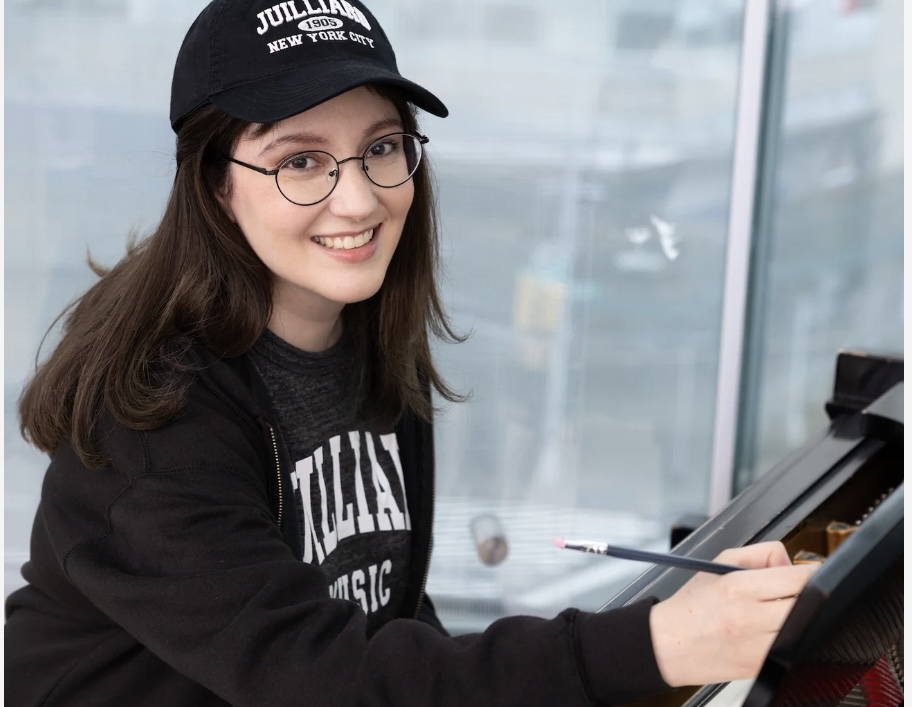
Elizabeth Younan. Portrait supplied

“The first movement of Interwoven was composed in 2016 as part of the Composing Women program at the Sydney Conservatorium,” Younan tells Limelight. “It feels slightly surreal to think back and remember that it began as a university requirement … and now it is touring the country.” 

The Sydney Conservatorium’s Composing Women initiative was established to address the under-representation of women composers in classical music. Younan was part of the first cohort in 2016-17, working alongside performers including the Goldner String Quartet, for whom the opening movement of Interwoven was originally written. 

The full quartet was completed across several years, with support from Musica Viva Australia in 2018. What emerged was a work deeply informed by the history of the quartet form while searching for a distinctly personal voice.

“Even though I was only 22 when I started composing Interwoven, I was acutely aware of the history and significance of the genre,” Younan says. “Beethoven is particularly special to me, and as a teenager I spent countless nights listening to the Goldner Quartet’s recordings of his complete quartets.

Writing for the Goldner Quartet was a “dream come true”, she adds, “but also very nerve-wracking.”

“I quickly realised the only way forward was to let go of expectation and focus on what I wanted to say, and trust my own voice.”

The resulting work takes its title from the intricate relationships between the four instruments, with Younan describing the music as a network of “independent but closely connected voices” engaged in intimate conversation. 

The Australian String Quartet. Photo supplied

While Beethoven looms as an important influence, Younan says she was less interested in direct quotation or stylistic imitation than in responding to the communicative intensity at the heart of the quartet tradition.

“I think the most meaningful engagement with tradition isn’t imitation, but contributing something personal and honest,” she says. “I was more interested in responding to the intimacy, intensity and communication that makes the string quartet such a compelling form.” 

That sense of dialogue across centuries is central to the ASQ’s programming concept. Younan’s contemporary work sits alongside Haydn’s String Quartet in A major Op. 20 No. 6, Prokofiev’s String Quartet No. 2 and Clara Schumann’s Variations on a Theme by Robert Schumann (arr. Éric Mouret). 

For Younan, the juxtaposition creates a broader conversation about the evolution of the string quartet itself.

“You start to hear different ways of thinking about the string quartet, including shared questions around structure, expression and intimacy,” she says. “There are also clear shared techniques across the works – like imitation and the shaping of melodic ideas across the ensemble – even as they lead to very different musical outcomes.” 

The Australian String Quartet. Photo © Laura Manariti

The quartet format, with its exposed textures and conversational intimacy, remains one of classical music’s most demanding mediums for composers. Younan admits the process of completing the later movements proved considerably more difficult than writing the first.

“The first movement came without too much struggle, but the second and third movements … were much more difficult,” she says. “I think I wrote two or three versions of each before I felt satisfied.” 

Yet she also recalls the process as intensely enjoyable, shaped partly by imagining the personalities of the original performers.

“I thought of them a lot as I wrote – who would be speaking to whom, and when,” she says. “I also dearly love the viola, and I wanted to give Irina many special moments.” 

Now, with a new ensemble taking ownership of the piece, Younan says she hopes audiences experience the immediacy and closeness that chamber music uniquely enables.

“I hope listeners feel close to the music, as though they’re inside the conversation between the instruments,” she says. “Live performance has a way of making those emotional shifts feel especially direct. You feel like you are part of the music-making.” 


Interwoven tours to Perth, UKARIA Cultural Centre, Mt Barker, Adelaide, Canberra, Brisbane, Sydney and Melbourne from 11-21 May. For information and bookings, visit asq.com.au

Contribute to Limelight and support independent arts journalism.