



From 26 February to 14 March, 2027, local and international theatre, dance and music-makers will converge in the City of Churches for the 42nd Adelaide Festival.
Festival highlights include the Australian debut of Baroque ensemble il Pomo d’Oro alongside a gathering of ten pianists for the complete Philip Glass Piano Etudes, while Artistic Director Matthew Lutton tells Limelight that the previously announced productions of Bartók’s Bluebeard’s Castle by director Romeo Castellucci, Barrie Kosky’s K. inspired by Kafka’s The Trial and Robert Icke’s Oedipus have all been selling well.
For Lutton, the program takes an unexpected direction, away from the everyday towards the surreal and the fantastical. Even Oedipus, which he says resembles an episode of The West Wing, manages to remain “very epic” and a story about “truth undoing someone”.
“I didn’t set out to do this, but I’m really pleased that the program is about leaping into the otherworldly rather than turning our gaze to the domestic and reality,” Lutton says. “Most of it invites the audience into something very ‘unpedestrian’ and ‘undaily’, which I adore.”
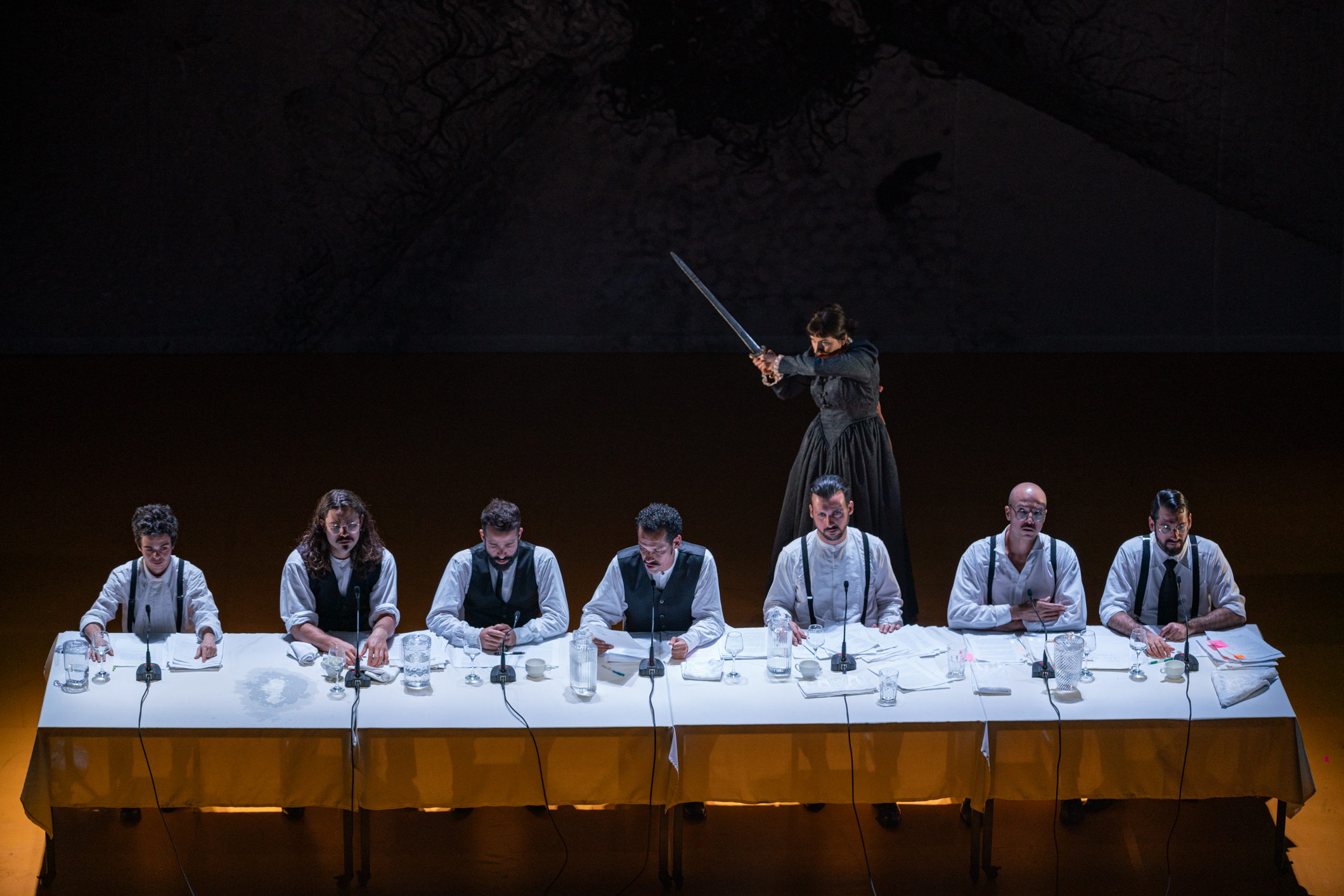
The Brotherhood. Photo © Mayra Azzi
Theatre
Lutton is particularly excited about two productions directed by women: The Brotherhood: CADELA FORÇA TRILOGY Chapter II, by Brazilian theatremaker Carolina Bianchi, and Valentina, written and directed by Caroline Guiela Nguyen, whose Lacrima was seen in Sydney and Perth earlier this year.
Described by Lutton as “off the charts” and “an amazingly complex work”, The Brotherhood follows an assault by a male colleague and Bianchi’s attempt to understand whether she can return to making theatre with men.
“It’s Carolina on stage with maybe eight men, and it’s about the cults of the male genius in art and the brotherhoods that hold up these men, even when they behave appallingly,” Lutton explains, pointing out a scene in which Bianchi wrestles with her love of Chekhov and her anger at what she sees as his misogyny, questioning how an artist can reconcile admiration for the work with the conduct of its creator.
Combining dance numbers, satirical monologues and humour, The Brotherhood comes with an 18-plus rating.
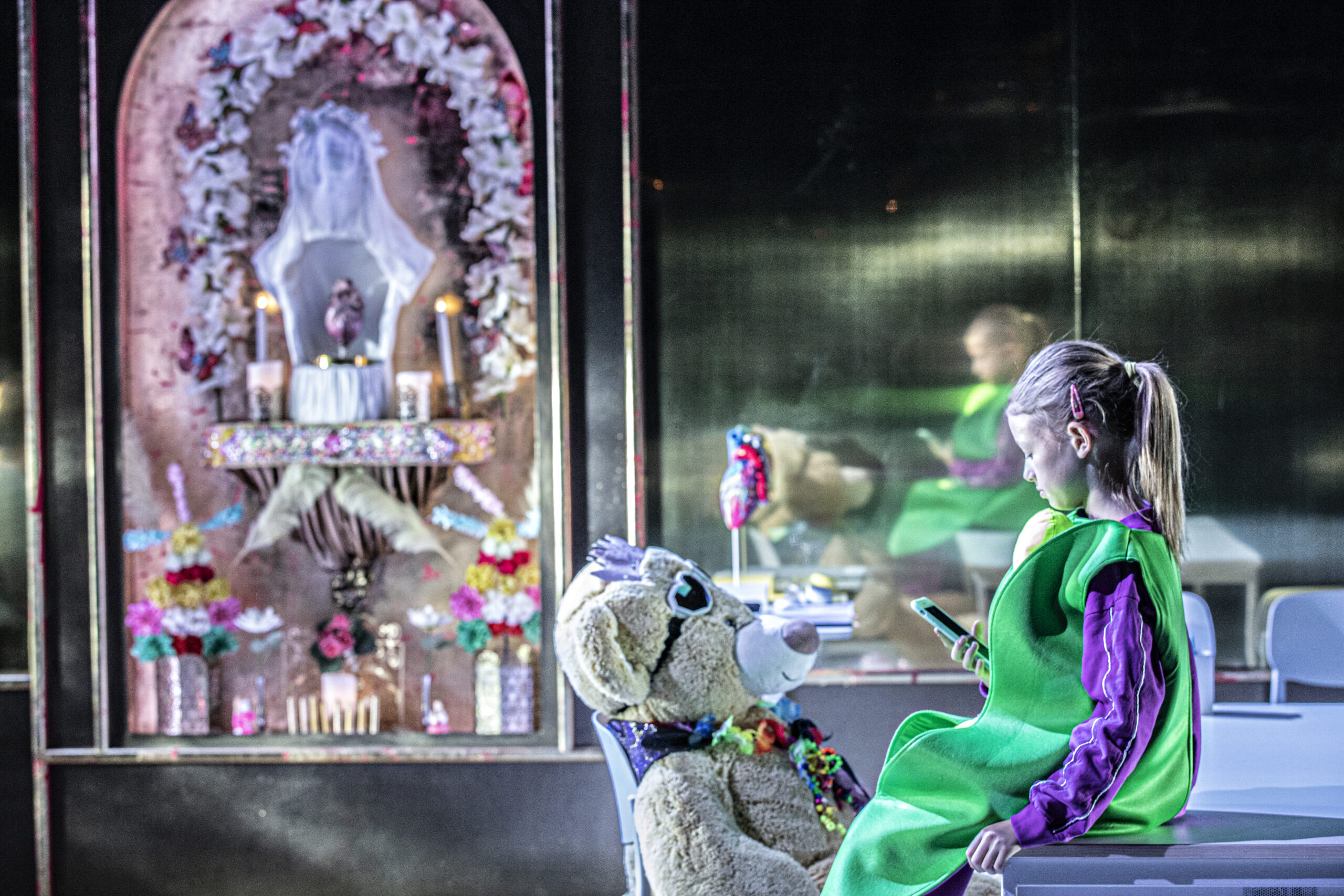
Caroline Guiela Nguyen’s Valentina. Photo © Jean Louis Fernandez
Nguyen’s Valentina is another complex work which Lutton describes as “a fairy tale” about a ten-year-old girl who accompanies her Romanian mother to France for a heart transplant.
“She has to be the translator between the doctor and her mother, and she starts to lie to them because she doesn’t like what she’s hearing,” he says, explaining how the production’s emotional force lies in the child’s love for her mother and the magical way she tries to change their circumstances. “Without giving anything away, she conjures a miracle.”
Greek theatremaker Mario Banushi, whose Goodbye, Lindita appeared at the 2024 Adelaide Festival, returns with Taverna Miresia – Mario, Bella, Anastasia. The work grew from Banushi’s experience of returning to Albania with his sisters to grieve and celebrate his late father’s memory in the family tavern.
“His father was sort of haunting the tavern, and there was a real strong sense of his presence,” Lutton says of the production which is entirely set in a bathroom – a space Banushi associates with vulnerability and exposure.
Rather than a conventional narrative, the work comprises a series of stage images with mirrors, showers and other objects emerging through the floor to become conduits for the father’s return, while an Albanian singer provides the musical thread.
“No words are spoken, and I just love it,” Lutton says. “You lose all sense of time and completely fall into a dream.”
Kumarangk Sisterhood. Photo © Colleen Raven
First Nations storytelling is represented by The Dark Matter of Usulal, created and performed by Margaret J Harvey in her first stage appearance in 10 years, and Kumarangk: Sisterhood, written by Tracey Rigney.
Directed by Glenn Shea, Rigney’s work revisits the resistance of Ngarrindjeri women to the bridge proposed for Kumarangk (Hindmarsh Island), and the devastating consequences when confidential cultural knowledge was made public.
Lutton says the women whose experiences underpin the story have guided a younger generation of performers. The work will be staged outdoors on Kaurna Country at Yitpi Yartapuultiku (The Soul of Port Adelaide), a new Aboriginal cultural centre on the banks of the Port River.
Following its appearance at the 2024 festival with Grand Theft Theatre, Australian collective Pony Cam returns with Burnout Paradise, a physical comedy about the demands of everyday life. Four performers run on treadmills while attempting to complete tasks associated with survival, admin, work and leisure.
“It’s just so much fun, and you really champion them,” Lutton says.
Burnout Paradise progressed from the Melbourne Fringe to New York and illustrates Lutton’s view that the Adelaide Festival and concurrent Adelaide Fringe work best when their artistic territories complement one another. As he puts it, Burnout Paradise lies at the intersection of “a Venn diagram of them both”, but with its natural home in an international arts festival.

Diptych. Photo © Andrea Macchia
Dance
Belgian dance-theatre company Peeping Tom presents DIPTYCH: The Missing Door and The Lost Room, two works set in familiar spaces that become increasingly hallucinatory.
“I find that I really like theatre that manages to scare or unnerve you. And these two pieces do exactly that,” Lutton says.
A hotel room and a ship’s cabin become places of surrealism and horror, as ordinary objects appear to move, swallow or conceal things. Lutton singles out the performers’ extreme physicality, which has been likened to Pina Bausch’s choreography, and their ability to make an audience feel the stage is rocking without the set itself moving.
By contrast, Beijing-based TAO Dance Theater brings 13 & 14, two works from choreographer Tao Ye’s numerical series. Their circular movement system and tightly synchronised choreography create what Lutton describes as a meditative or even hypnotic experience.
“It’s a minimalism where you just breathe with them, you again lose all sense of time, and the whole audience is taken into a space where you become a community with the dancers,” he says. “It’s an incredible experience because of their discipline.”
Following the success of Wayfinder in 2024, Dancenorth Australia presents the world premiere of Galaxia, which features a canopy of interactive stars (created by New York theatrical pioneer Andrew Schneider) extending from the stage into the auditorium, while Adelaide choreographer Larissa McGowan’s ShadowSide expands on Carl Jung’s concept of ‘the shadow’ through the physical interplay of dancers Ben Hancock and Connor MacDonald. The resulting work promises an exploration of identity, what we project, what we hide, and the strange, dark territory in between.
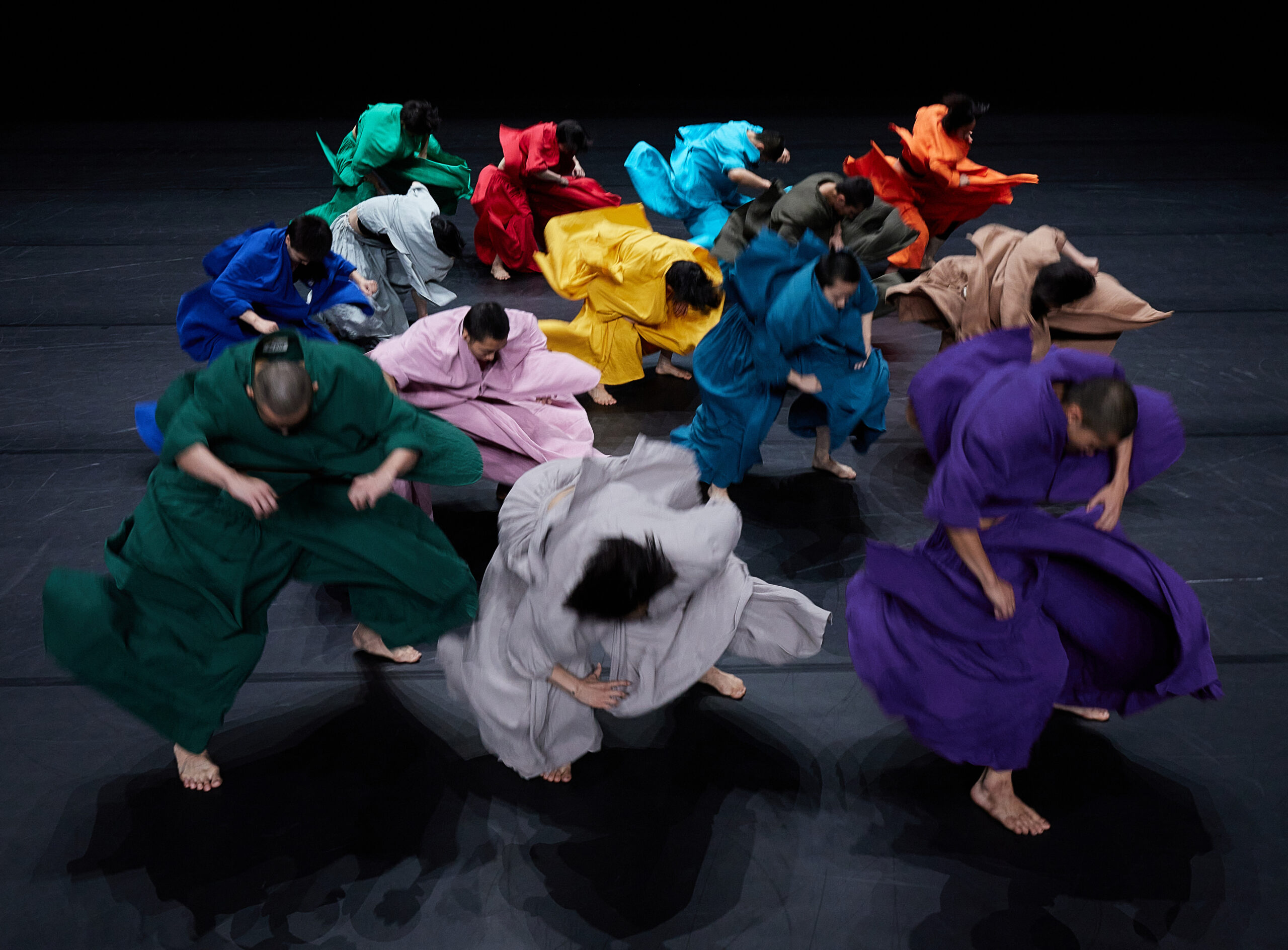
TAO Dance Theater’s 14. Photo © Fan Xi
Music
Lutton sees the classical and contemporary music program as one of the Festival’s defining strengths, with early music, choral repertoire, solo recitals, opera and electronic music which segues between them.
“In some ways, the music program is like a festival within the festival,” he says, adding, “In the first week, you could actually just see that.”
One of its centrepieces is The Complete Philip Glass Etudes, celebrating the composer’s 90th birthday. Ten pianists will perform his 20 etudes, each playing two works before the next performer takes the keyboard.
“Philip talks about the love of hearing different pianists interpreting them, so we’re flying them in from around the world to come and play two pieces each,” Lutton says. “It’s like a gentle passing of the baton, where you pass the piano on to the next player.”
The pianists include Timo Andres, Anton Batagov, Janice Carissa, Aaron Diehl, Luke Howard, Andrea Lam, Lisa Moore, Maki Namekawa, Christian Sands and Sally Whitwell.
Batagov also performs GLASSWORKS+, a personal selection of Glass’s music, including pieces from Einstein on the Beach, Koyaanisqatsi and The Hours.
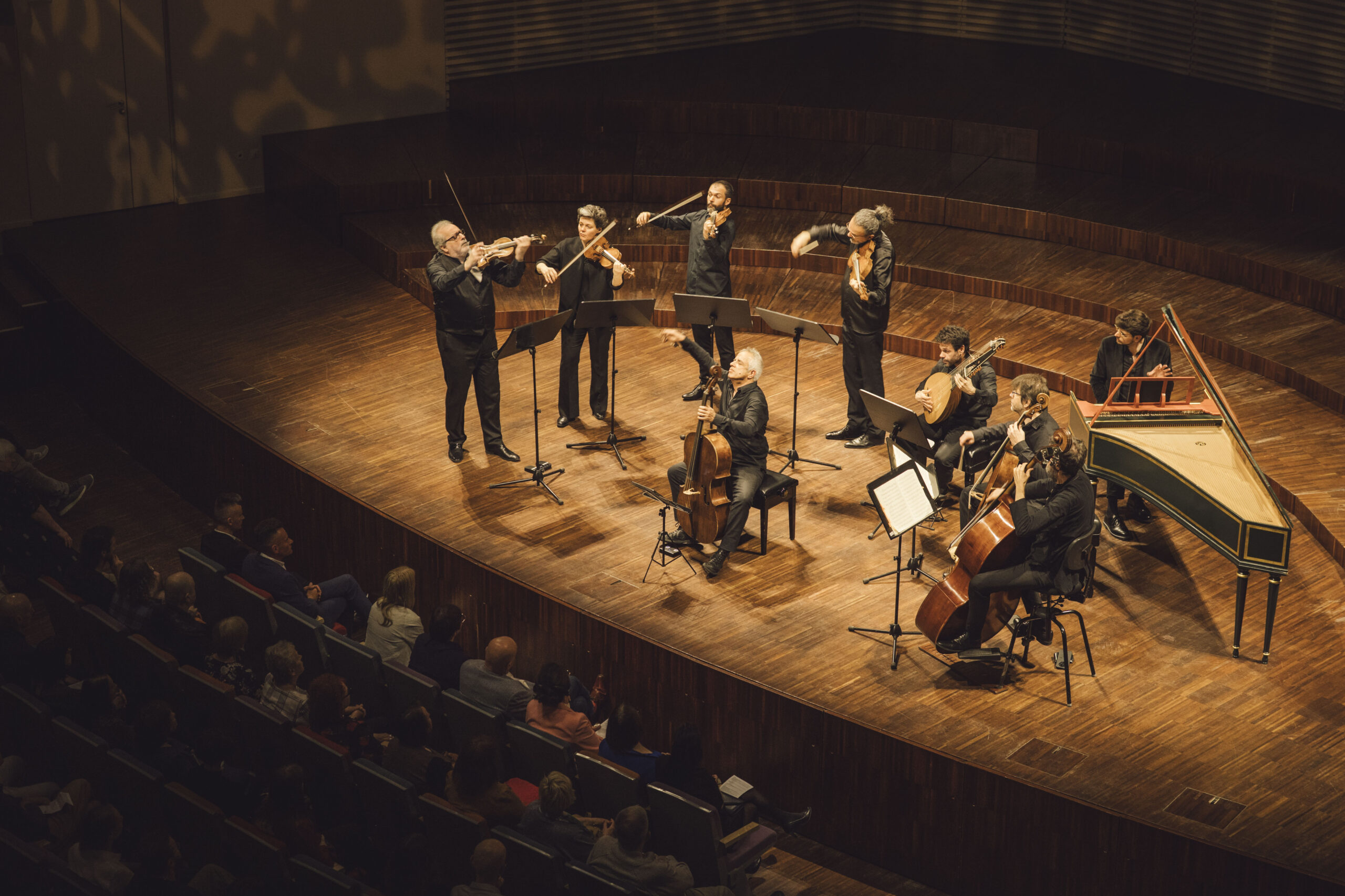
il Pomo d’Oro. Photo © OHM.LV
The Australian debut of Baroque ensemble il Pomo d’Oro continues the Adelaide Festival’s presentation of leading European ensembles, following Pygmalion’s Australian debut in 2026.
Il Pomo d’Oro performs two programs: Al Bunduqiyya – The Lost Concerto, with cellist Giovanni Sollima imagining how Vivaldi composed a work shaped by the confluence of Middle Eastern and Asian cultures in 17th-century Venice, while organist Cameron Carpenter joins the ensemble for Bach’s keyboard concertos and a selection of preludes and fugues.
During the festival, Sollima also gives a solo recital of his own works alongside Albanian folk music, JS Bach and Jimi Hendrix.
Latvian Voices makes its Australian debut in a series of performances spanning Baltic folk songs, contemporary a cappella arrangements and sacred music. In the the third and final concert, Moon and Stars, the vocal ensemble is joined by Adelaide Chamber Singers at St Peter’s Cathedral for a program of works by Latvian and Australian composers including Ēriks Ešenvalds, Luke Byrne and Carl Crossin, as well as a world premiere by Laura Jēkabsone.
In addition to hosting one of the Latvian Voices’ concerts, UKARIA Cultural Centre in the Adelaide Hills welcomes Belgian violinist Marc Bouchkov and Australian pianist Aura Go in a concert of Schubert, Bach and Beethoven that culminates in the Kreutzer Sonata, while Canadian pianist Angela Hewitt traces the influence that Scarlatti and Bach had on Chopin.
Marc Bouchkov. Photo © Peter Adamik
The Melbourne Chamber Orchestra and Australian String Quartet join forces for The Rave and the Nightingale, a program featuring Elgar’s Introduction and Allegro, Beethoven’s Heiliger Dankgesang, a reworking of Adelaide composer Anne Cawrse’s Anon, from A Room of Her Own and Matthew Hindson’s title work, which imagines Schubert completing his final string quartet in the 21st century.
Ensemble Lumen’s First Light pairs Mozart’s Clarinet Quintet with Ravel’s Tzigane and a new work by Australian composer Alice Chance.
Icelandic composer Ólafur Arnalds brings Falling Apart Together, combining strings, percussion and electronics. Lutton describes him as one of the artists who bridge classical and electronic music, alongside Max Richter and Nils Frahm.
Canadian experimental composer Tim Hecker is a personal favourite of Lutton’s, who recalls hearing him at the Sydney Opera House and discovering music that “you could feel in the body rather than just hear it.”
Meanwhile, Australian singer-songwriter Grace Cummings – whom Lutton describes as “a storyteller in the tradition of Paul Kelly and Bob Dylan but with an incredible voice like Florence and the Machine or Lana Del Rey” – presents her fourth album Bloodhorse!, and Arnhem Land songman Ngulmiya Nundhirribala performs music from his latest album Catalunya, combining the song traditions of his home in Numbulwar with the flamenco sounds of guitarist Pau Figueres.
The program also features Jonathan Mills’ opera Eucalyptus, based on Murray Bail’s novel, with a libretto by Meredith Oakes. This performance at Adelaide Town Hall will be conducted by Richard Mills and features the Adelaide Symphony Orchestra and State Opera South Australia Chorus. Desiree Frahn reprises her performance as Ellen, as do Simon Meadows (Holland) and Michael Petruccelli, whose interpretation of The Stranger earned him the 2025 Green Room Award for Outstanding Performance in a Lead Role.
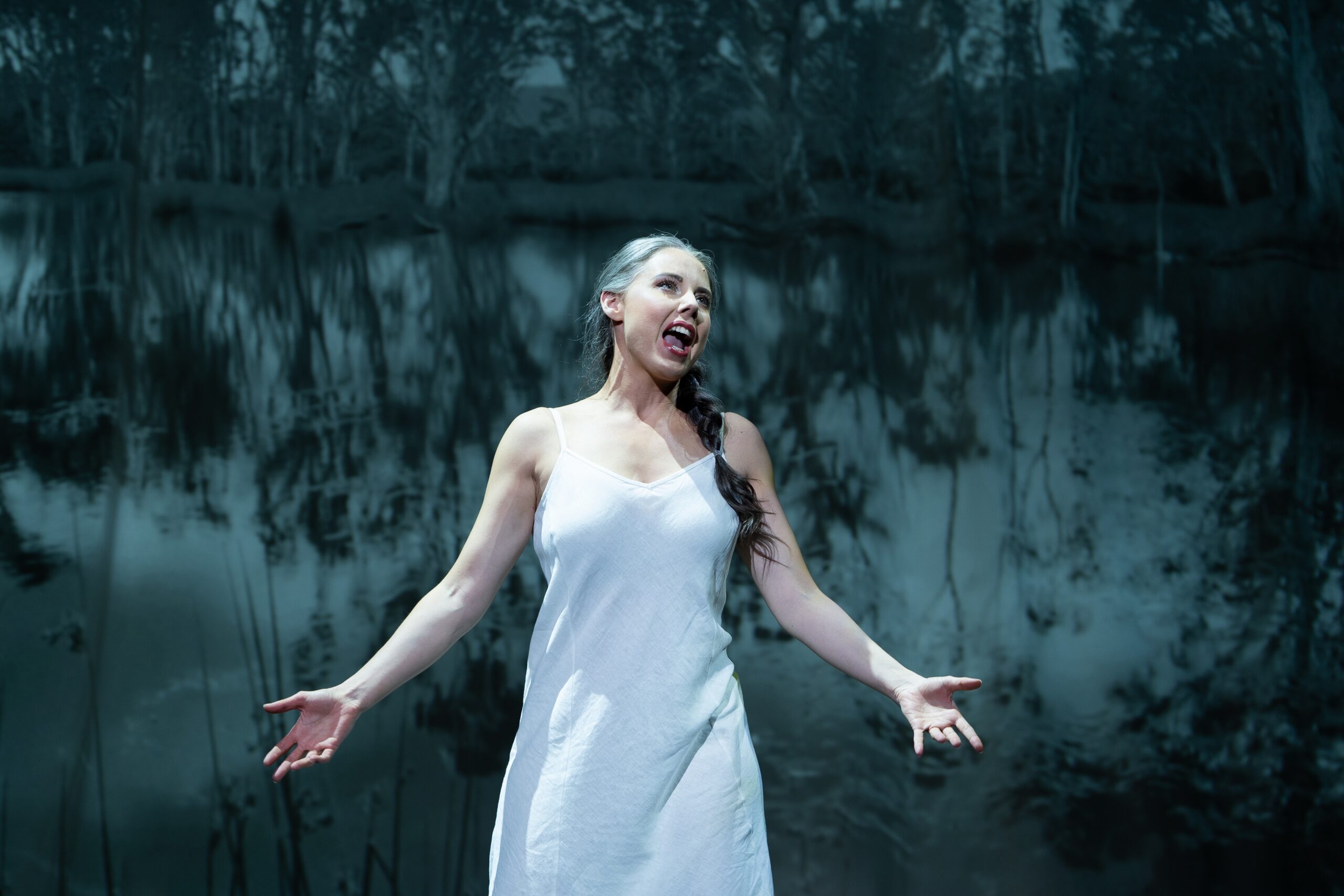
Desiree Frahn in Eucalyptus. Photo © Billie Wilson Coffey
Accompanying Program
This year sees the inaugural Adelaide Festival Exchange, or AFX, a two-day symposium showcasing South Australian artists and emerging projects across theatre, dance and music. Reflecting on its inception, Lutton says, “I really want a place where people can gather and talk about art, not about funding and economics, but the practice of making art that is audacious.”
As in previous years, WOMADelaide rounds out the program, along with AF Talks hosted by Tom Wright and Adelaide Writer’s Week, which returns under new Director Rosemarie Milsom following its cancellation in 2026.
Artists’ Week marks the start of a rich accompanying visual arts program held across the city’s various galleries, including Floating Worlds: Prints from Osaka & Kyoto at Art Gallery of South Australia, Kaled Sabsabi’s Solitude at Samstag Museum of Art and Ned, Giambattista & a Few Dogs by theatre designer Mark Thompson (Aida on Sydney Harbour) at BMGART.
And last but not least, Adelaide filmmaker Tilda Cobham-Hervey’s It’s All Going Very Well starring Jonathan Pryce has its Australian premiere, while the festival hub CODA returns for patrons to enjoy a post-show drink and rub shoulders with festival artists.
The 2027 Adelaide Festival runs from 26 February to 14 March.




Comments
Log in to start the conversation.