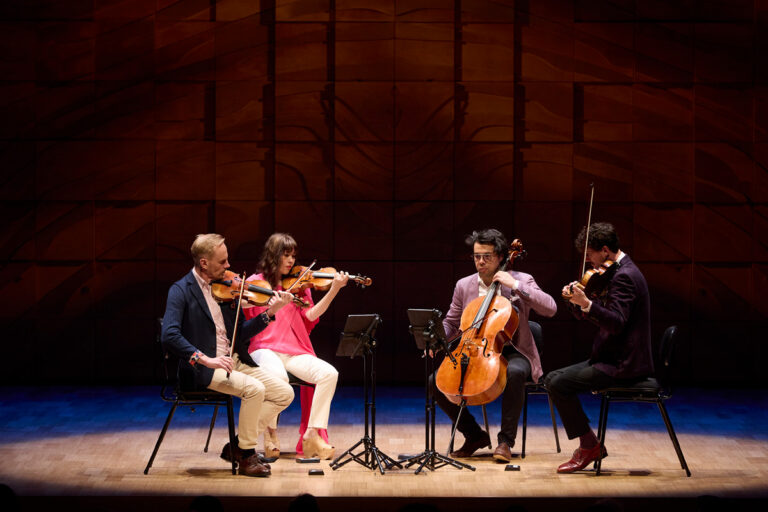


Australia’s arts and creative sectors are facing a mounting education crisis, with new research warning of a widening gap between national cultural policy rhetoric and the reality of shrinking arts education pathways in schools and universities.
A comprehensive review of national data shows a steady decline in arts subject enrolments at senior secondary level and a parallel contraction of creative arts degree courses in higher education since 2018.
The downturn has accelerated following the introduction of the federal Job-Ready Graduates (JRG) policy in 2020, which significantly increased student fees for arts, humanities and creative courses while subsidising disciplines deemed more “job-ready”.
The findings sit uneasily alongside Australia’s National Cultural Policy, Revive: a place for every story, a story for every place (2023), which positions creativity as central to workforce development and aims to build sustainable career pathways for the nation’s 3.2 million young people aged 15–24.
National data from the Australian Curriculum, Assessment and Reporting Authority reveal that Year 12 arts enrolments fell sharply between 2012 and 2022. Participation by male students dropped from 22.2 percent to 15.8 percent, while female enrolments declined from 37.6 percent to 26.9 percent.

Students of the Elder Conservatorium of Music, Adelaide. Photo supplied
Across states and territories, ATAR arts enrolments fell by 21 percent between 2015 and 2023. Queensland (−45 percent) and Western Australia (−44 percent) recorded the steepest falls in ATAR arts enrolments between 2015 and 2023, with smaller but consistent declines in Victoria (−12 percent), New South Wales (−10 percent), Tasmania (−8 percent) and South Australia (−5 percent).
The ACT was the sole exception, posting a 43 percent increase driven by Music and Visual Arts.
Nationally, Drama (−39 percent) and Dance (−38 percent) saw the sharpest drops, followed by Media (−25 percent), Music (−16 percent) and Visual Arts (−14 percent).

Victorian College of the Arts Music Theatre students in The Drowsy Chaperone, 2025. Photo © Ben Fon
The report argues that these trends threaten Australia’s “creative ecology” at a time when the cultural and creative sector employs more people than mining and contributes $67.4 billion to the economy – 2.5 percent of GDP. Artists, the research notes, are among the most highly educated workers in the country and frequently apply their skills beyond the arts, including in education, research, community services and consulting.
Despite mounting evidence that arts education builds critical 21st-century skills – creativity, collaboration, critical thinking and communication – the study finds little coordinated government response. While STEM education has attracted more than $75 million in federal investment over five years, in-school arts initiatives under Revive received just $2.6 million over the same period.
The report’s authors describe the situation as a “polycrisis”, one driven by declining school enrolments, reduced university offerings and policy settings that have made arts education less affordable and less visible.
Without intervention, the report’s authors warn, Australia risks undermining the very creative workforce its cultural policy claims to champion.

Comments
Log in to start the conversation.