




France’s national library, Bibliothèque nationale de France (BnF), has announced the unearthing of a previously unknown manuscript by Wolfgang Amadeus Mozart from its collection.
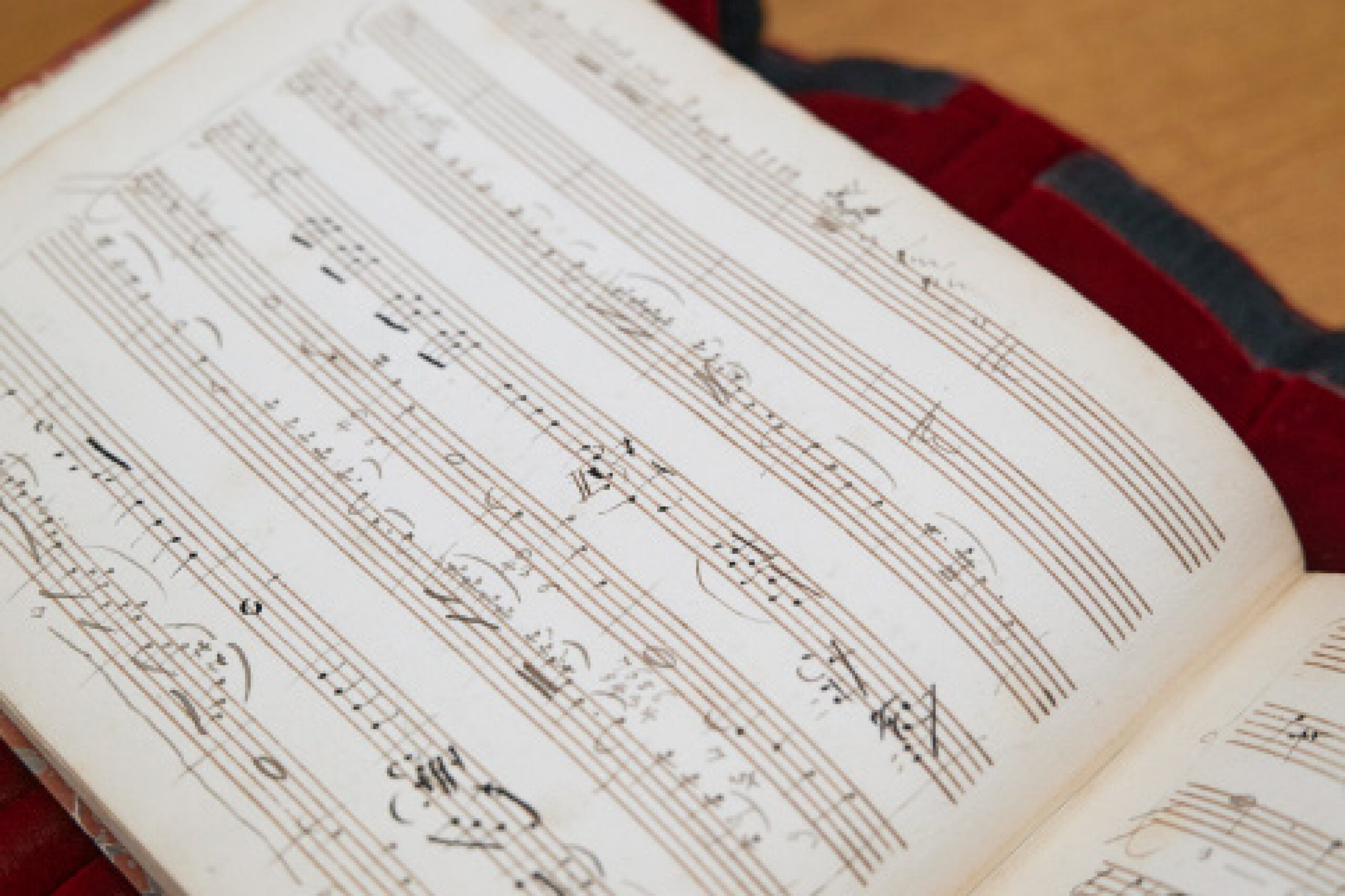
Page 10 of Mozart’s manuscript. © Élie Ludwig / BnF
Discovered on 2 February by curator François-Pierre Goy, the 44-page notebook contains composition exercises and seven works for flute and harp that Mozart penned during his time in Paris in 1778. The notebook was likely used for composition lessons that the 22-year-old composer gave to harpist Marie-Louise-Philippine de Bonnières de Guînes, daughter of the Duke of Guînes.
After Goy identified the handwriting as Mozart’s, the notebook was validated by the Bibliotheca Mozartiana in April.
“This discovery is, according to specialists, one of the most important of recent decades,” said the library’s President Gilles Pécout.
“It allows us to document Mozart’s last stay in Paris and… reveals to us, in his daily life, the activities of the young [composer] in dialogue with his student. The identification of this autograph confirms the universality of our collections and suggests the promise of new and fruitful international scientific and artistic collaborations, particularly with Austria.”
A flautist, the Duke of Guînes...
Continue reading
Get unlimited digital access from $4 per month
Already a subscriber?
Log in








Comments
Log in to start the conversation.