




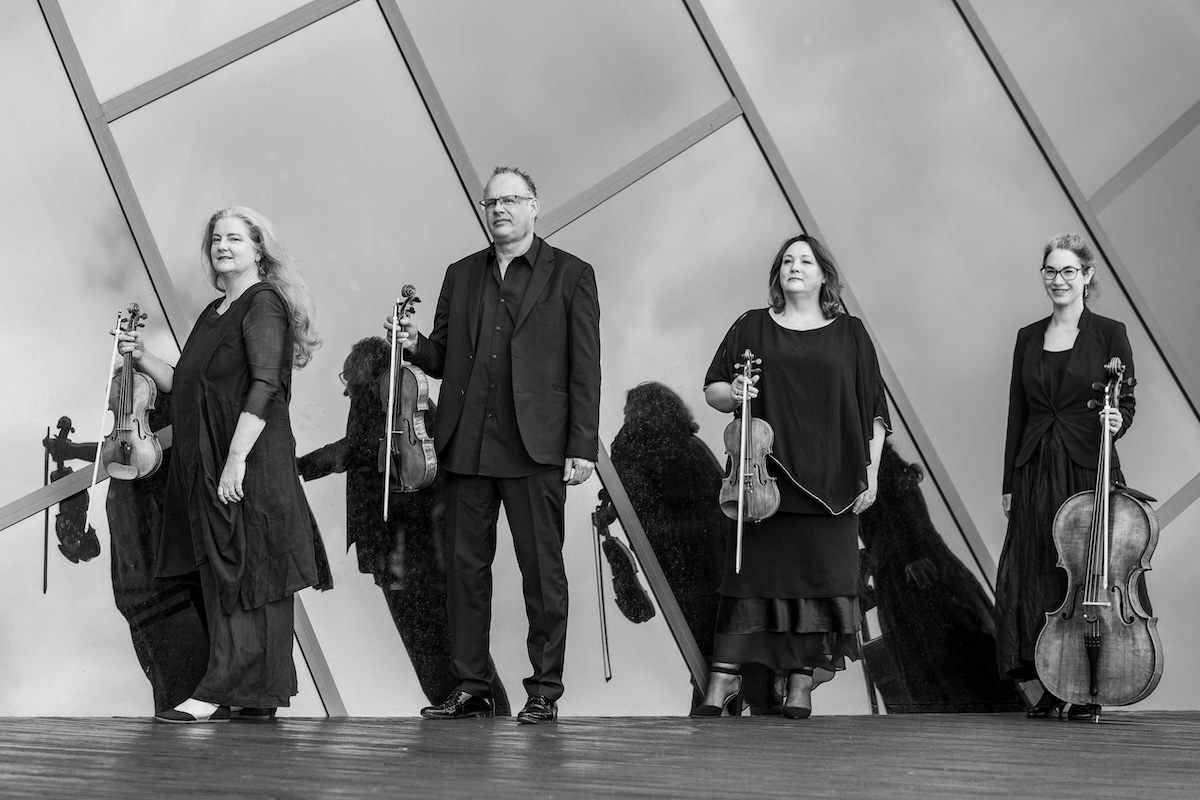
With the Acacia Quartet, Orange Chamber Music Festival taps in local talent. The group calls the Central West its home and is no stranger to taking classical and Australian works to the regions. In the quiet, ornate St. Joseph’s Church on a Saturday afternoon, it offers a French-led program tackling an emotional gamut.
This Saturday afternoon flows on from the OCMF’s 2026 Cultured program, a morning of free performance that light up the city’s cultural hub just down the road (this year was crowned by the Sydney Symphony Orchestra Fellows and Hartmann’s Dance Suite for Wind Quintet, backdropped by an Orange Regional Gallery exhibition about the mating dances of exotic jumping spiders – a delightfully quirky pairing).
Cellist Stephan Koncz’s A New Satiesfaction borrows from Satie’s hit Gymnopédie No. 1. for an amiable and buoyant work for quartet. Relishing the airiness and sparkle of the violin’s highest register, the work glimmers in the hands of Acacia’s violinists – particularly first violinist Lisa Stewart – while ranging in tone from lightly delicate to intense, with all hands on deck.
Puccini’s Crisantemi – named after the chrysanthemum flowers that were used exclusively for mourning during the composer’s time – was a break from the French theme. It’s beautifully devastating, though, so it’s easy to forgive the transgression’ Likewise the inclusion of Australian composer Nick Wales’ shimmering Harbour Lights, a musical reflection of the way that water in Sydney Harbour plays with the light that hits it.
A clever lighting setup for the performance paired well with the piece. If you missed the lights, it seemed as if afternoon sun was spilling on just the players from one of St Joseph’s Church’s brick-lined arched windows.
Like Debussy, Ravel was one and done with the string quartet form, and it’s a corker of an entry. His only String Quartet is a gorgeous pressure test for a curated collection of melodies – across the length of his work, he stretches and squeezes them in different settings. Those threads are easy to follow in Acacia’s rendition.
Acacia is a joy to watch, as well as hear with the players physically and emotionally in-tune with the bends and corners in Ravel’s music. Stewart played with such exuberance, her glasses fell off at the end of the piece. There’s heart bared in every work.







Comments
Log in to start the conversation.