British violinist Daniel Hope’s career took off in 2002 when he joined the Beaux Arts Trio. Now, Hope is an internationally acclaimed performer and recording artist and has commissioned and premiered more than 30 works. On his second Australian tour, he is accompanied by emerging German pianist Marie-Sophie Hauzel.

The duo is presenting music primarily from ‘La Belle Époque’ (1871-1914), featuring major works by Elgar and Dvořák, and salon pieces by Gabriel Fauré, Felix Mendelssohn and George Enescu.
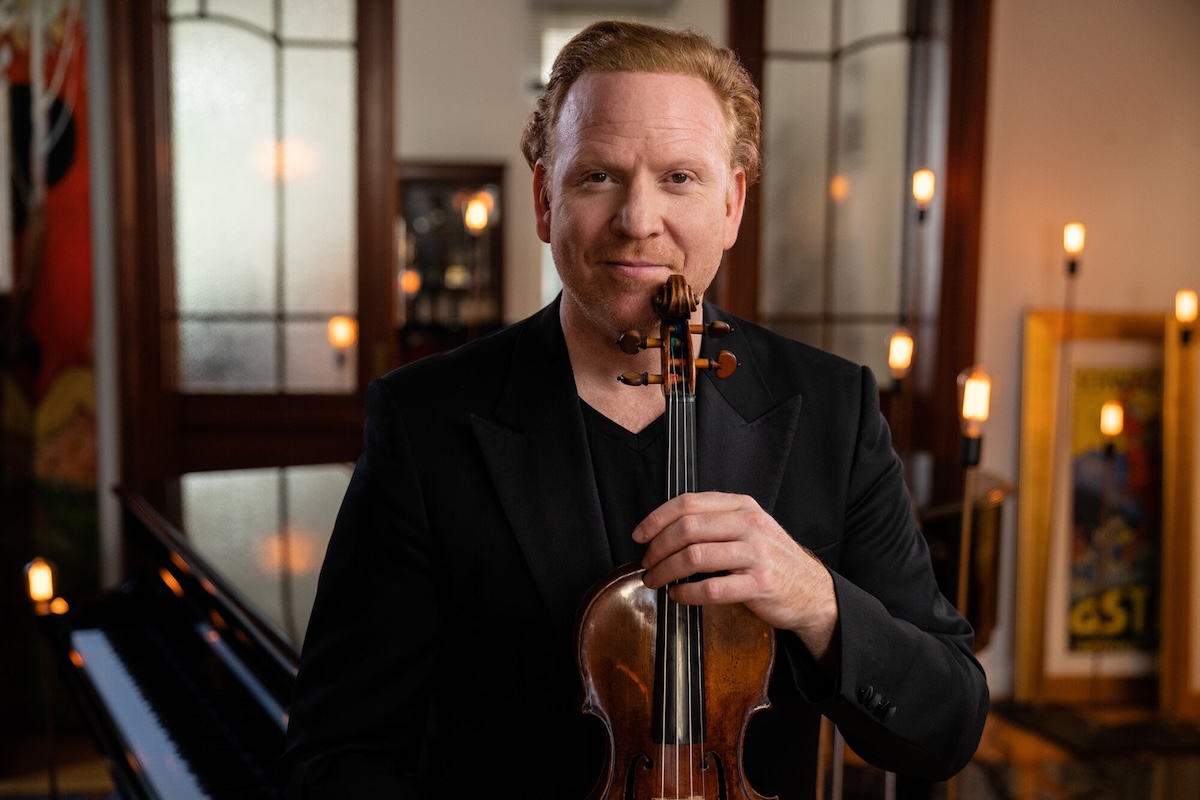
Danile Hope. Portrait © Nicolas Zonvi

The program opens – rather abruptly, it seems – with Enescu’s Impromptu concertant; but as the music progresses, Hope and Hauzel combine to create an expressive performance of this rarely performed work. Fauré’s Andante offers a contrasting style, highlighting Hope’s ability to sustain a long lyrical line and Hauzel’s empathetic accompaniment.

Dvořák wrote his four-movement Sonatina – his 100th work – in America. Like his ‘New World’ Symphony, it is vibrant, tender, melancholic and jubilant, and much more. This duo extracts every ounce of energy and sensitivity from a complex score, making the performance suspenseful and captivating.

The second half opens with arrangements of two contrasting songs without words by Mendelssohn. The duo brings grace and charm to On wings of Song, and a powerful, almost manic energy to the Witches’ Dance.

Elgar’s violin sonata was a mature work, written just one year before the cello concerto. The three contrasting movements stretch both performers to express the full gamut emotions with a large and colourful musical palette. They give a gripping performance, making the most of Elgar’s rich and luscious writing.

An encore is a must.

Brahms’ F.A.E. Scherzo  was the composer’s contribution to a four-movement collaboration with Robert Schumann and Albert Dietrich for their mutual friend, violinist Joseph Joachim. Hope boasts a link to Brahms and Joachim via his 1742 Guarneri del Gesù violin, which once belonged to the virtuoso Karol Lipinski, who gave a historic performance of their works. Hope and Hauzel attack the Scherzo with great gusto, keeping momentum throughout and playing the expansive lyrical moments with evident relish.

More insistent clapping gets them back. Hope and Hauzel give a stellar performance of Lili Boulanger’s glistening Nocturne and are, finally, allowed to leave.

It’s worth noting also that Classical Music Australia’s (CMA) innovative payment options – “pay what you can” and “pay it forward” – give 120 audience members a ticket they would otherwise probably forgo.


For more information on Classical Music Australia events, visit classicalmusicaustralia.com

Contribute to Limelight and support independent arts journalism.