

From all the press, and now this book, it seems to be true that Liza Minnelli has lived her life, on and off stage, at full volume. It’s proved in this memoir – which is hilariously “as told to Michael Feinstein”, while two journalists, Josh Getlin and Heidi Evans, are credited with the nuisance task of actually writing it. Only Liza.
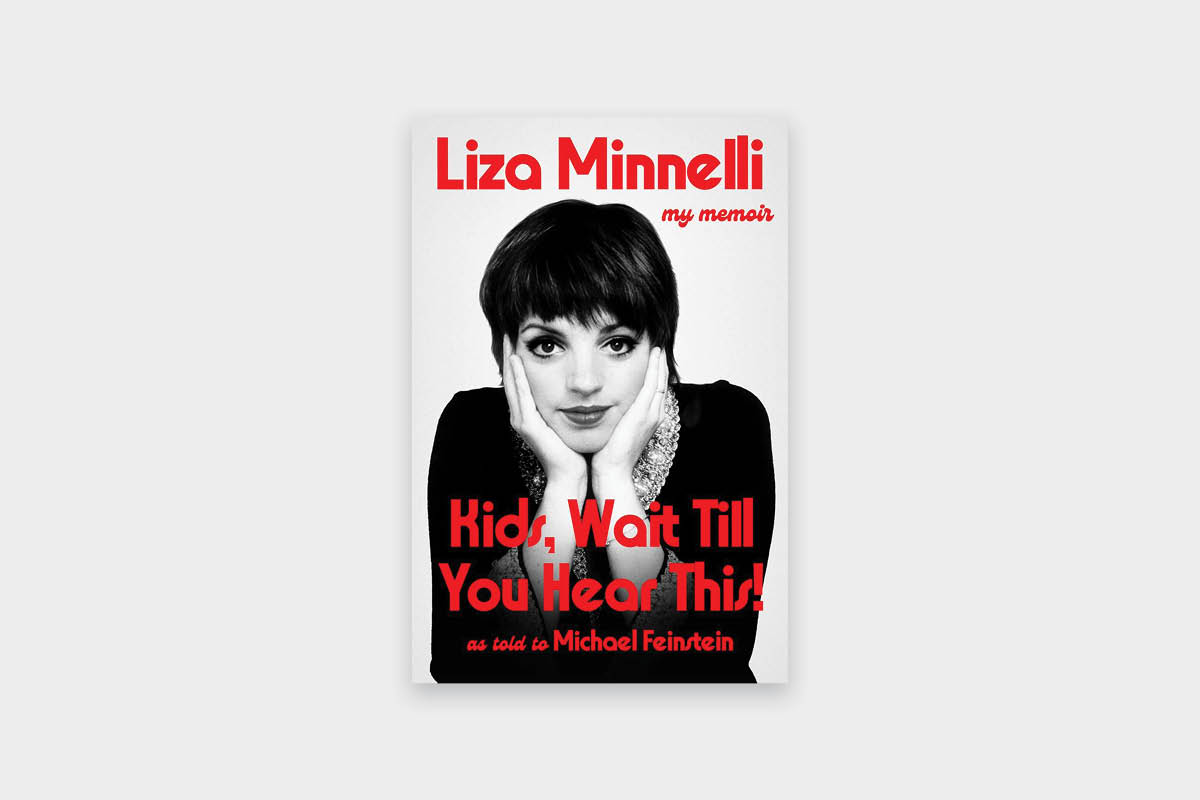
Nevertheless, despite this unusual distancing from the coalface, that unmistakably and endlessly imitable shooshy-zhuzhy voice is channelled with crackling energy into a book that is less a chronological recounting of an extraordinary life and more an intimate monologue delivered from the prone position on a dressing room sofa after yet another triumphant performance. The result is a book that is messy, magnetic and unmistakably Minnelli.

What makes it extra compelling is its inability to corral her into a tidy narrative. Minnelli leans into the contradictions that have always defined her. She was the child of real Hollywood royalty (Judy Garland and Vincente Minnelli) who longed for normalcy; the shy girl who became a stage-devouring force; the woman who could command a stadium yet struggled with her own private world. She writes with a candour that feels earned rather than performative. When she describes the pressures of growing up as Garland’s daughter, she avoids both self-pity and sensationalism. Instead, she offers a nuanced portrait of a childhood shaped by love, instability, booze and the constant hum of expectation.

The memoir’s strongest sections are those that explore her artistic development. Minnelli has always been a storyteller who works in movement, voice and presence, and she brings that same sensibility to the page. Her recollections of working with Bob Fosse, Fred Ebb and John Kander, for instance, are vivid and affectionate, capturing the collaborative electricity that produced Cabaret and Liza with a Z. She writes about craft with the precision of someone who has spent a lifetime studying the mechanics of performance – how to hold a note, how to land a gesture, how to make an audience feel seen.

Yet the book is not simply a celebration of triumphs. Minnelli is painfully frank about her struggles with addiction, her rolling health crises and the relentless scrutiny that inevitably accompanies her degree of fame. What keeps these passages from sinking into bathos, however, is her instinctive, irrepressible sense of humour. Even in the bleakest moments, she finds a way to wink at the reader, as if to say, “Can you believe I made it through that?” This blend of vulnerability and theatricality is quintessentially her.

For the picky, the book could be described as structurally scattered, but that loose grasp on convention and the dizzying pinball redirections mirror Minnelli’s conversational style. She digresses, circles back, interrupts herself with anecdotes and occasionally leaps across decades. Rather than detracting from the experience, this tangible rhythm gives the book a sense of immediacy, as though she is telling the story in real time, guided by emotion rather than chronology.

Ultimately, Kids, Wait Till You Hear This! succeeds because it captures the essence of Liza Minnelli: a woman who has lived a life of extremes and somehow managed to hold onto her warmth, wit and generosity of spirit. She loves extravagantly, unless you happen to be Lady Gaga, and has been fiercely loyal to those such as Elizabeth Taylor and Peter Allen who clearly returned her love and loyalty in spades. Unsurprisingly, Kids is not a definitive historical tome, nor does it try to be. It’s actually another performance – vulnerable, exuberant and deeply human. And like any great Minnelli performance, it leaves you feeling a little breathless and a lot happier for the ride.

Available on Booktopia

Hodder & Stoughton, HB 320pp, $55, ISBN 9781399746762

Contribute to Limelight and support independent arts journalism.