




A clock ticks loudly. A decrepit old man in scruffy clothes shuffles his way onto stage. He slowly moves a ladder into place and clambers up to unlock a drawer in a wall of filing cabinets, emerging with a banana, which he happily consumes.
Sitting at his desk, with its reel-to-reel tape recorder, he consults a log book, finds the tape he’s looking for (tape 5 from box 3) and starts to listen. Today is his 69th birthday and as is his wont, he listens back to a tape from the past, and records another. This time the old tape was one he made in an empty wine house on his 39th birthday, in which he also reflects on himself in his confident twenties. Thus, recollections lead to other recollections, as the past rewinds.
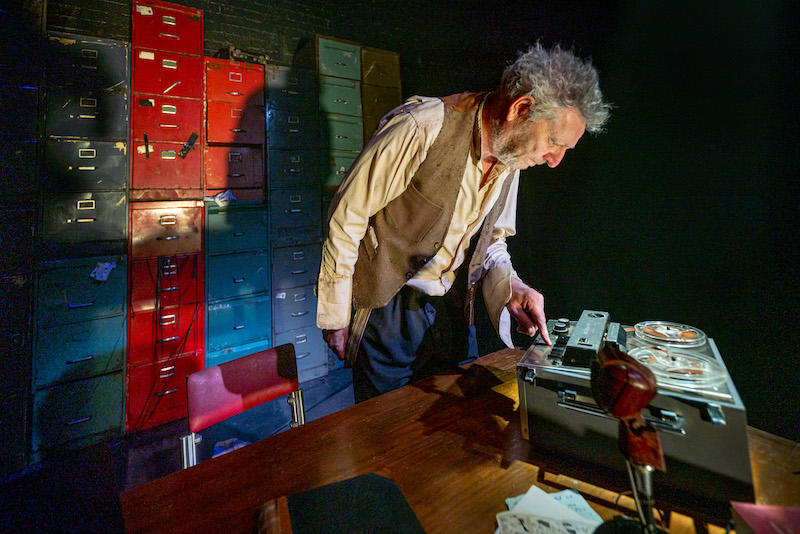 Jonathan Biggins. Photograph © John Marmaras
Samuel Beckett wrote Krapp’s Last Tape for Irish actor Patrick Magee, though it is considered one of his most autobiographical pieces. It premiered in 1958, when reel-to-reel tape recorders were relatively new, with Beckett setting it “in the future”. Nowadays, of course, memories are ubiquitous thanks to social media.
Running just 50 minutes, Krapp’s Last...
Continue reading
Get unlimited digital access from $4 per month
Already a subscriber?
Log in






Comments
Log in to start the conversation.