


I rarely, if ever, review jazz concerts. This one, part of the SIMA Sydney International Women’s Jazz Festival, featured two trios of piano, bass and drums. (SIMA is the Sydney Improvised Music Association, active for 40 years and currently celebrating the 15th year of its festival.)
Both groups play contemporary jazz, with its dissonant harmonies, uneven rhythms and time signatures, improvisation, and motivic rather than melodic thematic material. In many ways, it is not far removed from contemporary classical music – think of the piano Études of Ligeti or the French post-Impressionists.
But in one way, this was a traditional gig, insofar as it featured a headline act (New York’s Kris Davis Trio), preceded by a support band (Seoul’s Coloris Trio, led by drummer, percussionist and composer Soojin Suh). Both trios played original pieces.
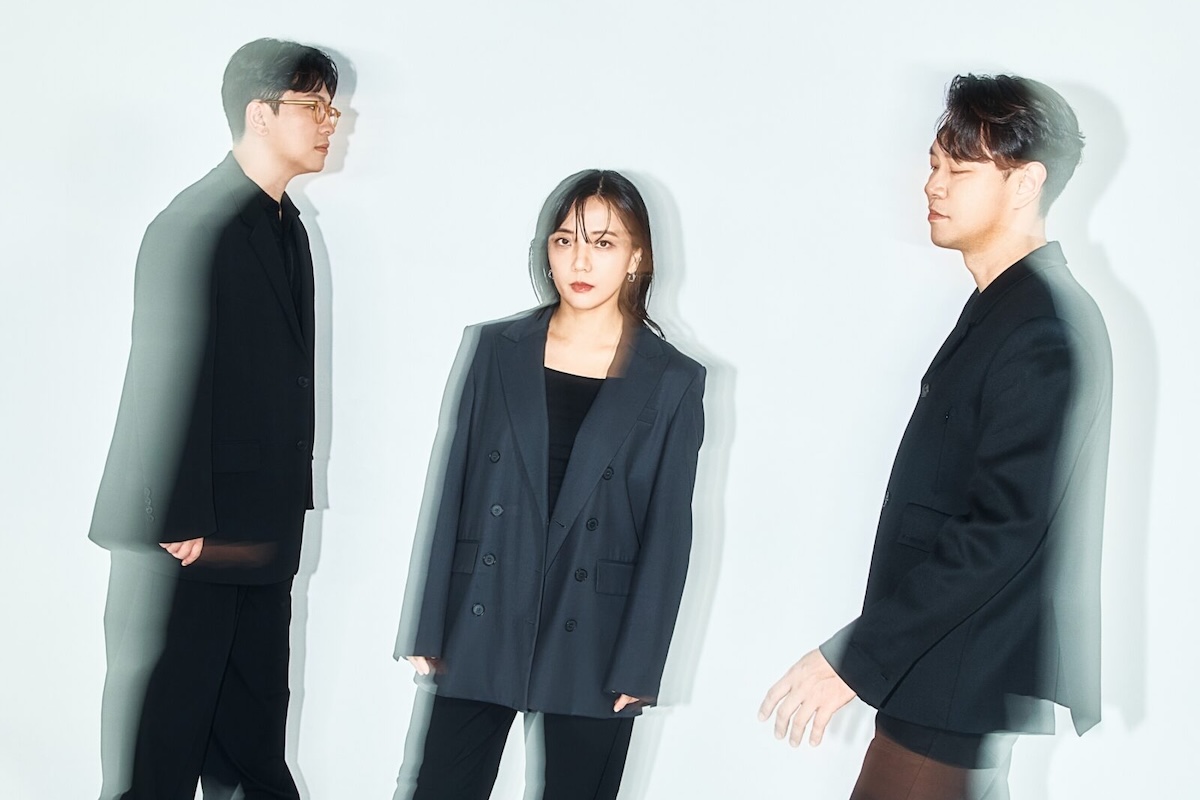
Coloris Trio. Portrait supplied
Soojin Suh’s music references traditional Korean styles (about which I know very little). The influence is felt not only through her subtly etched percussion, or the inclusion of a gong in the first selection, but also in the music’s formal structure. Her music has a very Asian tendency to fall into distinct segments, which are free-form, with various ‘signals’ along the way to indicate a change.
Texturally, it is very intricate, not just in Suh’s delicate percussion detail but also in the pared-back piano work of Jaehun Kang. Asian music does not divide time into equal, foot-tapping segments like Western music, so to our ears it seems to exist outside time. Mix in the unanchored harmony of contemporary jazz, and this timeless impression is reinforced even further.
For a Debussyan influence, I noted that Kang’s harmonies relied on intervals of the major second and fourth: not the pure sound of a triad or a conventional harmonic sequence, but not a grating dissonance either. The second piece, What’s Behind the Door, was built from a repeated bass riff. Here, jazz stylings claimed a stronger place in the musical fabric.
The highlight of the set was three pieces dubbed Uncertainty, with the subtitles Everlasting Peace, Faith in Fate and Beginnings and Endings. The second of these featured the gifted bassist Hoo Kim, playing a long, partly improvised melody arco (that is, with the bow). The accompaniment was a hypnotically repeated piano chord, with percussion colouring the texture. The resemblance to the slow movements of Messiaen’s Quartet for the End of Time was notable and mesmerising. The last piece was marked by sudden changes of mood and seamless tempo changes (such as a smile-provoking jump from four to eight beats in the bar). Kang and Kim’s playing was expressively nuanced but always incisive, like the clean lines in Asian art.
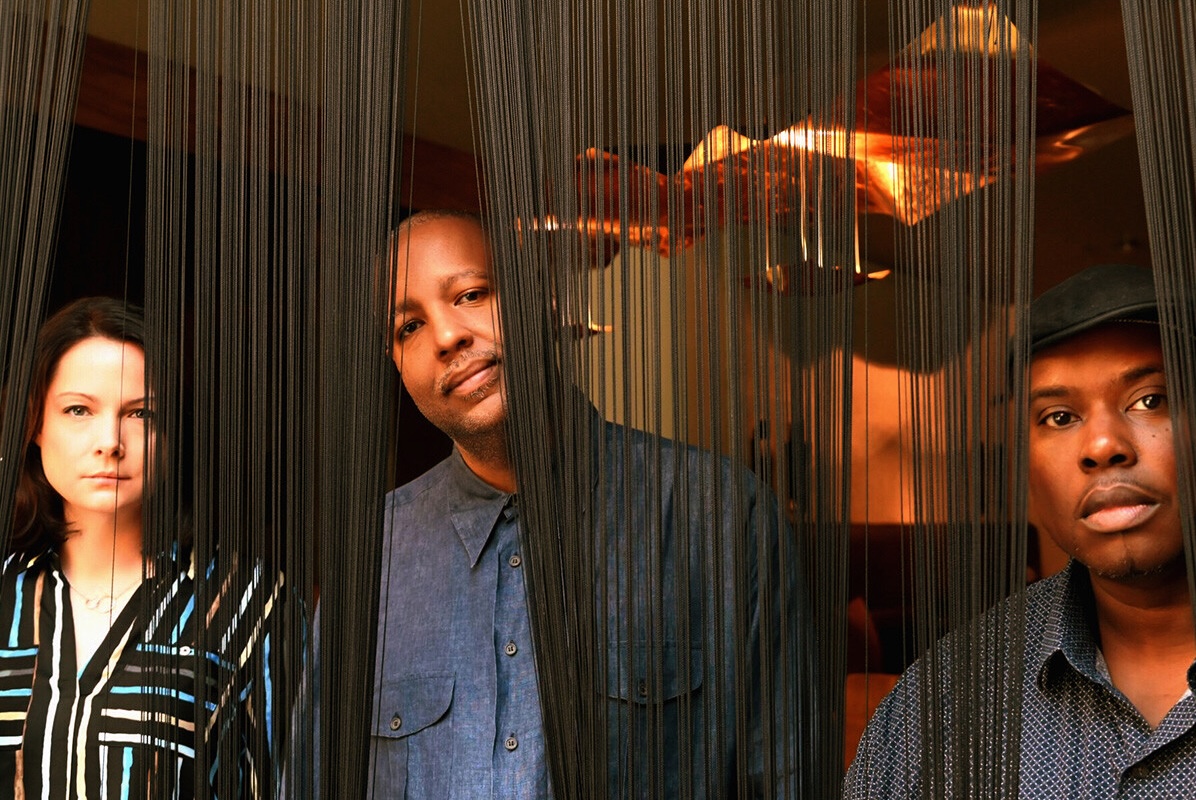
Kris Davies Trio. Portrait supplied
The contrast could not have been greater with pianist and composer Kris Davis’s trio. This was the headline act: three highly experienced members of the New York jazz scene – Robert Hurst on bass, Johnathan Blake on drums, and Canadian-born Davis. They gave us solid contemporary jazz: relentless, driven intensity to follow the Asian clarity and poise. Hurst’s bass was smooth and fluid, while Blake was a powerhouse. His accuracy at speed was something to behold. Davis, in contrast to Kang, often harmonised using intervals of the minor second: much punchier and more explosive.
It was not all chest-beating, of course. In the penultimate number, Davis played a long, lyrical solo based around the interval of a minor sixth. In the concluding Run the Gauntlet, each member of the trio did precisely that. A standout moment was a taxing bass solo in which Hurst doubled the bass line with high harmonics. (I caught the eye of a young bass player I know in the audience, who had a ‘What just happened?’ look on his face.)
The Kris Davis Trio was a knockout – so perhaps it’s my classical leanings, but I preferred the South Korean group. I felt Suh, Kang and Kim were aware of the shape of each piece and approached it as a true ensemble, despite their individual moments in the spotlight. At all times, they calibrated their personal contributions to the texture.
The Davis Trio gave us a meeting of three stunning musical personalities, a line-up not without internal competitiveness. We know how that situation can come across as overheated. Remember the Three Tenors? Davis and friends inevitably slipped into long sections where all three went for it, doing their own thing as intensely as possible. (Blake won.) It’s the improvisational aspect, I suppose, but when everybody is playing as fast, loud and busily as they can, my mind wanders. My problem with contemporary jazz solos is that they are inclined to drift because the form gives players the leeway. It never happened with the Coloris Trio.
Finally, the spacious acoustic of St Stephen’s Church, which was so kind to the open, carefully balanced textures of Soojin Suh, often turned the fuller sonority of the Davis Trio into mud. A fascinating evening, nonetheless.
The Sydney Women’s International Jazz Festival continues until 31 October.





Comments
Log in to start the conversation.