For the opening concert of their 20th season, Selby & Friends Artistic Director and pianist Kathryn Selby is joined again by ‘friends’ Alexandra Osborne (violin) and Clancy Newman (cello). 

Reuniting by popular demand after their successful collaboration in 2024, this program begins with two variations-based works, followed by two piano trios which most certainly stand on their own.
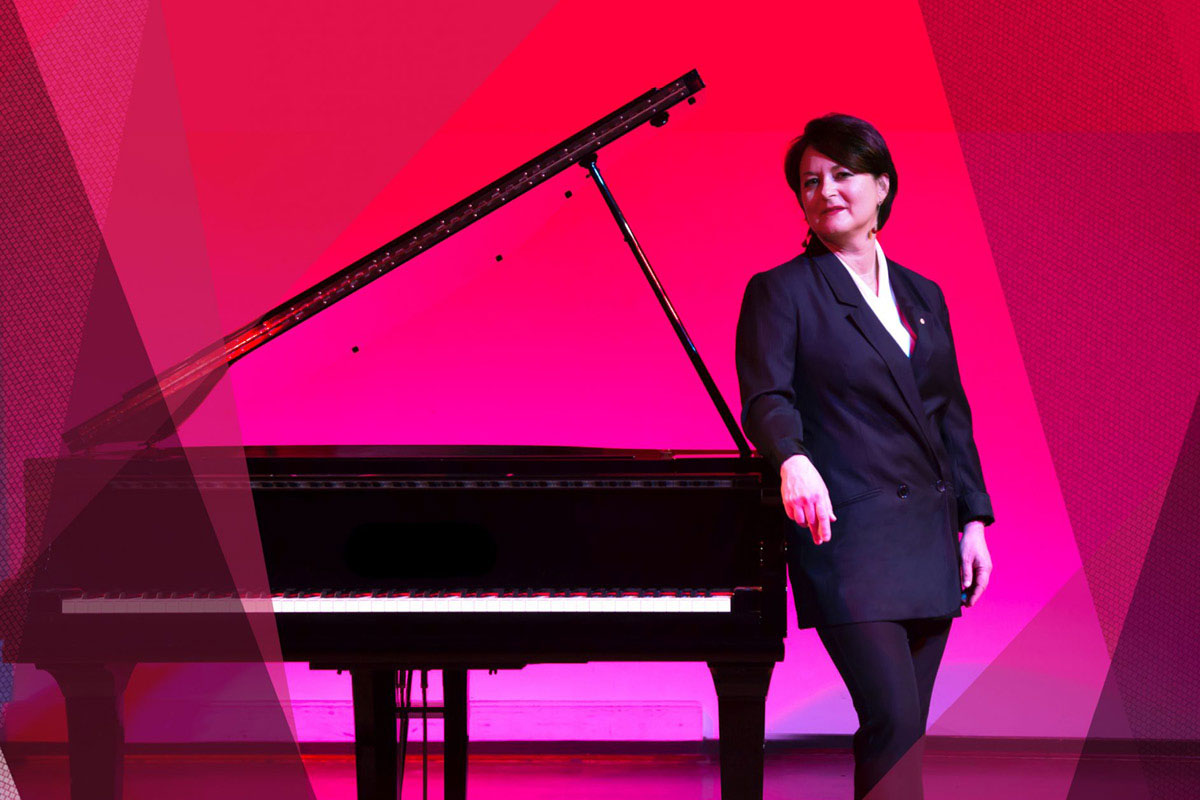
Kathryn Selby. Photo supplied

Beethoven’s Piano Trio No. 11 in G major consists of 10 variations on a song Ich bin der Schneider Kakadu (I am the tailor Cockatoo) from Wenzel Müller’s musical The Sisters of Prague (itself largely lost to history). Considered an ‘uneven’ work by critics of the day, the trio has some lovely moments and an engaging range of moods. 

Its great service in this program is to introduce the pure, rich and mellow tones of Osborne’s violin and Newman’s cello. In the hands of these two incredibly accomplished players, the timbre is perfectly matched. That said, there are moments when it seems the three players aren’t in perfect agreement about the way to handle certain climaxes and rallentandi. 

Interestingly, the opening Elena Kats-Chernin’s Variation on Schubert’s ‘Trauerwalzer’ (Mourning Waltz) is executed more confidently, with Osborne driving a relentless tempo over simple long-bowed cello notes before the dominant line is handed to the cello and subsequently the piano. 

The timing and character match are better than they were in the Beethoven, but marcato phrases are still articulated differently by each player, which proves slightly distracting.

Fanny Mendelssohn-Hensel’s spectacular but demanding Piano Trio in D minor was written in the year of her untimely death and also that of her beloved brother Felix (1847). Despite the acclaim she received during her life, her prodigious output, and the uncommonly strong support (in that day) she received from her husband and from Felix, Fanny Mendelssohn’s music is only now being rediscovered.

Selby, Osborne and Newman open with the plaintive first bars, but then open into an assertive and confident new mode. Newman’s vibratory expression on his gorgeous rosewood-coloured instrument consumes his whole energy later in the Allegro, despite a stage personality which is never as extroverted as his two colleagues. Then his sensual expressiveness in the Andante provides a complete contrast.  

After interval, this performance goes to a new level. Schubert’s Piano Trio No. 1 in B flat major can rarely have been played better. The charming interplay between the strings in the Allegro moderato is precise yet emotive, as the opening theme is passed between the violin, cello and piano.

The relentlessness of Schubert’s demands on the pianist’s right hand gives the right driving effect, but Selby makes it look easy.

The ensemble playing in the Andante is faultless. All the players are in sympathy with each other, matching tone and character perfectly and fading from a stunning piano-pianissimo into silence with exquisite delicacy.

While this concert is textured and well-executed, the performance of this Schubert masterpiece is breathtakingly brilliant.


Selby & Friends presents The Living Tradition at City Recital Hall, Sydney, 25 May; the Primrose Potter Salon, Melbourne Recitsl Centre, 28 May; and Concordia College Chapel, Adelaide, 31 May. For bookings visit this link.

Contribute to Limelight and support independent arts journalism.