

Sydney Symphony’s Cocktail Hour series is an intimate affair curated by a member of the orchestra and usually involves a handful of their colleagues.

But when it came to horn player Euan Harvey’s turn to put on a show at Sydney Opera House’s 200-seater Utzon Room he called on 15 instrumentalists for a program of works by three of Romantic music’s biggest hitters.
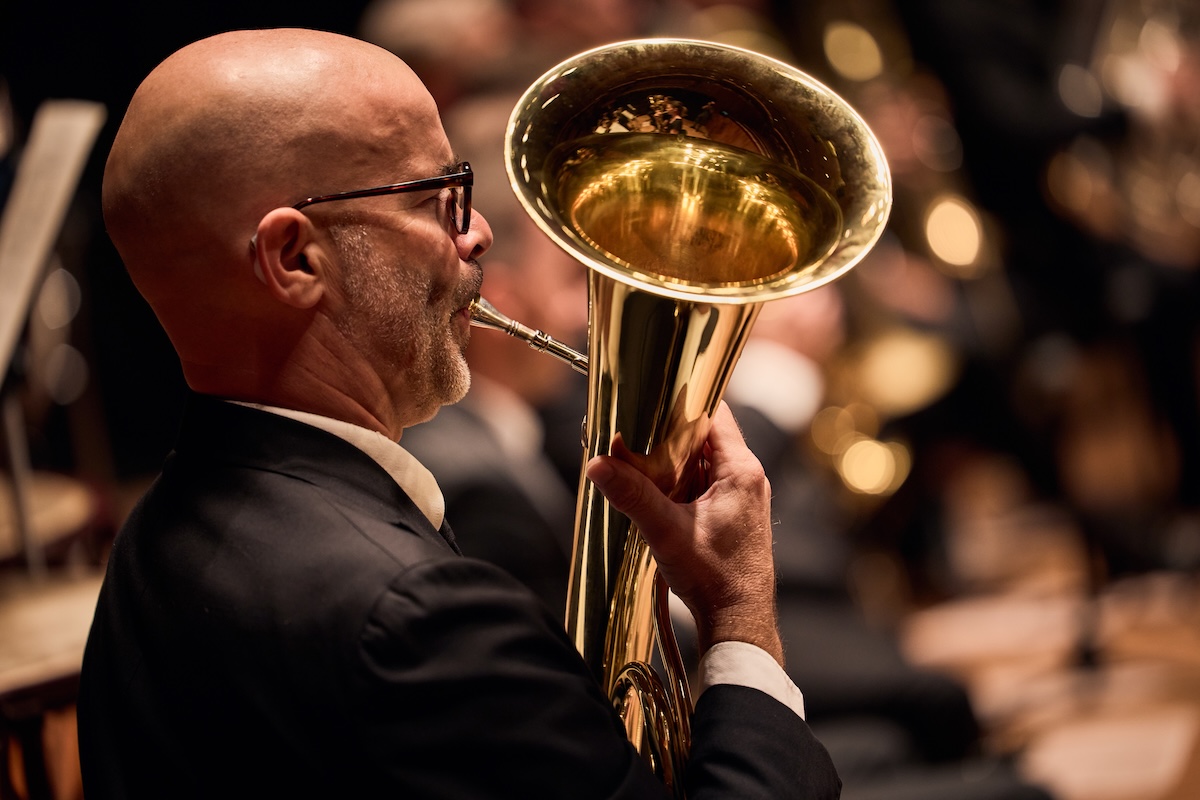
Euan Harvey. Photo © Daniel Boud

You don’t normally hear the words “chamber music” and Wagner in the same sentence, but he did compose what must go down as one of the loveliest Christmas Day gifts in history, Siegfried Idyll, as a triple celebration for his wife Cosima – her birthday, the recent legalisation of their marriage and the birth of their third child, Siegfried.

It was first performed as a surprise in 1870 with a small band of musicians arranged on a staircase at the couple’s villa at Tribschen on Lake Lucerne, Switzerland.

Part of its legend is the short trumpet part that conductor Hans Richter had to teach himself to play in secret on a boat on the lake. David Ellis made the one-minute appearance for this before taking the rest of the night off.

Led by Associate Concertmaster Alexandra Osborne, the close acoustic of the room captured the rich sound of the string quintet opening before the entry of Emma Sholl’s silvery flute, followed by the winds and two horns, with Samuel Jacobs taking the solo theme from Wagner’s opera Siegfried.

Like Wagner Richard Strauss was a master of the big moment, especially in his tone poems, but his last opera Capriccioopens a with string sextet on stage performing their new piece.

This 11-minute gem made the perfect companion to the Idyll with Osborne, second violin Emily Long, violists Justin Williams and Amanda Verner and cellists Timothy Nankervis and Elizabeth Neville all working together seamlessly in the smooth and lush opening – think Four Last Songs or Metamorphosen – before the sudden interruption two minutes in with shuddering tremolos and dramatic solo violin arpeggios.

Benjamin Britten was just 19 and in his final year at the Royal College of Music when he wrote his Sinfonietta, prompting one of his examiners to ask, “What’s an English public schoolboy doing writing music like this?”

Introducing the work broadcaster and harpist Genevieve Lang said “there’s a lot going on” in the three movements, with highlights that include an unaccompanied violin duet, lively interplay in the woodwinds and Todd Gibson-Cornish’s bassoon paired with Harvey’s horn for an arching pastoral section.

It all finishes madly in a Tarantella, bearing out Britten’s friend the poet WH Auden’s inscription on the score: “It’s farewell to the drawing-room’s civilised cry”.

Contribute to Limelight and support independent arts journalism.