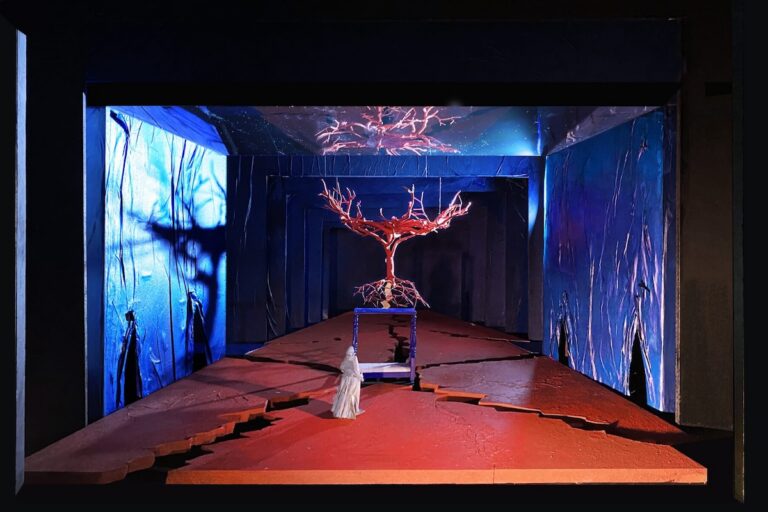
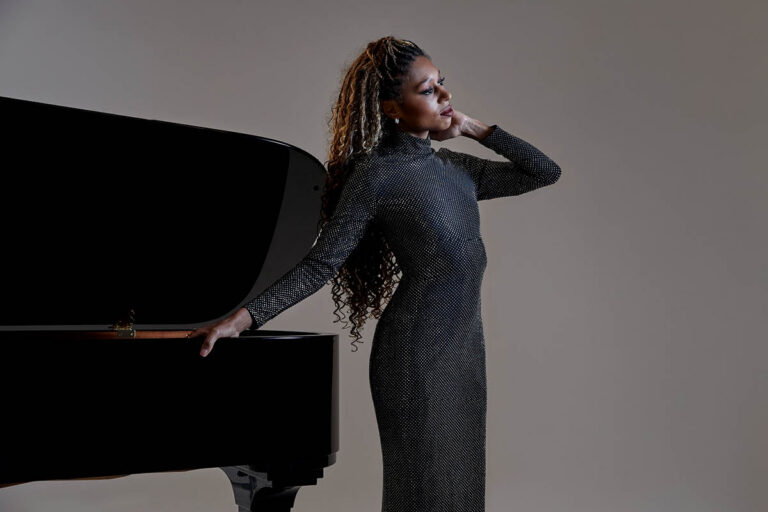
Australia’s first orchestral performance to combine Auslan poetry, live chamber music and vibro-tactile haptic technology is poised to ask audiences to rethink what music is.

Presented by Orchestra Victoria and Newmarket Collective at Blackwood Box, Meat Market in Melbourne on 8 August, Across Silence brings Deaf and hearing artists together in a performance that centres Auslan not as translation, but as artistic expression in its own right.

The production combines newly commissioned music, signed poetry and wearable haptic technology that uses vibrations and physical sensations to communicate information through touch.

In this setting, haptic vests convert elements of sound such as rhythm, dynamics and texture into carefully designed vibrations that can be felt across the body.

Rather than replacing hearing, the technology offers an additional sensory pathway, enabling Deaf and hard of hearing audiences to experience music through touch while also creating a richer, multi-sensory experience for all audience members.
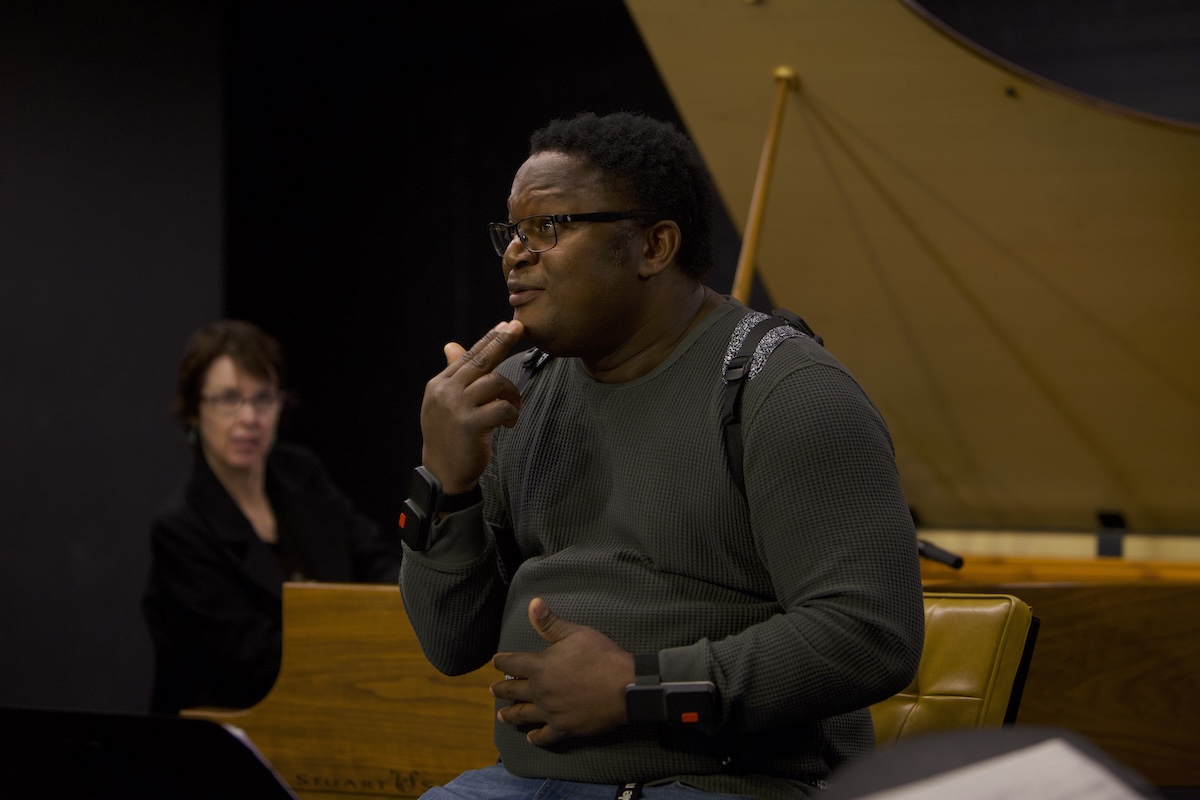
Across Silence: Andrea Keller and Walter Kadiki. Photo supplied

At the centre of the creative process of Across Silence are Deaf artists Walter Kadiki and Marnie Kerridge, working alongside composer-pianist Andrea Keller, vocalist Gian Slater, conductor Nicholas Buc and musicians from Orchestra Victoria and Newmarket Collective.

Kadiki and Kerridge perform wearing haptic vests, wristbands and ankle bands developed by Music: Not Impossible, with the technology translating live orchestral performance into vibrations across 24 points on the body. Audience members will also have the opportunity to experience the performance through the same system.

For Kadiki, however, the technology is only part of the story.

“What first drew me to Across Silence was the chance to finally centre Auslan – my language, my culture – in a space where it has so often been ignored or treated as secondary,” he tells Limelight.

“For generations, Auslan has been oppressed, unrecognised, pushed to the margins. Deaf people have been looked down upon, our language dismissed, our ways of experiencing the world misunderstood.”

Rather than presenting Auslan as an interpretation of music created elsewhere, Kadiki says the work places signed language at the heart of the creative process.

“I wanted audiences to experience Auslan not as a translation, but as an equal partner in the performance – a language with its own rhythm, intensity and emotional weight.”

His description of Deaf musical experience extends far beyond technology.

“Deaf people experience music through a different medium, not only through vibration, but through the world itself. The wind brushing past our skin, the swaying of trees, the fluttering of grass, even a single drop of rain landing on the back of a hand. Silent music is always embedded in our environment.”

Across Silence: Andrea Keller and Marnie Kerridge. Photo supplied

That philosophy shaped one of the concert’s major commissions, Little Fledgling #2, created by Keller and Kadiki. Unlike conventional compositions written primarily for the ear, the work was developed with vibration as a compositional element from the outset. A hearing artist, Keller tried out the haptic vest herself.

“I could hear the music as well as feel it, but I also became really aware that hearing gives context to what you’re feeling,” Keller says. “Walter was born profoundly Deaf, so I was worried that without that context, what I was playing might feel terrible on someone’s body.”

That concern changed the way she composed, Keller says.

“I started thinking differently about register and rhythm. Rhythm became much more important than melody because through the haptics, register is felt and rhythm is felt. A moving melody line doesn’t necessarily have the same impact through vibration as it does through hearing.”

The haptic vest allows different instruments to be mapped onto different parts of the body. Low instruments might resonate through the back while other sounds travel through the shoulders, wrists or ankles, creating what Keller describes as an entirely new form of orchestration – one that considers not simply how music sounds, but where it is physically experienced.

The collaboration also challenged assumptions about who leads artistic innovation. Working together, Kadiki says, meant his visual understanding of music was treated as a source of compositional material rather than something requiring adaptation.

“When we shaped the musical composition from my poem, I described the music visually: the energising warmth of a new day, the emotional turbulence of a raging storm, the desperate sound of a single raindrop falling onto a parched desert.”

“Andrea didn’t impose her hearing privilege. She listened in the truest sense – not with ears, but with respect.”

For Keller, the process reinforced the importance of accessibility being embedded at the beginning of artistic creation rather than added afterwards. “I think it’s really important that we’re proactive in the way we curate programs and venues and have accessibility at the heart.”

She also found herself inspired by Kadiki’s artistic practice.

“I’ve never worked with a poet who then delivers their own poem in the way Walter does, which is an absolute artistic performance of the highest level in itself.”

Alongside the new commission, Marnie Kerridge performs Auslan interpretations of poems by W.B. Yeats, E.E. Cummings, Sara Teasdale and Walt Whitman, set to selections from Keller’s Still Night album, newly orchestrated for a chamber ensemble.

Across Silence: Walter Kadiki. Photo supplied

Both artists hope the performance will ultimately be remembered not for its technology, but for the shift in thinking it represents.

Kadiki argues that the arts need to move beyond framing Deaf participation primarily as accessibility.

“I hope projects like this move us beyond the idea of accessibility and into genuine artistic collaboration,” he says.

“A work like this proves that innovation happens when Deaf artists are not brought in to translate or accommodate, but to co-create. It shifts the conversation from making things accessible to making things possible.”

Looking ahead, he believes the greatest opportunity lies in allowing Deaf artists to reshape concert practice itself.

“When Deaf poets, composers and performers shape the work from the beginning, concerts stop being sound-first events and become multisensory experiences – visual, spatial, tactile and vibrational.”

“The opportunity is not to include Deaf people in concerts. It is to let Deaf creativity redefine the concert itself.”


Across Silence is performed on Saturday 8 August (1.30pm) at Blackwood Box, Meat Market, cnr Blackwood and Tyrone Street, North Melbourne.

Contribute to Limelight and support independent arts journalism.