When Daniel Verstappen sits at the piano to play “cinematic” music, he does so without screens and cues from a director’s cut. Instead, the Belgian pianist-composer invites his audience into something more subtle and more intimate: a cinematic experience created entirely in the listener’s mind and unique to each person.
Verstappen is preparing to return to the Sydney Opera House following his 2024 debut, as part of his Reconnection album tour, bringing with him a program that blurs the boundaries between classical recital, film concert and personal storytelling.
Performing alongside violinist Yena Choi, one of Australia’s most versatile and in-demand musicians, Verstappen presents a concert that moves effortlessly between his own evocative compositions, contemporary classical works and reimagined film scores by composers such as Hans Zimmer, Ennio Morricone and Nino Rota.
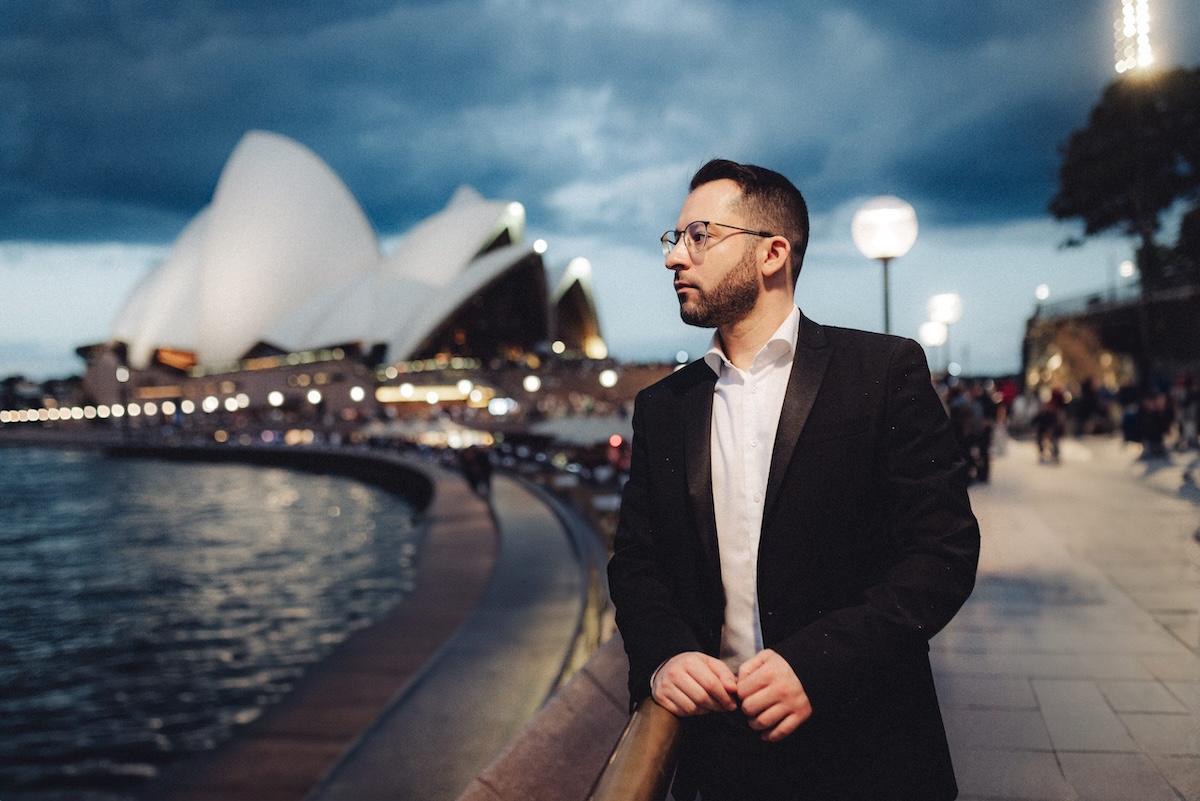
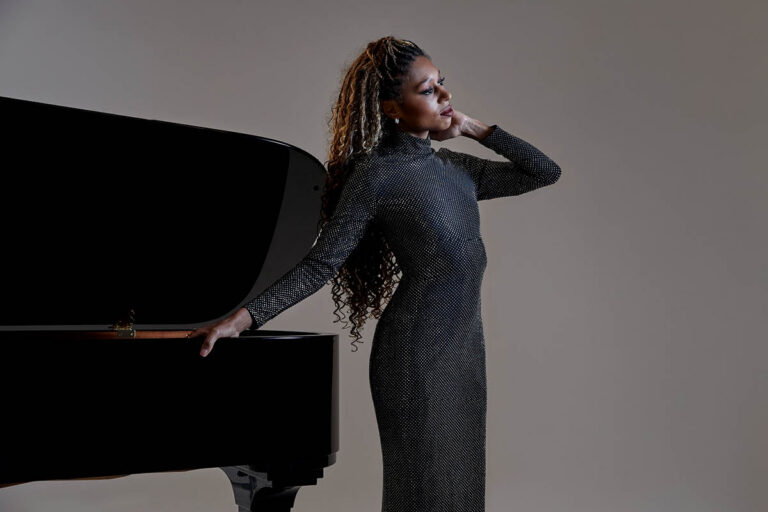
“Music shouldn’t feel like gymnastics” – Daniel Verstappen. Portrait supplied
For Verstappen, film music has long felt like a natural extension of his own musical language. “My compositions are very cinematic,” he says. “So it makes sense to perform film music alongside them.”
Over recent years, he has increasingly incorporated scores such as Zimmer’s Interstellar, Morricone’s Cinema Paradiso and Gabriel’s Oboe (from Roland Joffé’s 1986 historical drama The Mission) and Rota’s music for The Godfather into recital programs – music often associated with symphony orchestra now reframed through piano and violin.
Gabriel’s Oboe is a work Verstappen returns to again and again. “Every time I play it, it just touches the soul,” he says. “You feel it resonate in the audience. I don’t know exactly what it is – there’s so much love in that piece, so much emotion.” For Verstappen, the music has long since detached itself from the film. “It becomes a new story, separate from the movie.”
That idea sits at the heart of what he calls his Piano Cinematic Experience. Rather than relying on nostalgia alone, Verstappen invites listeners to reconnect with familiar music in a more personal way. “You don’t need to see the movie to create a story,” he says. “We create the story with the music alone.”
Within that framework, Verstappen allows space for spontaneity, subtly shaping each performance in response to the moment, the space and the energy of the audience. It is a philosophy that resonates strongly with Yena Choi, whose own career has traversed classical orchestras, chamber music, film sessions and collaborations with artists ranging from Hans Zimmer and Ed Sheeran to the BBC Concert Orchestra.

Daniel Verstappen. Photo © Felipe Espinal
Like many pianists, Verstappen began young – at five years old – and was quickly immersed in a traditional classical education. He attended a specialist arts high school at 14 and trained with teachers who instilled rigorous classical technique and discipline. “That foundation was very important,” he says. “But even early on, I was always improvising, playing what I felt, not only what I was told to play.”
Alongside piano, Verstappen explored other instruments. He played double bass to join orchestras, studied organ, and spent a decade as an orchestral musician. The piano, though ever-present, slipped temporarily into the background. “But at a certain moment, I realised the piano was my soulmate,” he says – a word that later became the title of one of his best-known compositions.
Around 2016–17, he made the decisive shift from orchestral playing to a solo career as a pianist-composer. This year marks a decade since that transition, with a new album currently in the making.
It was also a turning point psychologically. Verstappen speaks candidly about the pressures young classical pianists can face, especially in the piano competition environment.“For me, that kind of world was very stressful,” he says. “I was a sensitive child. I don’t think there was enough guidance about the mental side – how to deal with pressure, how to manage anxiety.”
Today, that experience informs not only his performances but his teaching. On tour, he regularly gives masterclasses, offering students practical tools to cope with performance stress. “Now I still feel adrenaline,” he says, “but not fear. Music shouldn’t feel like gymnastics where it’s a perfect 10 or nothing. In the end, it’s about the soul.”
If music is Verstappen’s emotional language, it is also his social one. The idea of “building bridges” recurs throughout his work – a phrase that can sound abstract until grounded in practice. In 2024, while touring Australia and New Zealand, he collaborated with a Polynesian choir in Auckland, stepping far outside his European musical upbringing. “The rhythms, the harmonies… everything was different,” he says. “But I loved it.”
Verstappen has performed around the world – from Carnegie Hall and the Kennedy Center to the Philharmonie Luxembourg – and frequently works in diplomatic and cross-cultural contexts. In recent years, this has included performances for the Belgian Royal Palace during a mission to India,as well as appearances at the World Expo in Osaka and Dubai, collaborating with local artists in projects that deliberately blur genre and tradition.
In Belgium, he says, he has been described – half-jokingly, half-seriously – as a “musical ambassador”. He is, he admits, “no diplomat”, but he appreciates the sentiment. “We might not speak the same language,” he says, “but through music, people all over the world can understand each other.”
That belief underpins Bridge Between Cultures, a concept Verstappen has developed and presented across Central and Northern Europe. The project brings together artists from different backgrounds through workshops, masterclasses and rehearsals, culminating in a shared performance in a major venue. With a focus on innovation and sustainability, the framework is designed to be adaptable – capable of being implemented in new cities and countries, connecting communities through shared creative experience.
It is a philosophy that aligns naturally with his return to Sydney. The Opera House performance invites audiences into a carefully shaped musical world – not a sequence of applause-break pieces, but a continuous narrative arc. “I want the concert to feel like watching a film,” Verstappen says. “From the beginning to the end, you are in that world. You forget everything else for a while.”
Ultimately, for Verstappen, bridging the classical and cinematic, the past and the present, is more than a strategic career gesture – it’s an extension of who he is as a creative person. “It’s more than making music,” he says. “It’s about creating stories, creating experiences.”
Daniel Verstappen tours Aotearoa/New Zealand from 21 February to 24 April. He performs his Piano Cinematic Experience in the Utzon Room, Sydney Opera House 2 May. Details and bookings here.

Comments
Log in to start the conversation.