The Australian Ballet’s Music Director and Chief Conductor is just minutes out of a rehearsal for Copland Dance Episodes as he tells Limelight, “there’s no stopping here for us at The Australian Ballet!”

He’s certainly right: the work’s choreographer, Justin Peck, had stepped straight off a plane from New York before booking it to that same rehearsal. Lo squeezes in a Limelight interview and a short break, before he and the dancers head back to the studio again to rehearse for Romeo and Juliet.
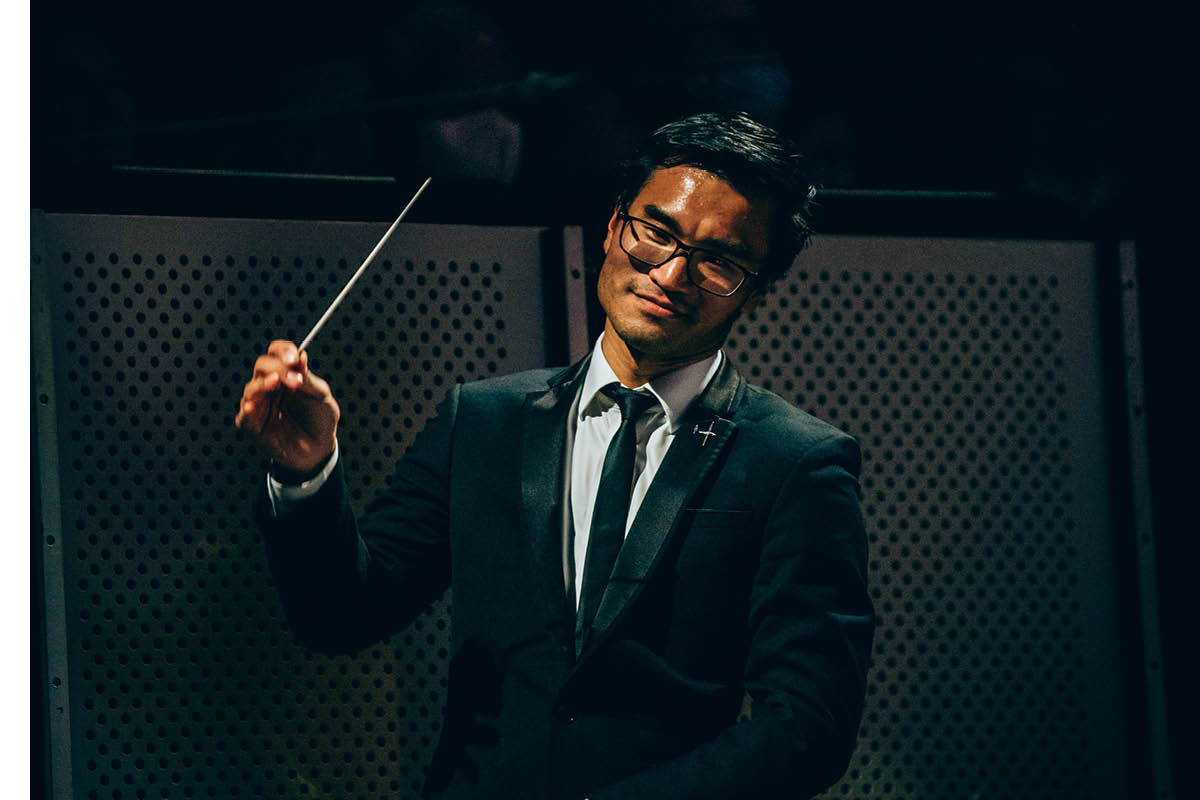
Jonathan Lo

Jonathan Lo. Photo © Kate Longley.

“The dancers are always going from one thing to another. It’s amazing how much they absorb – they learn the steps and musicality very quickly, but it’s been great to see how hungry they are for [Copland’s] particular language, and how quickly they’ve absorbed the nuance,” Lo says.

Copland Dance Episodes makes its Australian premiere with The Australian Ballet on 23 June at Melbourne’s Regent Theatre and will be the first time the work will be performed outside of New York – a major get for Australian dance. Premiered in 2023 for the New York Ballet where Peck is Resident Choreographer, the work is a series of vignettes set to four pieces of Aaron Copland’s music: Fanfare for the Common Man, Four Dance Episodes from Rodeo, Appalachian Spring and Billy the Kid. Lo’s no stranger to Copland’s scores, but it will be the first time he’s conducting it as a ballet.

“There’s always a rhythmic vitality in Copland’s music, and a sense of optimism that doesn’t feel contrived; when you bring those two things together, it’s a sound world that’s always energising and fun, and you always leave with a smile on your face. That being said, you  can dig deeper and deeper into layers of that score, and you find that this simplicity and effortlessness is underpinned by some real thought and sophistication in the writing,” Lo says.

Copland turns the spotlight on the relationships between a string of unnamed characters in Copland’s work. Rodeo sweeps from an atheletic, high-octane first movement, where “everyone’s just enjoying the sheer vitality of the score” to whimsical reflection on moonlight in a farm pen. Appalachian Spring is more reflective, but not without its playfulness, and energy comes back as the company’s drawn together for Billy the Kid, ending with this “this mass movment, this positivity and optimisim”.

The Australian Ballet’s Copland Dance Episodes. Photo © Pierre Toussaint

“At no time are any of these characters on stage named, but you just see them dance and dance their own emotions, their own relationships. In Appalachian Spring, there’s the husband, the preacher; and in Rodeo, there’s the cowgirl, the ranch owner. I think it’s this conscious reaction against the traditional high European art form of ballet, with characters like Giselle or Odette in Swan Lake. This is a ballet for you, and a ballet for everyone, and without a story to follow, you feel really connected to the dancers and music.”

There’s a four-month gap between the Melbourne and Sydney seasons of Copland Dance Episodes, and for each run there’s a new orchestra and new venue to wrangle (Orchestra Victoria at the Regent and the Opera Australia Orchestra at the Opera House). Adapting the score for these changes is a challenge, yes, but it’s the part that makes the job “even more fascinating” for Lo.

“It’s a bit like being told to drive the Great Ocean Road again but with a different car: the score is the same, but the vehicle with which you do it is different and offers something different. Each player brings their own personality, their own artistic decisions; my job is to allow that to thrive while retaining that central vision of the ballet and the integrity of the score. It’s actually a lot easier, a lot more fun, and less constricting than it sounds,” he laughs.

“We take what we’ve learnt from last time, but we’re also building it from the ground up and seeing how the voice of the orchestra can give this work a different shade that might enhance the emotion or work better with the acoustic of the space.”

Alongside acoustics, the size of each stage also has a huge impact on the pacing of the ballet. At different venues, dancers cover ground at a different pace, and the music has to match. The Sydney Opera House stage is a lot closer to the audience, Lo says, so giving more space to the score can give audiences time to “really take in the emotions” on the dancers’ faces.

That’s all in addition to a new duty for a music director with Copland Dance Episodes. Here, Lo’s job isn’t really to read Copland, but to read Peck’s interpretation of Copland. If Lo pulls out parts of the score that Peck didn’t choreograph for, the emotions and pacing will be thrown off.

“Unlike a classical ballet, where so much of it is about playing the music in a way that really helps dancers dance well, or, like in Romeo and Juliet, to propel the drama along, this is much more about understanding Justin’s idea of musicality and what he heard in the music. That’s been our fascinating journey in the studio: to marry that with the colours of the score.”

Principal Artist Benedicte Bemet and Elijah Trevitt in rehearsal for Copland Dance Episodes. Photo © Kate Longley/The Australian Ballet

And that’s some of the beauty Lo finds in contemporary repertoire. There’s more scope for play with a work that has less baggage behind it; TAB can “add its own stamp” to a work Lo is sure will soon have a long history behind it.

“But it’s not like we’ve gone in and forgotten our pointe shoes,” he notes. “These are classical steps. The difference is – and this is where I find the parallel with Copland really fascinating – that Justin’s effectively taken the classical language and infused it with the everyday. There are everyday gestures in the work, but it’s all done through the beauty and excellent execution of classical steps, in the same way Copland took these folk tunes and infused them with a sense of modernism.”

Copland’s works in this ballet are all under 90 years old. Flecked with jazz and folk rhythms, Lo calls his music “sleek and lean, like a modern skyscraper”. For him, Copland is a vital gauge of the evolution of ballet over that almost-century, and a way to keep the company immersed in the art form’s ongoing development.

“It cannot be overstated how important it is that we at The Australian Ballet, the national classical ballet company, do works like Copland Dance Episodes. Not only is Justin one of the foremost choreographers working today – which is a real vindication of the company’s artistic excellence – but it’s also important that we can share with our dancers and our audience the latest steps being made to these great scores.”

“I think it’s really important for us to say that we’re doing this work as a real signature of the company’s artistic strength. But it’s also our passion and desire to share with our audience, our musicians and our dancers what is foremost and best in the current ballet world. This is a very special piece, and it deserves to be seen again and again. It’s an hour and 15 minutes of complete captivation.”


Copland Dance Episodes runs at the Regent Theatre, Melbourne on 23 June – 2 July and Sydney Opera House, 6–21 November.

Contribute to Limelight and support independent arts journalism.