


Some of the most disturbing moments in cinema don’t require a crashing orchestra, a dissonant string section or a sudden musical stab. A simple repeated piano motif, a low bass note and the feeling that something is about to go wrong is quite sufficient.
The score to Rowan Woods’ 1998 Australian psychological crime drama The Boys (by the avant-garde jazz trio The Necks – Chris Abrahams, Tony Buck and Lloyd Swanton) has been inducted into The National Songbook, a new annual digital archive which is being launched jointly by APRA AMCOS and the National Film and Sound Archive of Australia (NFSA).
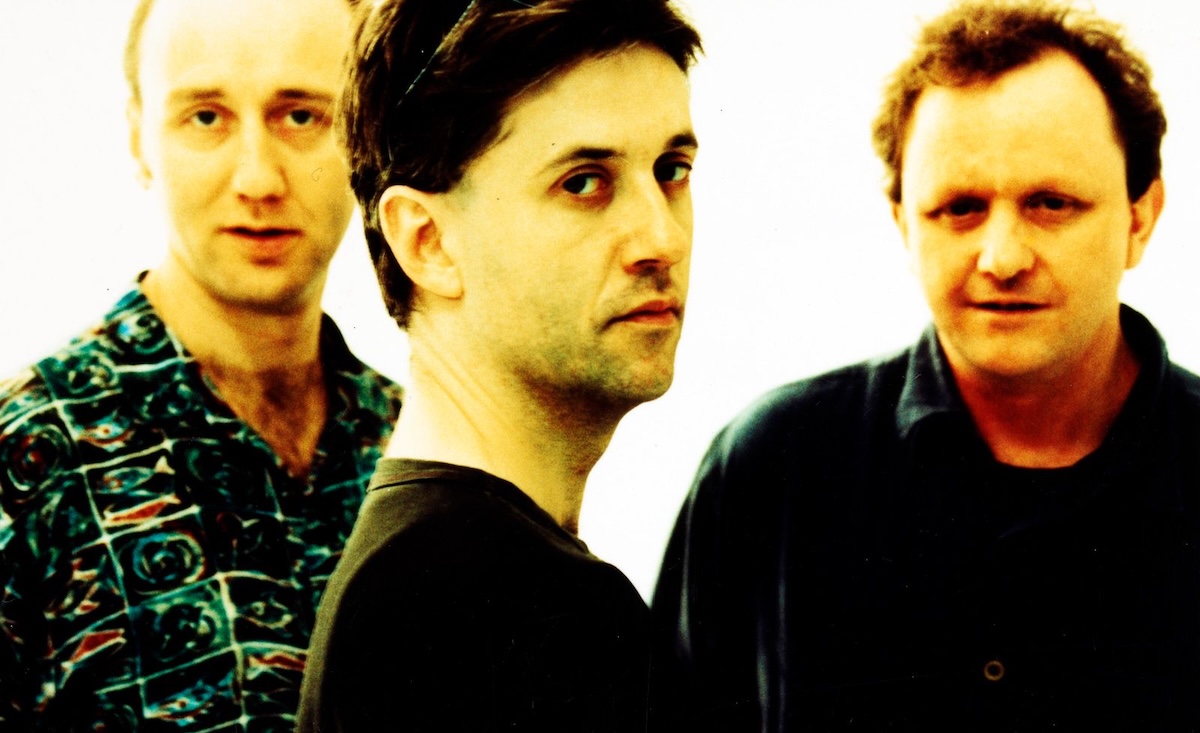
Lloyd Swanton, Tony Buck and Chris Abrahams: The Necks
Nearly 30 years after its release, the recognition brings renewed attention to one of Australian cinema’s most distinctive soundtracks. The use of minimalism, improvisation, and restraint feels like the right approach to portraying the film’s disturbing examination of masculinity, domestic intimidation, and violence. Rather than reacting to individual dramatic events, the score proceeds according to its own musical logic and, in doing so, transforms the audience’s experience of time, space and anticipation.
Why The Boys still matters
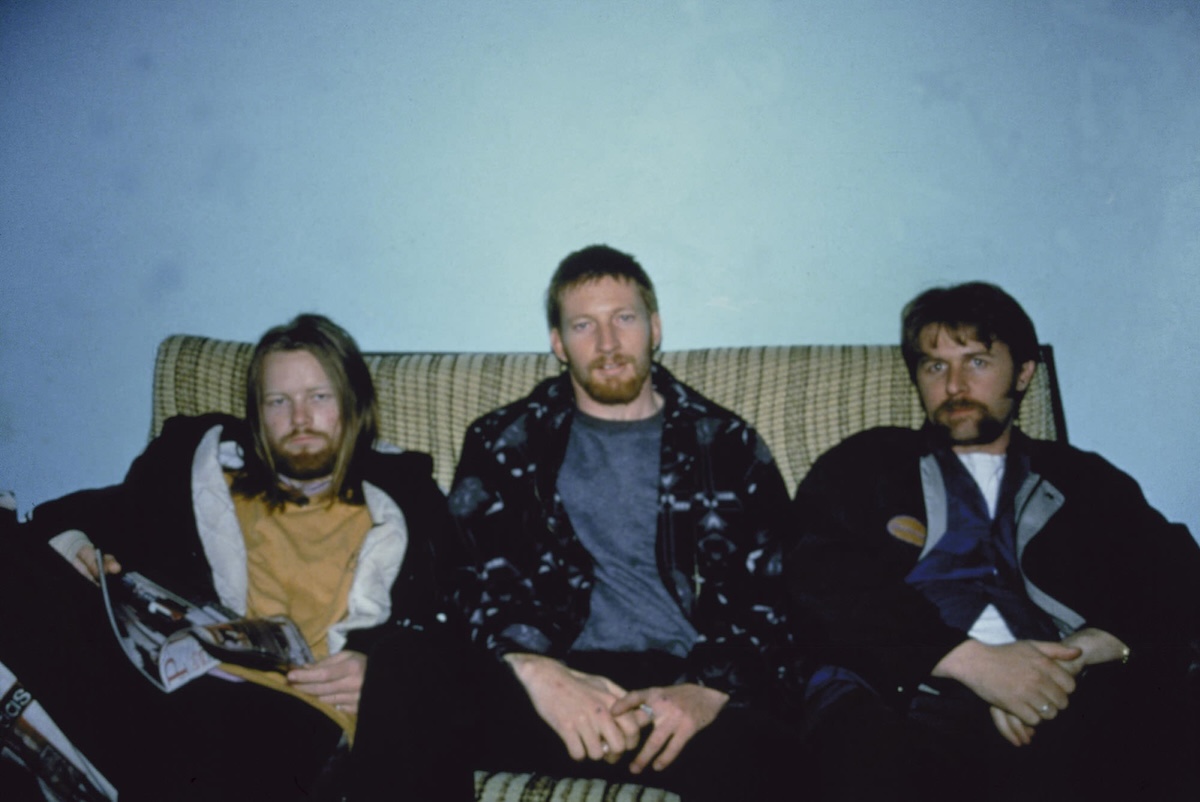
Anthony Hayes, David Wenham and John Polson in The Boys
The Boys‘ induction into The National Songbook recognises a soundtrack that has expanded the possibilities of Australian screen music. It’s significant in several ways beyond the use of minimalism in a psychological thriller. The Necks demonstrated the creative possibilities of involving composers from the outset, with the music developing as its own artistic language rather than merely responding to a finished edit.
Their approach also blurs the lines between score, sound design and environmental sound. Instrumental resonance, silence and the sense of space/atmosphere all become part of the film’s story.
For contemporary screen composers, that’s still very much the case. In the current climate, where composition is increasingly likely to blend with electro-acoustic practice, immersive audio, and integrated sound design, The Boys is a strong example of what you can achieve through a highly experimental approach while still arriving at a distinct cinematic sound.
When repetition becomes threat
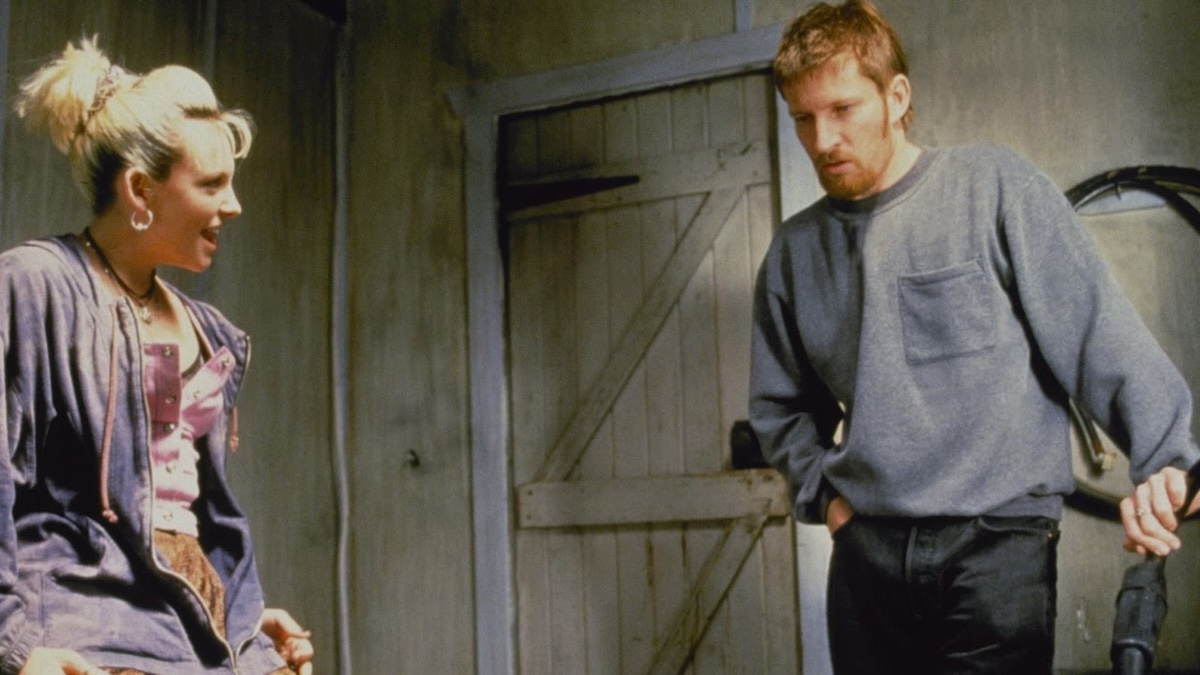
Toni Collette and David Wenham in The Boys
Minimalism is invariably linked with composers like Steve Reich, Philip Glass and Terry Riley (repetition, rhythmic processes, gradual transformation etc). The Necks are very much in the same camp in their interest in those techniques, though their approach is, of course, much more in the realm of improvisation and the organic development of textures.
In The Boys, there are small piano figures, resonant bass notes, and some percussion that adds a touch of rhythmic disruption. The harmonic movement is very restrained, with ideas developing so slowly that any change in texture is almost imperceptible.
What starts off as a neutral musical pattern becomes increasingly oppressive.
Not like the standard thriller scoring, where the tempo picks up, the harmony goes all wobbly, and the orchestra goes off at the mouth to indicate danger. The Necks build tension through duration and very gradual change. Their music doesn’t really provide the expected release.
This is exactly like the film. It’s about Brett Sprague returning from prison to his family home. It’s all about the patterns of intimidation and violence that are part of the domestic situation. The repetitive musical structures underline the nature of the behaviour and the sense of inevitability.
Music scholar Tony Mitchell examines this in his essay Minimalist Menace: The Necks Score, The Boys, in which he analyses the way the trio’s minimalist language plays off the film’s very particular psychological atmosphere.
The power of the score lies in the repetition itself. Each repetition carries the memory of what preceded it, and small variations shift our expectations of what comes next.
Composing without following the picture
The process behind the soundtrack was just as unorthodox as the music.
Director Rowan Woods came to The Necks during the film’s development, influenced by their 1996 Silent Night album. Rather than have them write a traditional score after the film was edited, he worked with the band throughout the process.
They worked through the script, rehearsals, filming and editing to produce a large body of music from which they could then select. The opening credits were written specifically for the film, but much of the soundtrack emerged through exploration and improvisation. For a screen composer, that’s a significant departure from the usual way scoring is done.
Normally, the composer and director hold a spotting session to determine exactly where the music starts and stops, what its dramatic purpose is, and how it relates to the various narrative points.
The Necks took a different approach. They created a musical language from which the director and editor could build the film’s soundtrack. This gave the pieces a real degree of autonomy. A musical phrase could stretch across a visual cut, and the rhythmic and textural elements could develop quite independently of the characters’ actions.
The result is a very convincing interplay between cinematic and musical time. The film moves through dialogue, performance and editing, while the music moves through its own structural time. These parallel processes create space for ambiguity. Rather than matching every musical gesture to the image, you keep the relationship between sound and picture fluid.
The unsettling power of silence
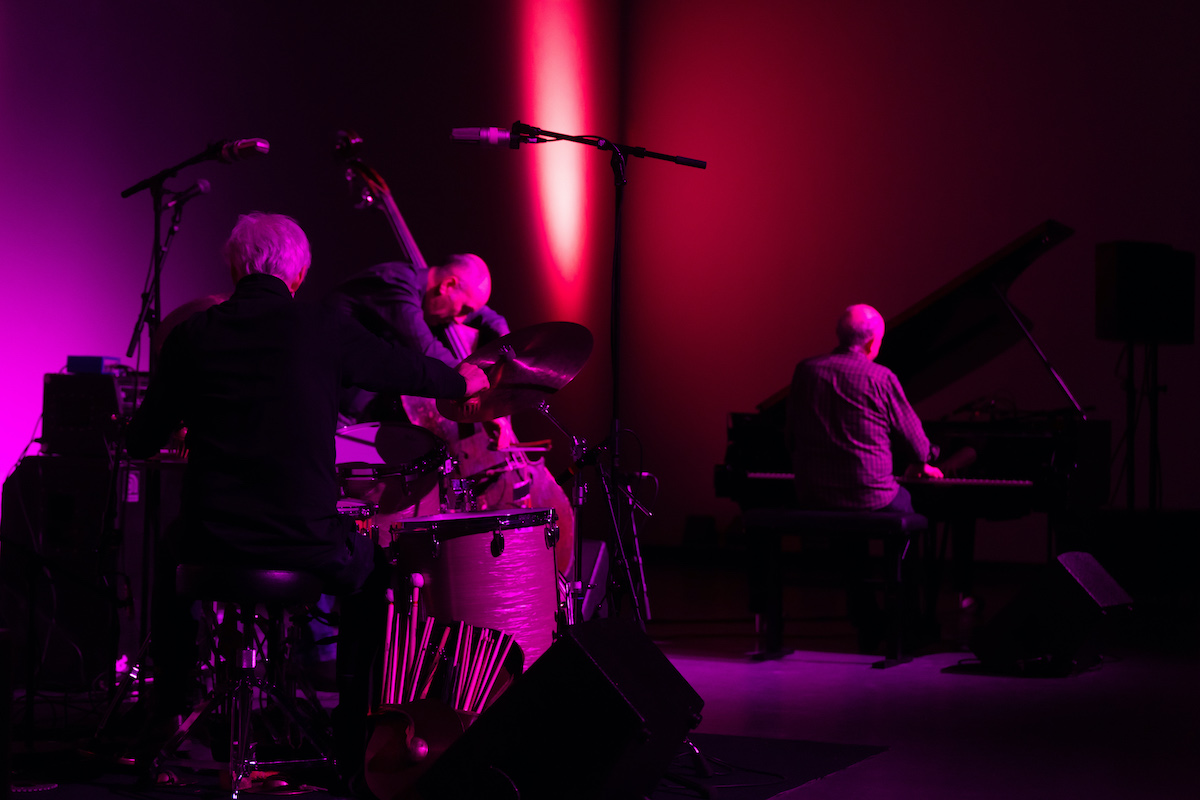
The Necks. Photo © Nabeeh Samaa
One of the most striking things about The Boys is how sparingly the music is used.
The film’s claustrophobic domesticity, confrontational dialogue and restrained performances all create an extremely uncomfortable atmosphere. A constant score would have easily overwhelmed it. Woods was keenly aware of the value of restraint and certainly didn’t treat silence and environmental sounds as an afterthought. Those elements were fundamental to the film’s soundscape.
When the music stops, our attention turns to the room’s acoustics, the closeness of the voices, the sounds of movement, and the awkward silences between people talking.
These details really drive home the nature of the characters and their relationships with each other and the spaces they’re in. The difference between the scored and unscored sections also changes how we hear the music when it returns. A familiar instrumental texture can take on a whole new dimension simply by virtue of where it’s placed in the film.
From a compositional point of view, this is a clear demonstration of the need to regard the soundtrack as a complete acoustic environment rather than merely a series of musical cues. Silence is not simply the absence of sound between the pieces. It has a dramatic presence of its own.
Music as an environment
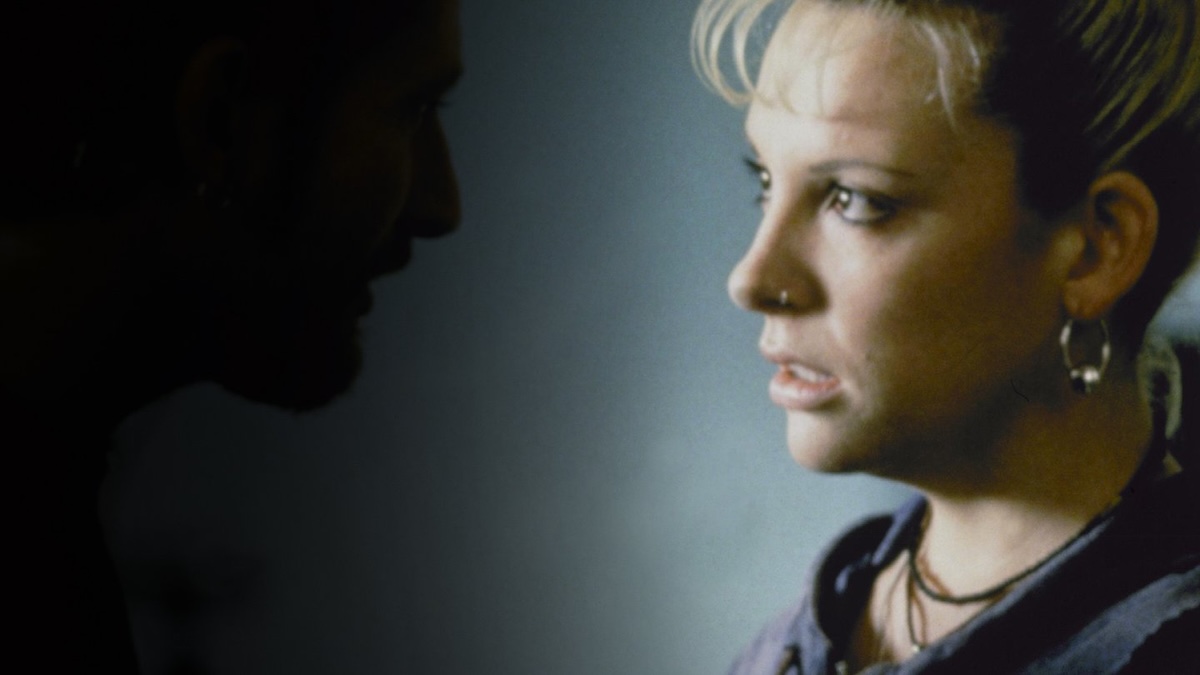
Toni Collette in The Boys
The Necks’ soundtrack also leads us to rethink the relationship between instrumental music and sound design. Although they’re primarily an acoustic group, their treatment of resonance, duration and texture is very much in the electro-acoustic tradition. A sustained bass note becomes an atmospheric entity rather than merely a harmonic bed. A piano phrase can, through repetition, quite easily become a rhythmic texture.
Percussion can introduce changes in density and timbre that closely resemble a disturbance in the acoustic environment. The line between instrumental performance and the soundscape is blurred. We know the sounds of the piano, bass and drums very well, but their traditional roles are completely subverted. The ideas of melody, accompaniment and rhythm all go out the window.
What you end up with is a constantly shifting texture in which the individual elements take on new spatial and psychological properties. This is clearly an approach with links to electro-acoustic and site-responsive composition, where the instrumental gestures, the recorded environment and the acoustic properties all contribute to the overall structure of the piece. In The Boys, the score is very much part of the film’s domestic spaces. It doesn’t exist in a separate musical dimension at all; its textures and sonorities seem to permeate the rooms.
A soundtrack with a life beyond the film
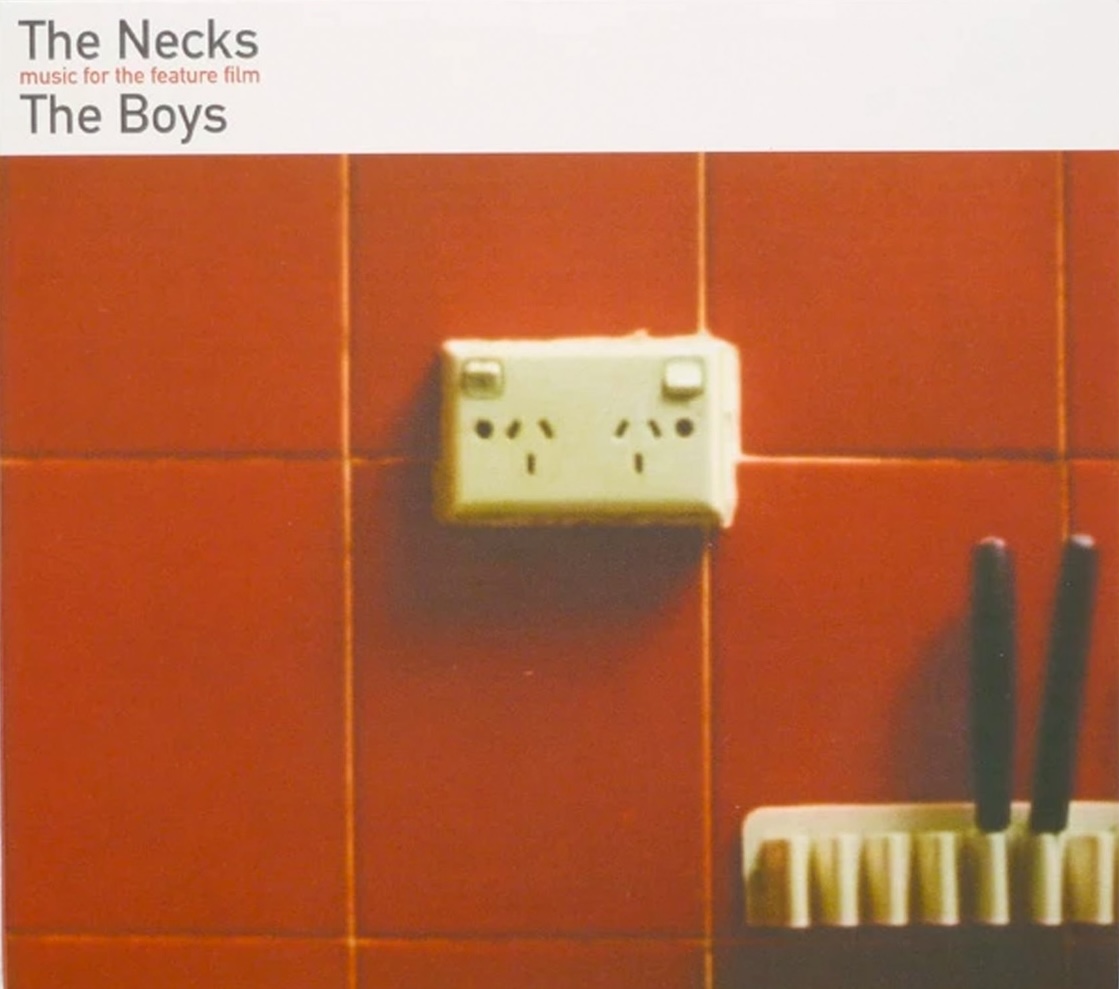
The Necks released The Boys (Music for the Feature Film) in 1998 as an independent album, comprising seven tracks and around 49 minutes of music. The album contains much more material than appears in the film, so you can hear the pieces in isolation. Listening to the recording, you can hear the trio’s structural maturity.
In The Boys, repetition and texture give it its musical identity through accumulation. Headlights is all about development and duration. Fife and Drum focuses on the contrast between the instruments and the harshness of the timbres. Each piece takes a different approach to musical form, favouring gradual evolution rather than the more traditional method of thematic development.
Without the film images, the listener becomes much more aware of the music’s internal processes: the interplay of rhythmic layers, the changing density of instrumental textures, and the very sense of time. What functions as psychological atmosphere on screen becomes an exploration of musical structure on record. The album shows that a film score alone can, in fact, be an artwork.
Ultimately, the score poses a compelling question: can music make an audience feel the presence of something that hasn’t yet occurred, without revealing what that thing is? In The Boys, The Necks show, you can.
The music doesn’t announce the violence at all. It simply allows you to feel that the violence has been there all the time.
Stream and/or download The Necks’ The Boys here.
Dr Alison Cole is Composer and Lecturer in Composition for Creative Industries, Sydney Conservatorium of Music, University of Sydney.







Comments
Log in to start the conversation.