Machine-learning models have identified distinctive melodic, harmonic and rhythmic patterns that can distinguish 20 leading jazz pianists with up to 94 percent accuracy.

Artificial intelligence can identify the individual artistic fingerprints of jazz pianists by analysing the musical patterns embedded in their improvisations, according to a new study published in Nature Machine Intelligence.

Researchers Huw Cheston, Reuben Bance and Peter M.C. Harrison trained a series of machine-learning models on 84 hours of recordings by 20 prominent jazz pianists. The study aimed not simply to determine who was playing an unidentified passage, but to investigate the musical characteristics that make one performer recognisably different from another. The researchers describe these recurring characteristics as an artistic “fingerprint”.
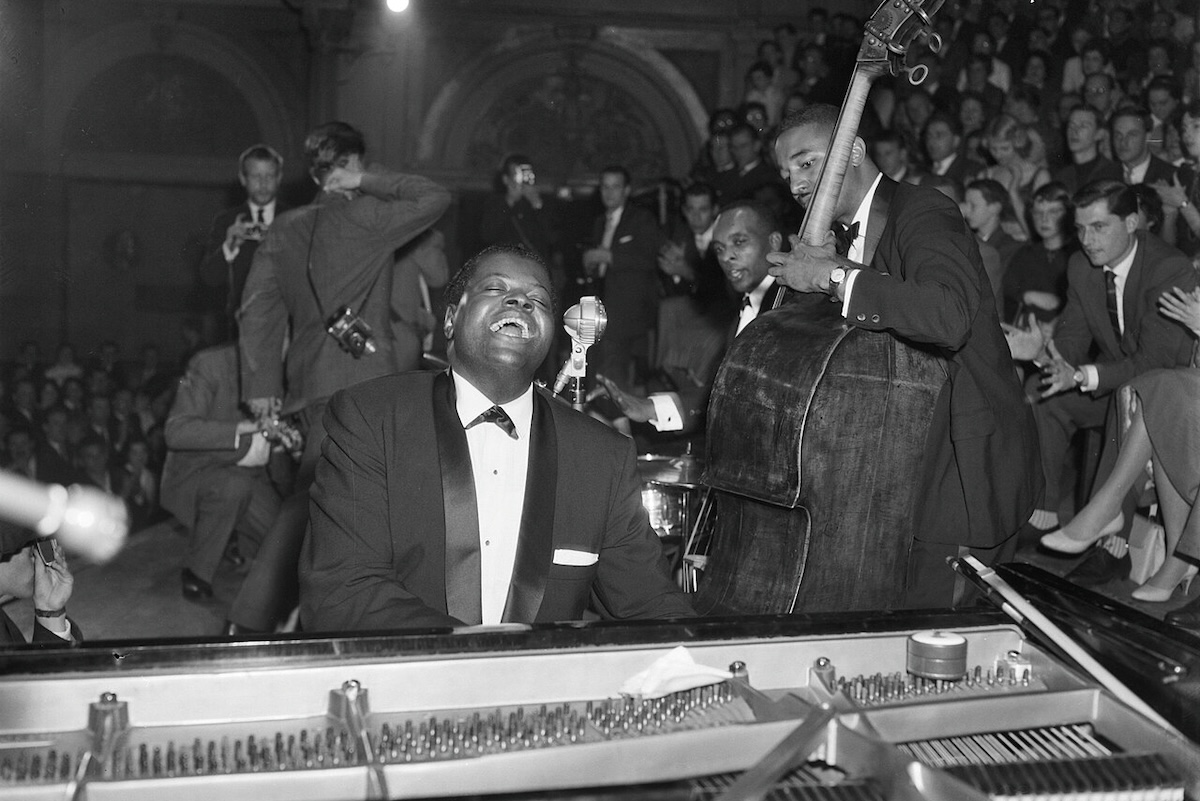
Oscar Peterson, Ray Brown (bass) and Ed Thigpen (drums). Concertgebouw, Amsterdam, 1959. Photo © Wim van Rossem / Wikimedia Commons

The dataset comprised 1,629 performances drawn from two existing collections of transcribed jazz recordings, including both unaccompanied piano performances and piano solos from trio recordings. The researchers converted the recordings into symbolic musical representations and examined melody, harmony, rhythm and dynamics.

The most sophisticated model identified the pianist correctly in 94 percent of cases. A more interpretable model based on identifiable musical features achieved 77 per cent accuracy, while placing the correct pianist among its five highest-ranked choices in almost 94 per cent of cases.

The results offer a more nuanced picture of what constitutes a musician’s individual style. Melodic patterns were highly informative when considered collectively, while individual chord voicings could carry considerable explanatory power.

In the multi-input model, harmony alone produced an accuracy of 74.4 per cent, compared with 61.9 per cent for rhythm and 57.5 percent for melody. Dynamics, by contrast, proved much less useful, producing an accuracy of only 26.3 percent when used in isolation.

When all four domains were combined, however, rhythm made the largest contribution to the model’s performance, followed by melody and harmony. This suggests that a pianist’s identity is not reducible to a collection of favourite notes or chords, but emerges from the interaction of several aspects of musical behaviour.

The researchers were also able to identify specific patterns associated with individual musicians. For Bill Evans, for example, some of the most strongly predictive melodic figures involved descending major- and minor-seventh arpeggios. For Oscar Peterson, the model identified melodic “enclosures” – patterns that approach a target note from above and below – as particularly distinctive.

Bill Evans and bassist Eddie Gomez, Kongsberg Jazz Festival, 1970. Photo Wikimedia Commons

Significantly, the system also identified patterns that musicians tend not to use. For Evans, some negatively weighted features included octave tremolos associated more strongly with the blues-oriented playing of Peterson and Junior Mance. The researchers suggest that such “avoidance behaviours” may be an under-recognised component of musical style.

The findings also indicate that a pianist’s fingerprint can change according to performance context. Musical features identified in solo performances did not completely correspond with those found when the same pianists performed with a trio, suggesting that musicians adapt their vocabulary according to the presence of other players.

The study has implications beyond performer identification. The researchers argue that machine learning could provide musicologists and educators with a systematic way of testing long-standing descriptions of individual styles, while potentially revealing characteristics that have escaped conventional analysis.

The researchers caution, however, that the experiment captures only part of what makes jazz performance distinctive. Its analysis is based on MIDI-style symbolic representations, which cannot adequately represent aspects of jazz such as timbre, vibrato and pitch-bending.

The authors say the approach could eventually be extended to other instruments, genres and historically under-represented musicians.

Read the full paper in Nature Machine Intelligence.

Get our free weekly round-up of music, arts and culture.