The Australian Recording Industry Association (ARIA) has today (31 August) introduced new guidelines around the use of generative AI for artists wishing to have their music considered in the ARIA Charts. These changes draw a welcome line in the sand and send multiple strong messages to Australian artists and listeners.

Firstly, ARIA has made it clear that it will continue to support and celebrate human-centred creativity, rather than reward “a performance without a human,” situating music and the wider arts as a necessarily human endeavour. This must come as a great relief to musicians who wish to get on with the business of creating and sharing their music.

However, this ruling does not completely level the playing field: Australian artists must still compete with the vast deluge of AI-generated music uploaded to streaming platforms every day, diverting potential exposure and royalties away from the musicians who would otherwise attract more listens and more revenue, and whose works are still being used unlawfully to train AI models.
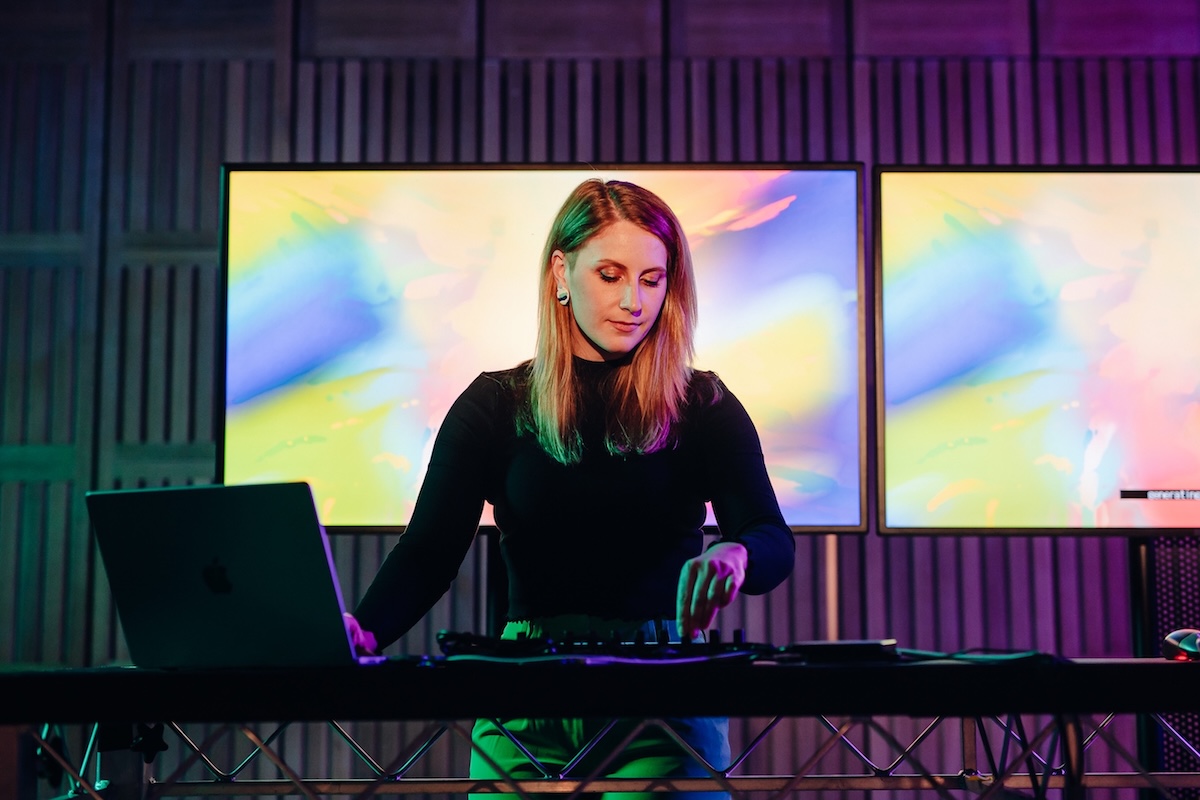
Alexis Weaver. Photo © Jordan Munns

In June 2026, APRA AMCOS found that the works of several prominent Australian artists had been unlawfully included in large AI training datasets used by several AI companies. But when it comes to measuring the success and consumption of human-led music in Australia, ARIA has clearly said: Australian artists, we have your backs.

It also serves as somewhat of a warning to the artists, labels and potential bad actors who wish to submit music primarily created through generative AI, potentially bypassing the input of the trained creatives whose livelihood relies on their art: you will not be rewarded on Australia’s music charts.

Photo © Stefanie Zingsheim/University of Sydney

By the same token, this change is not about vilifying artists who may use AI in a multitude of ways during the songwriting, composing or production stages. ‘AI’ can be used to describe a plethora of processes, generative or not, which may genuinely serve as a tool in the wider creative arsenal.

The key difference, according to ARIA, is whether the human behind the music has steered the artistic vision, and whether that vision is evident through the final recording. And, in fact, ARIA is not precluding all recordings that use AI from its charts; artists are permitted to use generative AI for “minor” elements of the music, or AI in production contexts (where AI and machine learning may be used for audio processing, mixing and mastering).

The changes, coming into effect from Monday 31 August, will require artists to answer a new question about their use of generative AI when submitting their music to the ARIA survey, the mechanism by which artists can be considered for the ARIA Charts and other accolades such as the ARIA Awards.

Recordings must now be categorised as either AI-generated, AI-assisted or using AI in production. Only the first, which describes releases where AI has been used to produce most of the track or its most significant creative elements, will prevent artists from being counted in the ARIA Charts. ARIA’s FAQ page on the rule change gives the examples of “a lead vocal or a key instrumental performance generated by AI” as reasons why a release will be excluded.

AI music generation platform Suno’s portal page.

This decision comes in light of recent international precedents in the generative AI music space. In July, the International Federation of the Phonographic Industry (IFPI) and a conglomerate of international music organisations published a new labelling system to help artists and listeners understand how and if generative AI has been used to create charting music.

The criteria also demand that any generative AI service used has not been trained unlawfully on existing music without compensating the original artists. In late July, a German court found that Suno, a US-based generative AI company, had used copyrighted songs without permission or licensing to train its AI model, dismissing the company’s claims that the training constituted ‘fair use’.

In this turbulent period of technological growth, it is important to define what exactly a socially acceptable use of generative AI in the arts looks like. For many, that will be a usage that does not actively harm the livelihoods of, or steal from, human musicians.

Perhaps even more will feel that only once generative AI can be developed in a way that does not put further pressure on our built and natural environments can it be called ‘ethical and sustainable’.

Bold decisions like ARIA’s assist artists and listeners alike to make informed decisions about who they lend their ears – and ultimately their money – to.

Discussions of generative AI in music remain emotionally charged and increasingly polarised. This decision is an encouraging step forward to ensure that music can and will remain a feasible practice for human artists to dedicate their lives to in the future… something all music-lovers should be able to get behind.

Alexis Weaver is an electroacoustic composer and Associate Lecturer in music technology at the Sydney Conservatorium of Music, University of Sydney 

Contribute to Limelight and support independent arts journalism.