




Louis Sharpe’s audaciousness in programming is his signature quality as Artistic Director of Canberra’s swelling, community-based National Capital Orchestra.
So why not include Rachmaninov’s Piano Concerto No. 2 and Mahler’s Symphony No. 1, Titan in a single program? What could possibly go wrong?
The answer is that a lot could go wrong. If things had gone off the rails, the audience would inevitably be somewhat forgiving: the orchestra’s pluck and courage would at least be applauded.
But nothing went wrong. Quite the opposite: the National Capital players under Sharpe’s masterful baton rose yet again to the challenge.
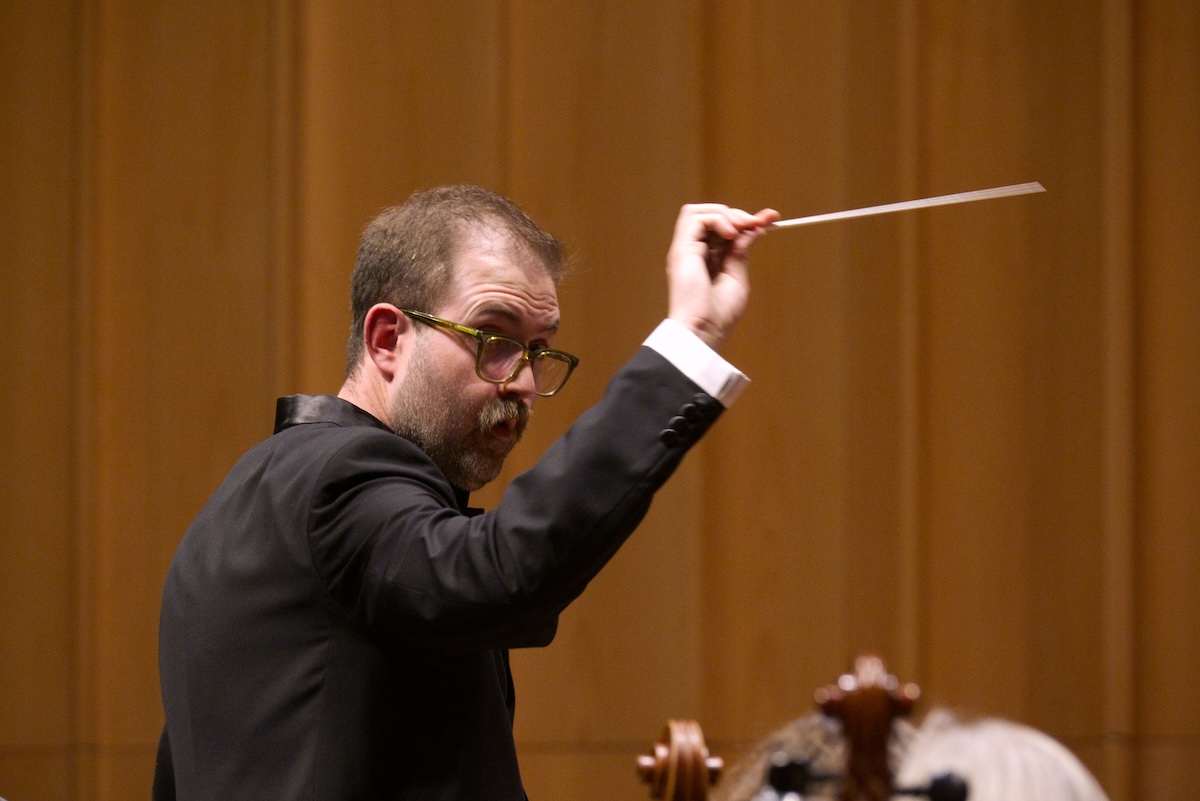
Louis Sharpe, Echoes of Humanity. Photo © Peter Hislop
Commencing with the most famous of Rachmaninov’s four piano concertos, Polish-born soloist Lucas Krupinski resisted wallowing in the opening passages, instead delivering an unpretentious but nevertheless virtuosic interpretation of the Moderato movement.
Beautifully supported by the nine cellos in the second theme, Krupinski moved into the famous recapitulation section with flair and confidence. The only problem here was that piano and orchestra are all at forte-fortissimo at this point, and the dramatic, gleaming articulation expected of the piano was inevitably suppressed by the 90-strong orchestra closely surrounding the Steinway on a crowded Llewellyn Hall stage. The volume had nowhere to go but into the audience. With the piano at full stick, the sustain pedal is a two-edged sword in this situation, but Krupinski managed to balance things adroitly in the circumstances.
Balance improved in the calmer second movement, featuring a lovely clarinet solo and Krupinski setting a sensible tempo in a passage that many play too fast. This allowed him and the orchestra to exhibit real delicacy and contrast at a quieter dynamic, especially in free passages where the piano leads.
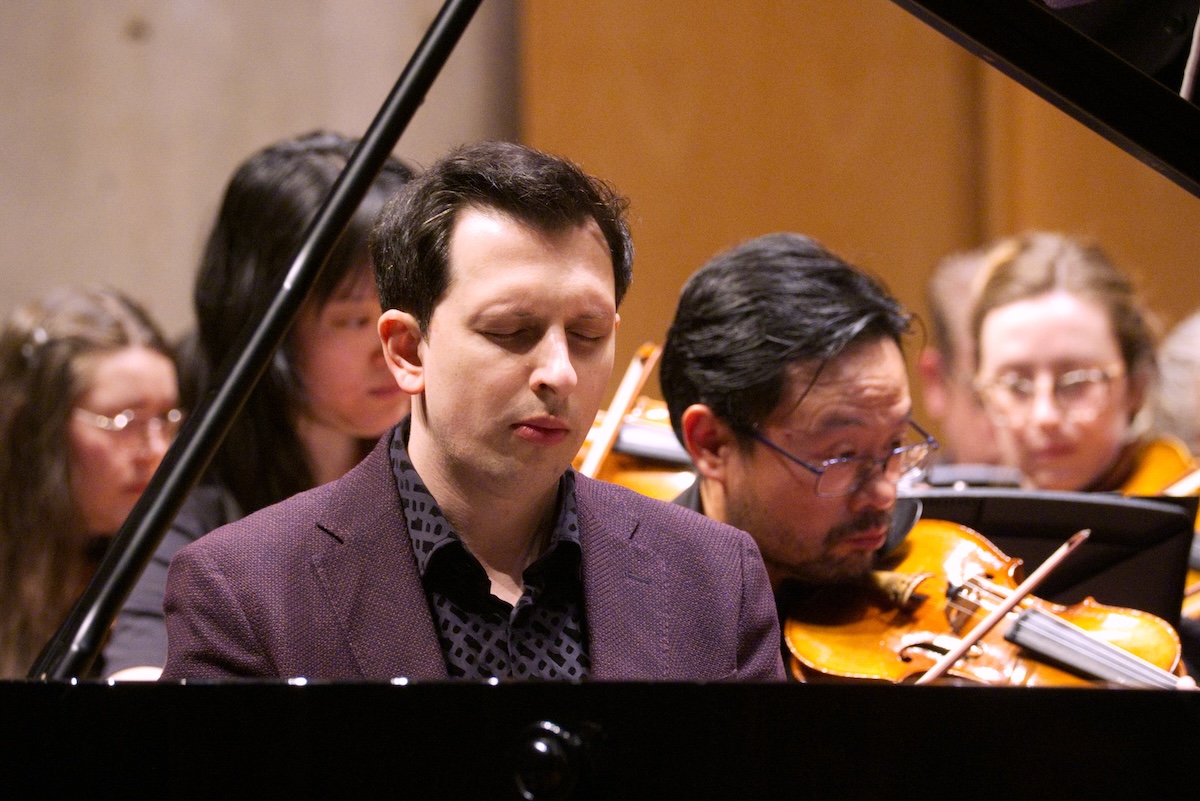
Lucas Krupinski, Echoes of Humanity. Photo © Peter Hislop
Then, startingly, Sharpe and Krupinski took the Allegro scherzando incredibly fast, to the point that the piano line lost some distinction even if the technique was impressive. Here the bassoon section was especially rich in support. The finale was gloriously unrestrained, grand and spine-tingling. Krupinski treated the audience to a charming, lyrical encore in the form of Chopin’s Waltz in C# minor.
For a man renowned for his intensity, perfectionism and intellectualism, Gustav Mahler’s Symphony No. 1 is not especially cerebral – at least not until you get to the final movement. Peppered with simple themes, including traditional Bohemian and Klezmer folk tunes (and even a set of variations on Frère Jacques in a minor key), the score demands precision and sensitivity rather than technical mastery, up until mid-way through the third movement when rhythms get suddenly more tricky and the orchestra moves into a grander romantic mode.
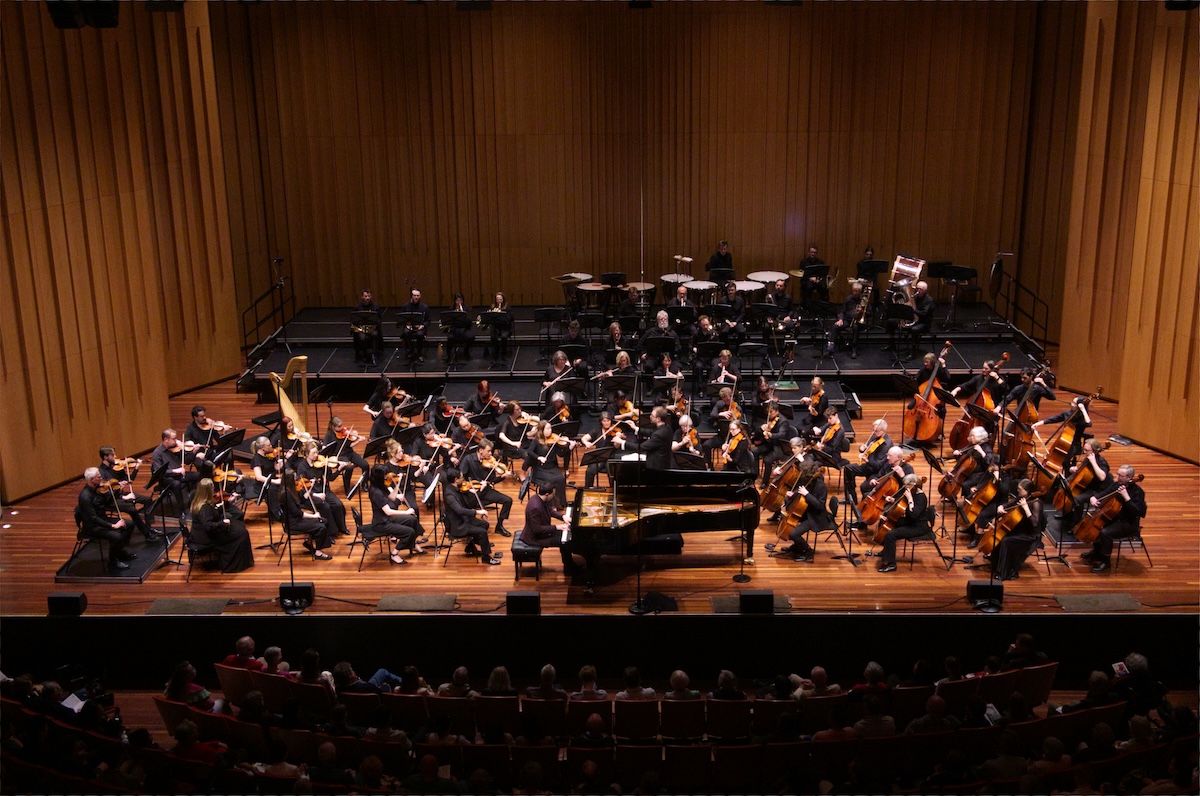
Echoes of Humanity, National Capital Orchestra and soloist Lucas Krupinski. Photo © Peter Hislop
While the French horn section (of eight!) was a bit muddy early on, they stood and sounded out a thrilling grand finale. Another particular highlight was the exquisitely delicate finish to the third movement, with percussion, woodwind and plucked strings playing into a perfect silence which lingered for several long seconds.
Sharpe doesn’t sweat the small stuff, and wisely concentrates on transmitting the big picture – all with a cheerful optimism which makes anything seem possible.
For information on upcoming National Capital Orchestra concerts, visit nationalcapitalorchestra.org.au








Comments
Log in to start the conversation.