




Big and Little Edie stand shoulder to shoulder with Judy and Liza as pop culture’s pre-eminent mother-daughter duo. It’s therefore fitting that their story, made famous through the Maysles brothers’ 1975 documentary Grey Gardens and beloved in LGBT circles to this day, has been retold as a musical.
Grey Gardens, the documentary, is an arresting yet pitiful snapshot of Jackie Kennedy Onassis’s impoverished aunt and cousin, both named Edith Bouvier Beale, who lived in the dilapidated family mansion from which the film takes its name.
This musical adaptation by Doug Wright (book), Scott Frankel (music) and Michael Korie (lyrics) seeks to further explore the Edies’ relationship with each other and their own inner worlds by depicting their glory days in Act I before catching up with the duo in Act II as their living situation hits the newsstands.
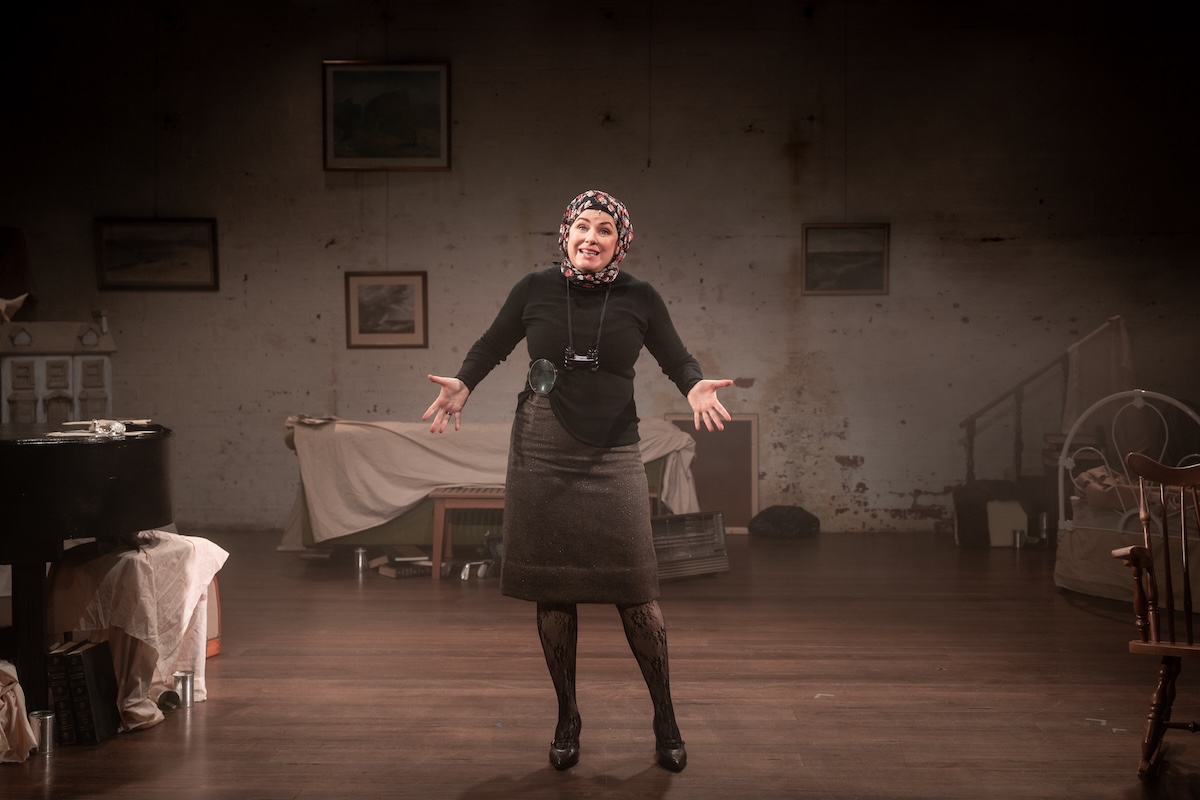
Helen Dallimore as Little Edie in Grey Gardens. Photo © Ben Fon
The second act is rife with meaty, emotionally charged themes – disability and caregiving, regret, abusive relationships and poverty, to name a few – all filtered through the fraught relationship between Big and Little Edie.
The air crackles between Helen Dallimore’s Little Edie and Deidre Rubenstein’s Big Edie. Their acerbic tongues are ready to lash out at a moment’s notice. Director Tyran Parke gives the pair ample creative opportunities to sustain the constant stretch and release of tension.
But Act II is also the easier part, drawing on a documentary that has already proved a winning dramatic formula.
It’s Act One, where primary sources fail thanks to unreliable narrators and tight-lipped relatives, that leaves the Edies to the discretion of the musical’s creative team. The result here is disappointingly pedestrian.

Deidre Rubenstein as Big Edie in Grey Gardens. Photo © Ben Fon
Big Edie, the central character of Act One, recalls Pride and Prejudice’s Mrs Bennet: self-absorbed, wilfully ignorant of high-society manners and looked down upon by her family.
Little Edie emerges as a reincarnated Elizabeth Bennet, constrained by her mother’s control and endless social faux pas. Her journey from a just-shy-of-well-behaved socialite to a destitute, staunch individual with undiagnosed mental illness is left frustratingly unexplored.
Parke doesn’t have enough tricks up his sleeve to overcome the book’s tired first-act narrative beats, nor does he seem particularly interested in doing so. Grey Gardens ultimately functions as a showcase for Dallimore, who has the enviable task of playing Big Edie in Act One and Little Edie in Act Two. Talk about becoming your mother.
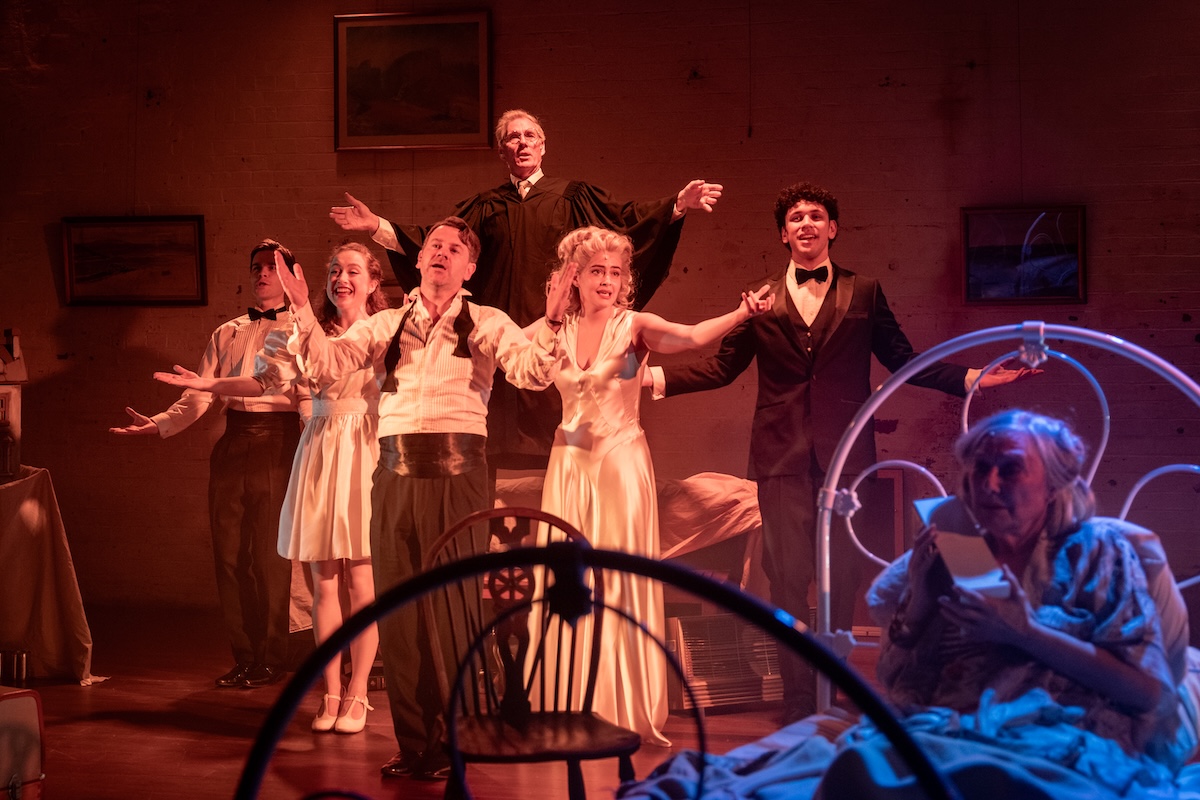
Grey Gardens. Photo © Ben Fon
Despite these shortcomings, it’s an easy watch thanks to Dallimore’s impeccable comic timing and David Hobson’s boisterous performance as Big Edie’s disparaging father. More importantly, it lays the groundwork for a riveting second act, in which Rubenstein goes toe to toe with Dallimore.
Together with Hobson, they remind us why they are industry stalwarts, and Grey Gardens offers a rare opportunity to see all three on stage together at an affordable ticket price.
Grey Gardens plays at fortyfivedownstairs, Melbourne until 2 August.








Comments
Log in to start the conversation.