There would be no instrumental Baroque music as we know it without dancing.

So says Salut! Baroque co-founder Tim Blomfield who, for the ensemble’s latest concert Invitation to the Dance, called on Sydney Baroque Ballet director Aimee Brown to demonstrate the steps of the bourées, gigues, courantes and sarabandes familiar to us through works by Handel, Bach, Lully and Corelli.

Originally dance was accompanied by voices until someone realised instruments were so much more effective and versatile. Nowadays, audiences are divided between those who go to the ballet and those who attend symphony concerts, but it wasn’t always that way as this concert eloquently demonstrated.
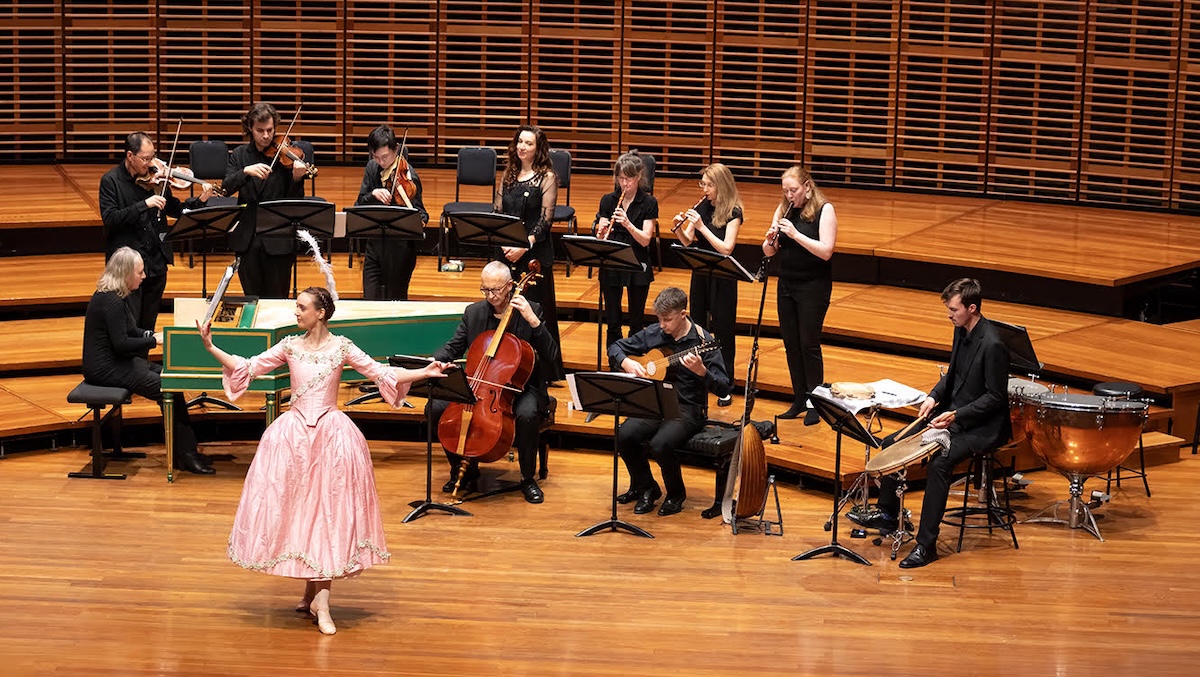
Aimee Brown and Salut! Baroque. Photo © Paul Porteous

As an opener Brown took us on a quick Cook’s tour with the aid of the 11-piece band and Jean-Féry Rebel’s Les carictères de la danse from 1715.

She looked like she had just stepped out of a Goya painting in her light apricot 18th century-style dress with sky blue trimmings and cream low-heeled ballet shoes, all topped off by an ostrich feather in her hair, which would later be swapped for a floral headpiece and a sparkling tiara.

She studied ballet for 15 years before setting up her own company six years ago. She is also a talented recorder, player. 

The Rebel piece featured a showreel of 11 different dances accompanied by two violins and a viola; flute; oboe; two recorders; harpsichord; bass violin; Baroque guitar and percussion. Brown’s graceful movements showed her ballet training. Her head was still, her face emotionless with mouth closed and all the expressiveness was shown in the arms and hand gestures and, of course, the footwork, on tiptoe rather than pointe.

For Henry Purcell’s Instrumental Dances from The Fairy Queen Brown carried a string of red roses and sported a floral headpiece while dancing a Rondeau before the band chipped in with the lively Monkey Dance.

Excerpts from Lully’s Les Saisons were more courtly with a Pavane oozing elegance – Louis XIV was an accomplished dancer and appeared in several of Lully’s ballets so the composer had to get it right – while L’Eté from the suite Phäeton was catchy and rhythmic featuring a bright recorder duet by Sally Melhuish and Alanna Blackburn.

For Johan Helmich Roman – dubbed “the Swedish Handel” – Brown gave us a late Baroque fan dance for the Menuet and energetic Gigue sections from his Golovinmusiken.

The instrumental pieces showcased the ensemble and solo talents of Salut! with violinist John Ma, flautist Sally Walker and oboist Jane Downer all featuring prominently.   


For more information on Salut! Baroque’s 2026 concert series, visit baroque.com.au

Contribute to Limelight and support independent arts journalism.