




King Gizzard & the Lizard Wizard are eclectic, to say the least. Much of their discography already toys with microtonal tunings, jazz fusion and even forays into contemporary classical stylings. That’s precisely why the Phantom Island tour – in performance with the Sydney Symphony Orchestra and conductor Chad Kelly – feels like the perfect next step, adding new depth and a new lens to their psych-rock identity.
From the very first note, the audience is hooked. The opening half centres on the band’s new album, Phantom Island, composed in collaboration with Kelly, who also conducts the orchestra. The project aimed to push the orchestral sections forward, building a vast, immersive wall of sound. Yet, despite this intention, the fuzzy guitar effects and driving drum kit often overwhelm the ensemble, leaving the orchestra most audible only in the brief interludes between songs. In those moments, their sustained drone notes reveal how much depth they add – a fullness that becomes even clearer after the interval, when the orchestra steps offstage and the band is left to jam and improvise alone.
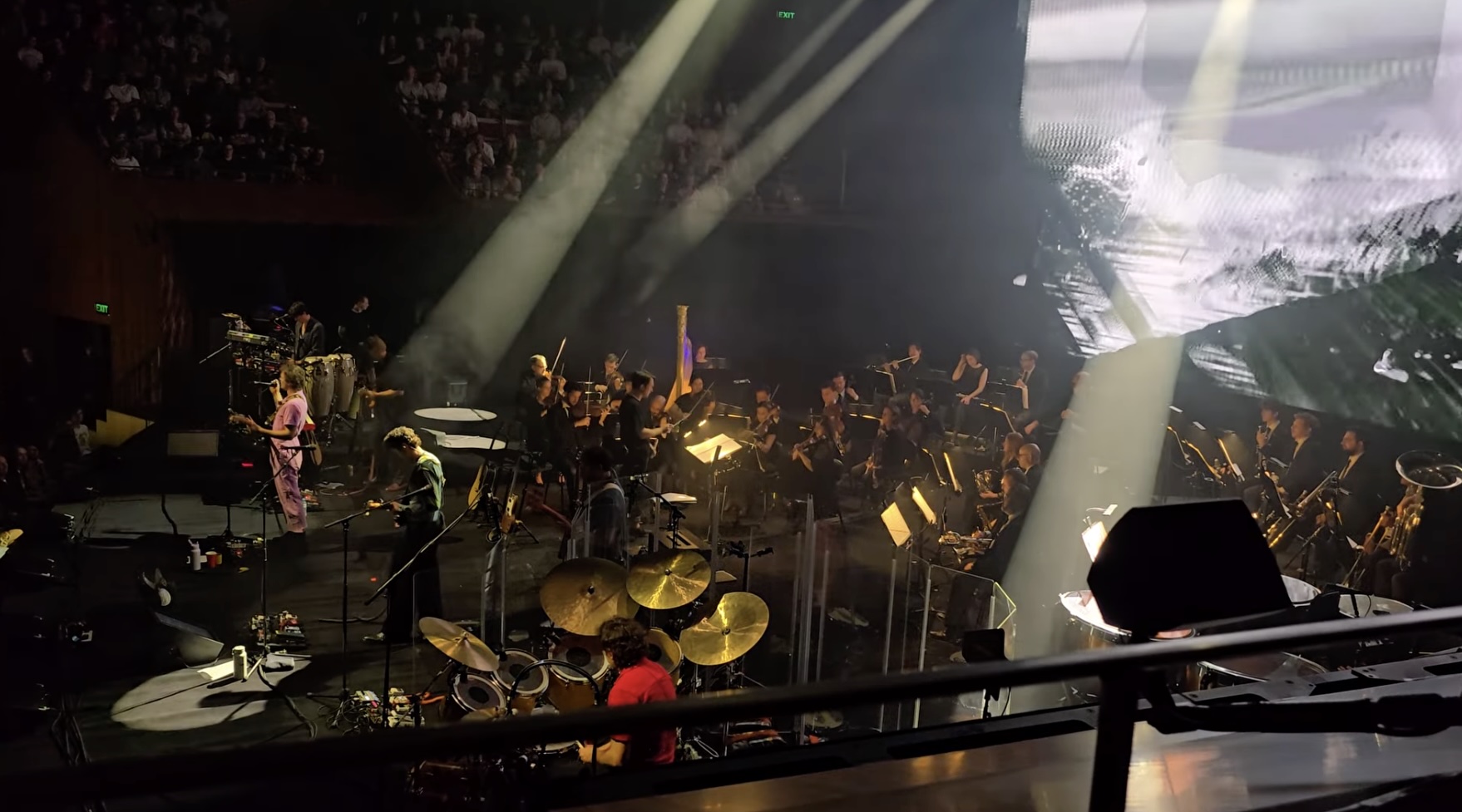
King Gizzard & The Lizard Wizard and Sydney Symphony Orchestra, Concert Hall, Sydney Opera House.
A visual divide reinforces the musical one: the band appears in casual clothes, while the orchestra behind them sits in full suits and concert blacks. Cutting across that contrast is Kelly, who moves with an easy, almost lucid groove as he guides the orchestra through the set, bridging the two worlds even when the sound doesn’t always meet in the middle.
Each orchestral line, even when not distinctly audible, acts like a building block in shaping the overall sound. The second half offers a more balanced conversation between the rock band and the orchestra as the group draws more confidently from their back catalogue, creating more space for the SSO to emerge against the distorted guitars. By the final songs, that balance has finally crystallised: orchestral solos echo guitar riffs, the drum kit locked in beneath them, and the result feels like a powerful demonstration of what this partnership could become.
The audience is already half out of their seats, itching to mosh, but what unfolds onstage is a more nuanced experiment – one that reveals both the promise and friction of pairing King Gizzard with the SSO.
The collaboration finds real footing in the moments when the orchestra finally pushes through the dense rock textures, rising from tight progressions into commanding crescendos that complement the band’s heaviness rather than fighting it. Still, a more balanced mix might have let that synergy shine earlier and more consistently.
It isn’t perfect, but when it works, it shows exactly why this kind of crossover is worth chasing.








Comments
Log in to start the conversation.