




Throughout much of the 19th century, when romanticism was in full swing, the Hindu temple dancing girl – the bayadère – was a common motif. The French composer, Charles-Simon Catel composed Les Bayadères in 1810 that reflected a music and design spectacle that emerged with Napoleon’s consulate. Another French composer, Daniel-François-Esprit Auber, composed Le dieu et la Bayadère in 1850. The Bayadère was a symbol of exotic India.
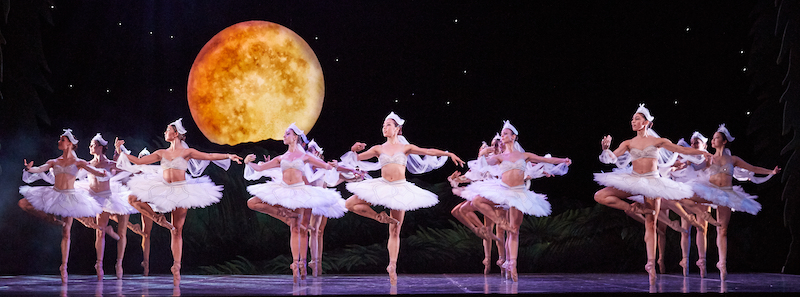 Dancers of West Australian Ballet. Photograph © Sergey Pevnev
The first dance interpretation, in 1858, was Théophile Gautier’s Sacountala a ballet-pantomime in two acts, based on the 4th century play, The Recognition of Shakuntala, by the classical Sanskrit writer, Kālidāsa. It is considered one of his best works, and the one that influenced Marius Petipa—another Frenchman – via Gautier, in his The Pharaoh’s Daughter (1862). With dramatist Sergei Khudekov, their La Bayadère, premiered in St Petersburg in February 1877.
Visually inspired by Gustave Dore’s 1832-1833 designs for Dante’s Divine Comedy, it was immediately recognised as a masterpiece, particularly Act III, but the ballet was not seen in the West until the Kirov Ballet unveiled The Kingdom of the Shades in the Palais Garnier in May 1961....
Continue reading
Get unlimited digital access from $4 per month
Already a subscriber?
Log in







Comments
Log in to start the conversation.