Over the last 40 years, I’ve had the good fortune to see and hear Mahler’s Fifth Symphony – with the Detroit Symphony in its heyday in Detroit under Antal Dorati, in Sydney under Leonard Bernstein with the New York Philharmonic, in New York under Daniele Gatti, in London with the Vienna Philharmonic and Sydney again with the London Symphony under Claudio Abbado.

My sentimental favourite has always been the 1969 EMI recording with Sir John Barbirolli and the New Philharmonia, widely revered for its warmth and humanity. The fact that Barbirolli died soon long after adds a dimension of poignancy.
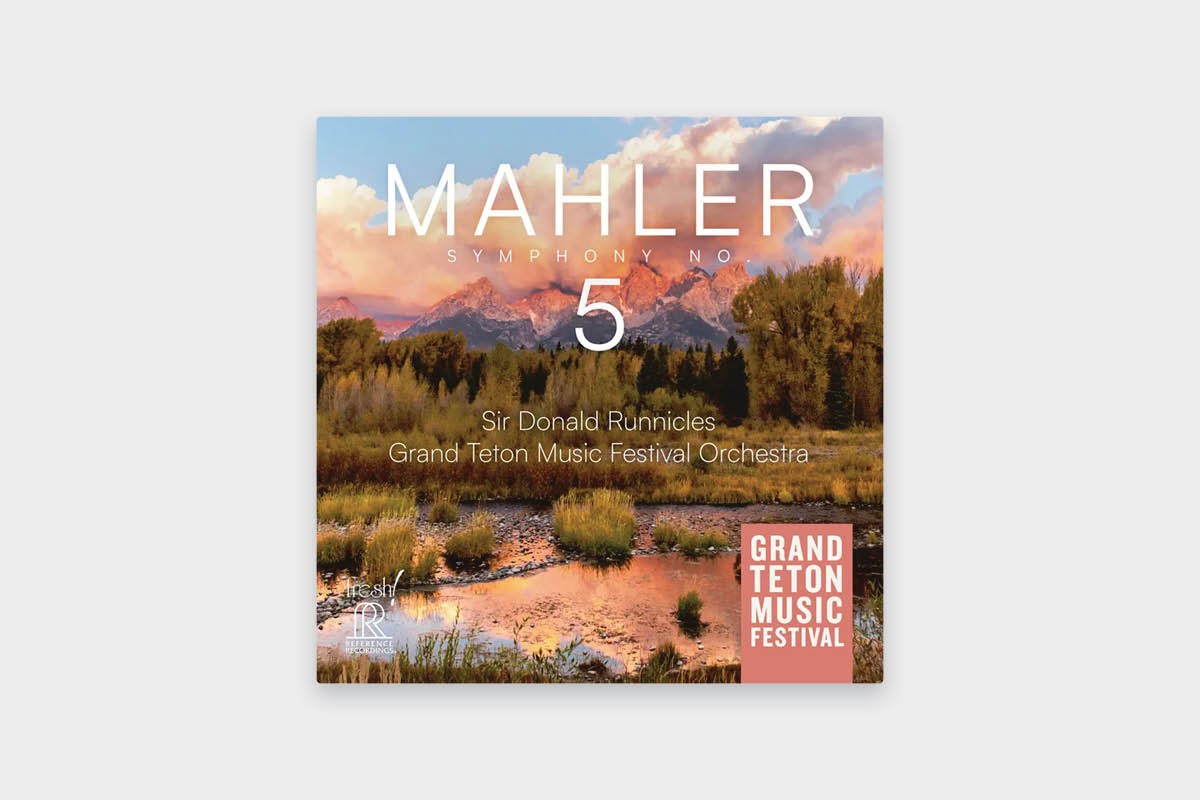
This new release on Reference Recordings with Donald Runnicles and the Grand Teton Music Festival Orchestra at Jackson Hole, Wyoming is one for the ages, like so many Reference Recordings, in terms of performance, interpretation and sound. The range, depth, clarity and resonance are all superb for an orchestra which draws its players from 84 ensembles in 72 countries. They don’t sound like a typical “festival ensemble”; they sound as if they’ve been playing together for years. 

Perhaps that should be playing to each other for years. I’ve come to think of this symphony as a huge concerto for orchestra and, in the 70s and 80s, it became a calling card for virtuoso orchestra on tour. The Fifth is Mahler’s most stylised symphony. For me, the best performances are those where the conductor has internalised that program or narrative, giving the work a coherent sense of development. I have that sense with Runnicles. 

The opening trumpet phrase has a gravity and a precision that establish the tone for everything that follows. The introductory funeral march moves with stoic dignity rather than a lugubrious trudge and when the wild section arrives, it crashes onto the scene with a real shock. The movement ends with a gorgeous murmur on the flute. The skittish second movement is a challenge to bring off because of its apparent similarity to the first and is periodically haunted by its nightmarish recollections. Its wayward key changes add to the challenge.

Few symphonies turn a corner as dramatically (and as delightfully and unexpectedly) as Mahler’s Fifth in the third movement. Here, the D major horn summons is as optimistic, even triumphant, as the initial trumpet summons was grim. Runnicles transforms the sheer volatility of the composer’s most Viennese movement into a waltz much of the time, despite the scherzo description. Even amid the jollity there are melancholy episodes where the minor key passages have the horn soloist scudding across the sound creating a chiaroscuro effect like clouds on a windy day momentarily blocking out the sun. The Orchestra’s principal horn beautifully alternates between the refulgent and the burnished. 

The Adagio often receives the most attention from critics despite being the shortest. Here, Runnicles at a sensibly central tempo at around 10”, (all his tempi are perfect throughout) avoiding the excesses of Bernstein and, in his declining years, Haitink who both took around 14. The harp is audible throughout.

Runnicles turns the rondo finale into charm by avoiding manic tempos, especially in the giacoso where the woodwind exchanges suggest a sylvan scene worthy of Mendelssohn at his most gossamer. The articulation of the counterpoint here is meticulous. With layered climaxes, he keeps his powder dry for the wonderfully zany coda.

This is one of the most impressive Mahler Fives I’ve ever heard.

Listen on Apple Music

Composer: Mahler
Work: Symphony No. 5
Performer: Grand Teton Festival Orchestra/Donald Runnicles
Label: Reference Recordings FR-763SACD

Contribute to Limelight and support independent arts journalism.