




It’s the bright green play mat, with nine perfectly placed patches in different stimulating colours and friendly animal faces, that lets me know our protagonist Sadie is a NSW mum like me.
The play mat given to new mums as part of the NSW Health baby bag, which filled my camera roll for the best part of a year, is casually draped over a bassinet on Cris Baldwin’s homely stage.
Abutting a simple bookshelf tightly packed with nappies, baby wipes, baby books and other postpartum essentials, Baldwin paints a tidy picture of motherhood – one in direct antithesis to the cluttered bomb site of a baby room I waded through each sleep-dazed morning of postpartum.
Jorjia Gillis quickly blows this propriety of motherhood wide open with her canny depiction of postpartum through Sadie (Stephanie Somerville, Big Girls Don’t Cry). A new Martu mum who has recently moved to Sydney, Sadie’s husband travels for work and, away from her family and Country, she finds herself alone, trying to settle a dysregulated baby who refuses to sleep.
Seeking connection and support, she joins an Inner West mum group, where she meets two blonde mums (Alex Malone and Ruby Teys) and a fashionable gay dad (Zarif). These parents seem to have it all figured out, and they have plenty of opinions about the right way to give birth and look after your baby.
It isn’t until Sadie finds her local Aboriginal Health Service and makes a friend (the brilliant Megan Wilding) that she finds genuine connection and support.

Megan Wilding, Stephanie Somerville, Alex Malone, Zarif and Ruby Teys in Mum Club. Photo © Phil Erbacher
There is much that resonates in the small details sprinkled throughout Gillis’ script. The motherhood-to-romantasy pipeline is real, as are the relentless opinions about what you should be doing when so much of motherhood is beyond your control.
There is a relief in seeing this profoundly graceless period rendered on stage with so much humour: a time when we are suddenly expected to make friends, appear to know what we are doing, fill our days and somehow keep our bodily fluids in check.
The delving into motherhood seems particularly stark against the recent discourse around the Lindsay Clancy mistrial which thrust the need for support in the postpartum period into the spotlight. Though Sadie’s experiences are much different, the specificity of them gives these familiar frustrations a different kind of weight. Her loneliness is not only the loneliness of new motherhood, but of moving away from family and Country, of longing for connection, and of navigating an Aboriginality that both defines and does not define her motherhood.
Through Sadie, Gillis asks what happens when the communities designed to support mothers are themselves shaped around assumptions that do not accommodate everyone.
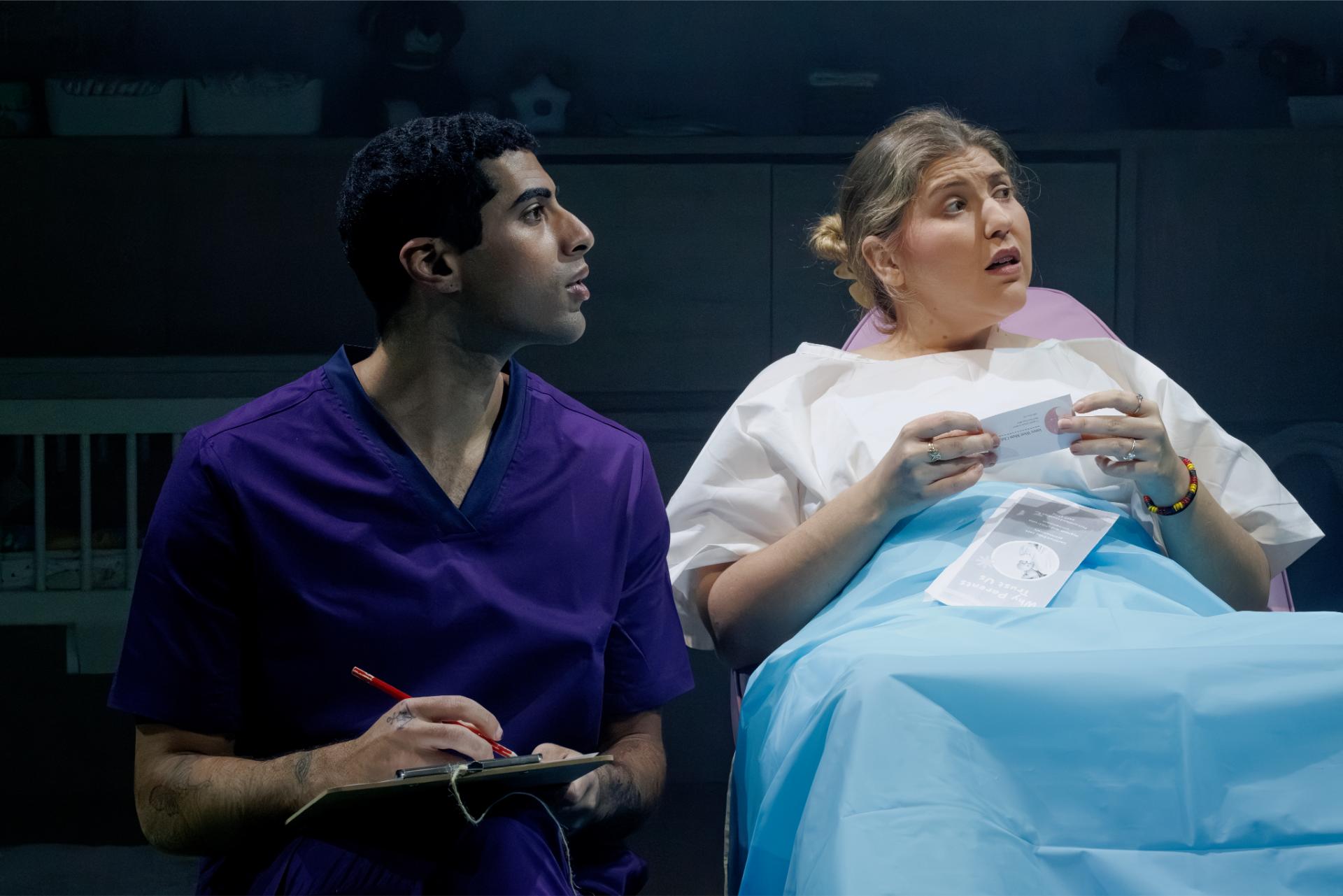
Zarif and Stephanie Somerville in Mum Club. Photo © Phil Erbacher
Yet Mum Club sometimes loses sight of this more compelling discovery. Gillis’ script creates a series of subplots and comic scenarios drawn from the specificity of postpartum life. Many are funny, recognisable and inventive, but not all develop the characters or feed into the play’s broader social commentary.
The first half often teeters into discomfort as Gillis and the ensemble reach for big laughs, landing somewhere between earnest and awkward. There is an honesty to this awkwardness, but it can sometimes feel overdone.
As these scenarios accumulate and the comedic chaos reaches its peak, however, the production begins to find its rhythm. The disparate threads start to cohere, and the play’s more serious ideas gather force beneath the laughter.
Megan Wilding is a much-needed anchor as the secretary for the Aboriginal Health Service, romantasy writer and Sadie’s friend. She makes even the simple action of filing her nails rumble with unspoken intention and personality. Through simple gestures and expressive wit, she presents the audience with a calmer reality amid the mum club’s chaos, while meeting the production’s comedic tone with equal zest.
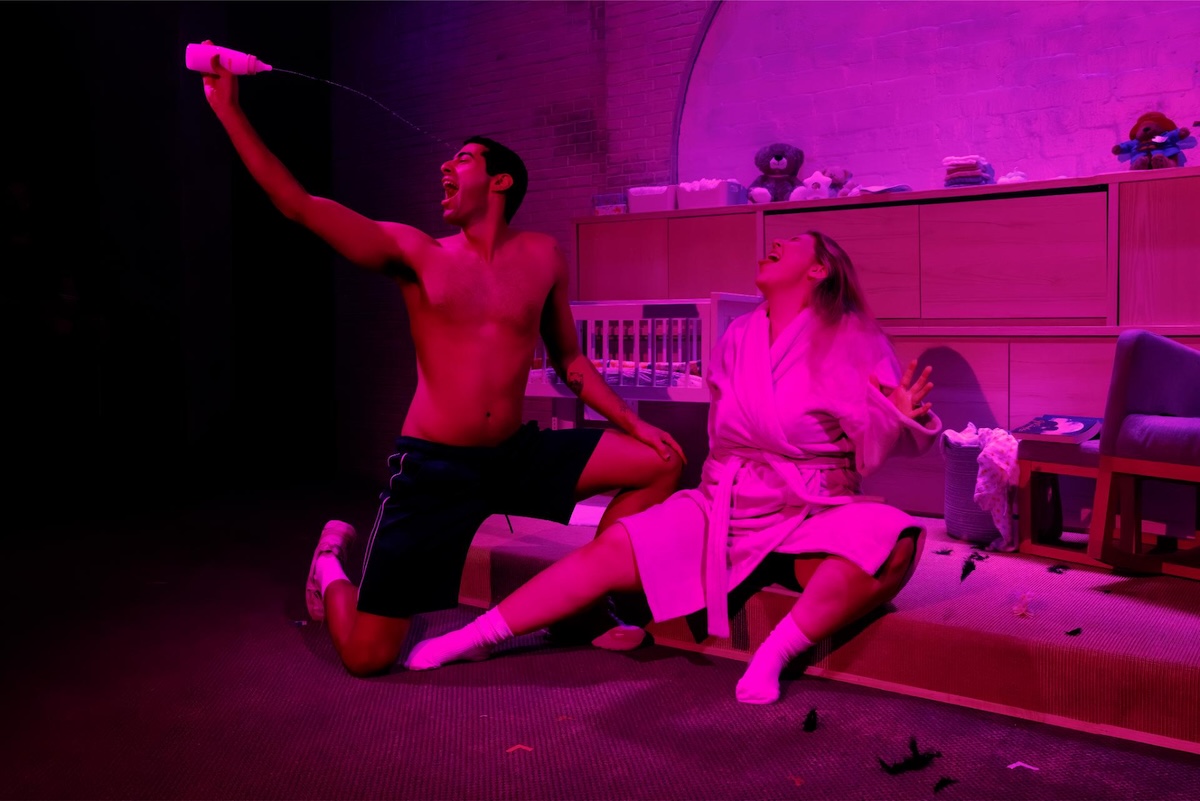
Zarif and Stephanie Somerville in Mum Club. Photo © Phil Erbacher
Verity Hampson’s restrained lighting and Baldwin’s domestic set keep the focus on the performers and the familiar detritus of new parenthood. Michael’s blocking attempts to draw the audience into these social spaces, positioning us as fellow members of the mum group or observers in doctors’ appointments. At times, however, this intimacy comes at the expense of visibility, with actors facing inwards and performances becoming obscured.
Ultimately, Mum Club is most compelling when it trusts the specificity of Sadie’s story. The things that make Sadie’s experience different – her culture, her distance from Country and family, her grief and loneliness and the particular barriers she encounters in seeking support – are what allow us to understand her loneliness in the first place.
The play mat remains on stage throughout: bright, cheerful and carefully arranged. It is an appealing picture of motherhood, but Mum Club is most powerful when it looks beyond its neat edges, into the messy, lonely and often contradictory reality underneath.
Griffin Theatre Company presents Mum Club in Belvoir’s Downstairs Theatre until 20 September.








Comments
Log in to start the conversation.