




There is a moment, about 30 minutes into Perle Noire: Meditations for Joséphine, when soprano Julia Bullock sings and dances her way through two of the evening’s most upbeat songs – C’est ça le vrai bonheur and Madinia – and the audience finally sees a semblance of Joséphine Baker – or rather, the stereotype of her.
“I bring both men and women to my feet”, she says, introducing the numbers, and as Tyshawn Sorey’s percussive arrangement comes to an end, sure enough, the audience finally cheers for the dancer, activist and French Resistance spy they think they know.
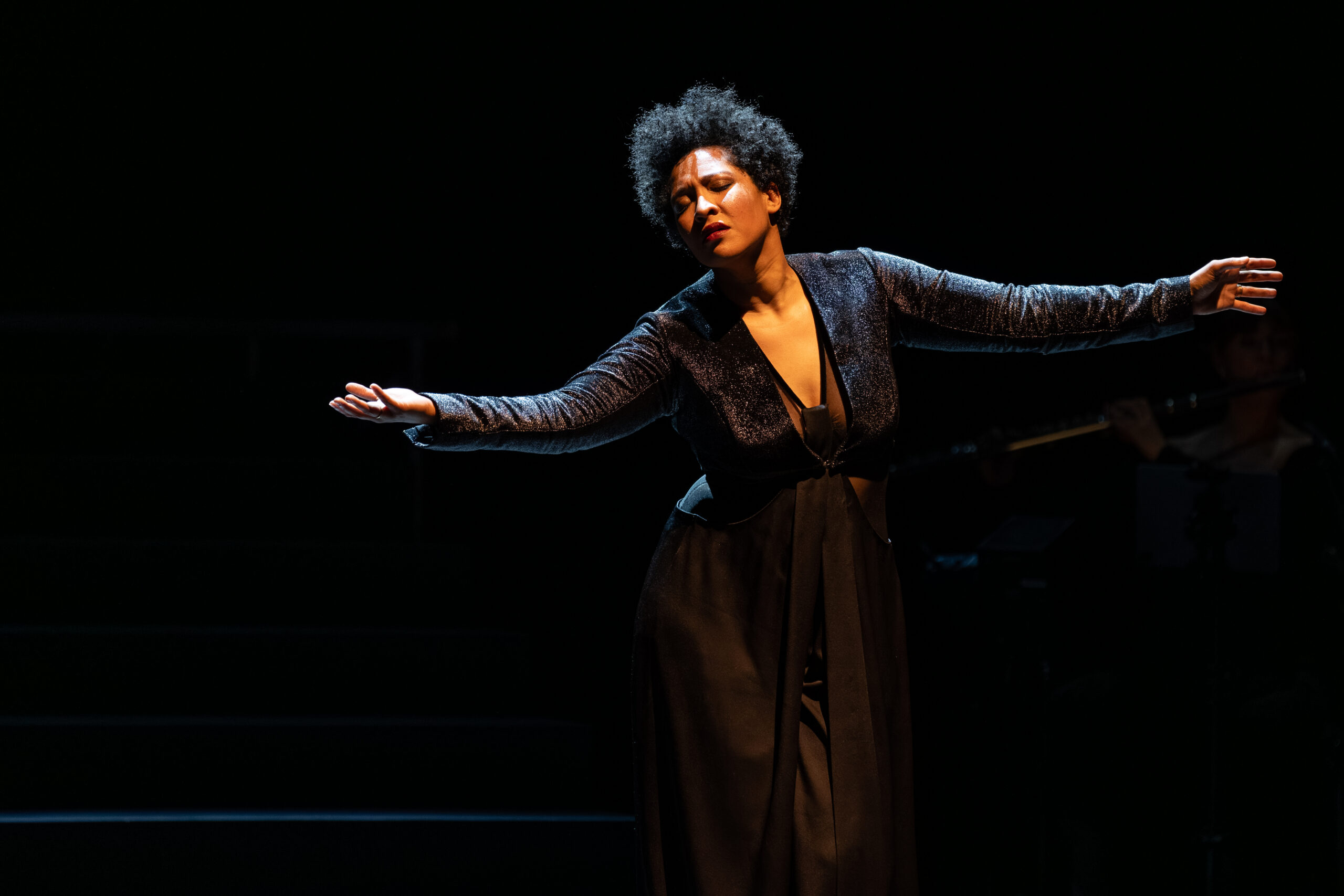
Julia Bullock in Perle Noire: Meditations for Joséphine. Photo © Andrew Beveridge
At first, Bullock’s “reincarnation” of Baker receives their adulation graciously, but almost immediately, her smile becomes forced and cracks, a sneer revealing the contempt she has for those whose interest in her is only skin-deep, and who have no desire to know the real person behind her extravagant mask.
The dynamic shifts and reveals something adversarial about Bullock’s relationship with the audience. I say Bullock, because she never resorts to mimicry or disappears into a fully-fledged portrayal of Baker. Here, she stands for...
Continue reading
Get unlimited digital access from $4 per month
Already a subscriber?
Log in






Comments
Log in to start the conversation.